
INDIA said developed countries must commit to providing at least $1.3 trillion (more than £1tn) each year until 2030 to developing nations.
It added that the new climate finance package, being negotiated at the UN climate conference in Azerbaijan, cannot become an 'investment goal'.
Speaking on behalf of like-minded developing countries (LMDC) at the sixth High-Level Dialogue on Climate Finance at the UN climate conference in Baku, Azerbaijan, India stressed that this support for developing countries to cope with the warming world should come through grants, concessional financing, and non-debt incurring aid.
It said the new climate finance package or the new collective quantified goal (NCQG) -- the top priority for this year's UN climate summit -- should align with the evolving priorities of developing countries and be free from restrictive conditions that could hinder their growth.
India is the world's fastest developing major economy with a per capita emissions of just 2.9 tonnes of CO2 equivalent (tCO2e), far below the global average of 6.6 tCO2e.
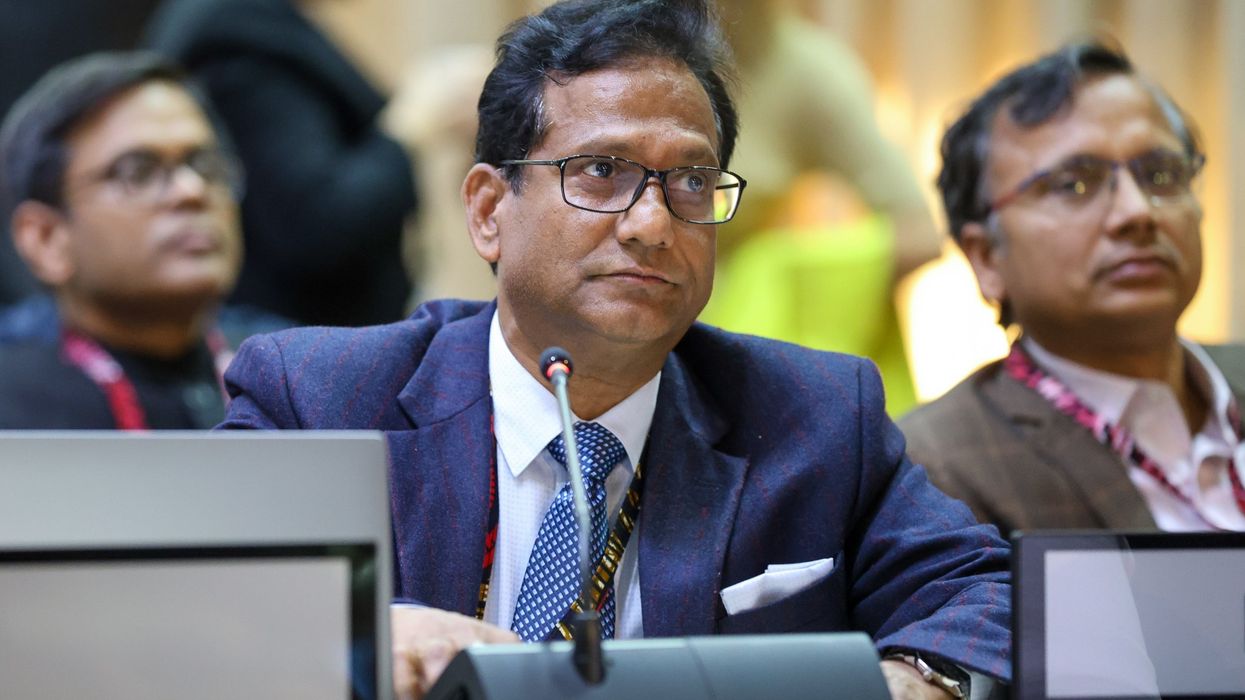
"Developed countries need to commit to providing and mobilizing at least $1.3tn every year till 2030 through grants, concessional finance and non-debt inducing support," the Indian negotiator, Naresh Pal Gangwar, said.
The joint secretary in the ministry of environment, forest and climate change said that this support is vital for advancing towards COP30 at Belem in Brazil where all parties are expected to submit their updated national climate plans.
"Achieving this outcome will set a solid foundation for meaningful progress in our global climate efforts," Gangwar said.
India also said that "NCQG cannot be changed into an investment goal" when it is a unidirectional provision and mobilization goal from developed to developing countries.
"The Paris Agreement is clear on who is to provide and mobilize climate finance -- it is the developed countries," it said.
India said that bringing in elements of any new goal that is outside the mandate of the UN climate change convention and its Paris Agreement is "unacceptable".
"We do not see any scope for renegotiation of the Paris Agreement and its provisions," it added.
Developing countries argue that, under the UN climate change convention and the Paris Agreement, it is the responsibility of developed nations to mobilise climate finance for them.
However, developed countries are pushing for a "global investment goal" that would draw funding from a variety of sources, including governments, private companies and investors.
Terming developed countries' performance on their financial and technological commitments "disappointing", India said the $100 billion (£78bn) target, promised in 2009, was already inadequate and has repeatedly been unmet.
It said that there is no clarity on what developed countries are actually counting as climate finance.
At COP15 in 2009, developed countries pledged to mobilise £78bn per year to help developing nations cope with climate change by 2020.
However, this target was only met in 2022, with loans accounting for around 70 per cent of the total climate finance provided. NCQG is set to replace the target next year.
(PTI)