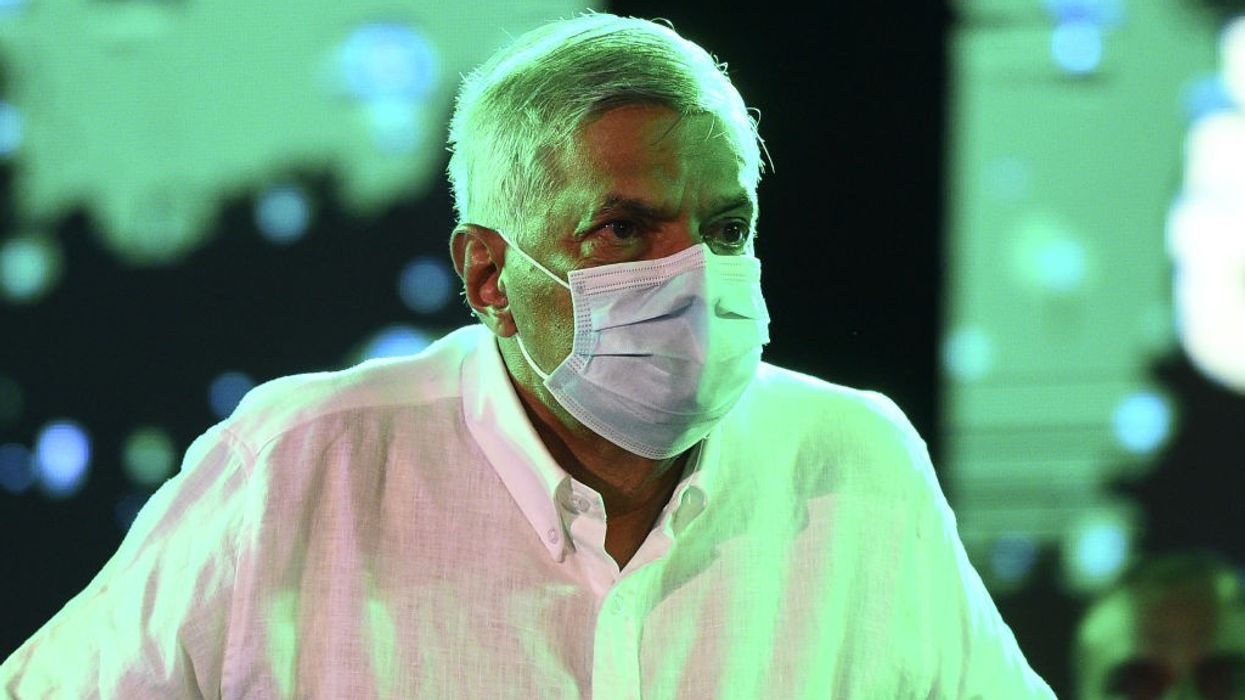

Sri Lanka Prime Minister Ranil Wickremesinghe on Tuesday said that the island country is participating in negotiations with the International Monetary Fund (IMF) as a bankrupt country.
In his speech in Parliament today regarding the economic recovery plan, the Prime Minister of the crisis-ridden country noted that a round of negotiations has been successfully conducted with the IMF. "Our country has held talks with the IMF on many occasions before. But this time the situation is different from all those previous occasions," he said in Lankan Parliament.
"We are now participating in the negotiations as a bankrupt country. Therefore, we have to face a more difficult and complicated situation than previous negotiations," Wickremesinghe said.
Sri Lanka has been facing the worst economic crisis since independence in 1948, leading to an acute shortage of essential items like food, medicine, cooking gas and fuel across the island nation.
The country, with an acute foreign currency crisis that resulted in foreign debt default, had announced in April that it is suspending nearly USD 7 billion foreign debt repayment due for this year out of about USD 25 billion due through 2026. Sri Lanka's total foreign debt stands at USD 51 billion.
The Prime Minister further in the speech said that once a staff-level agreement is reached, it will be submitted to the IMF Board of Directors for approval.
"We have been able to end the round of discussion effectively despite these difficulties," he assured, adding that the plan on debt restructuring and sustainability is being prepared by financial and legal experts Lazard and Clifford Chance, an international law firm.
"We hope to submit this report to the IMF by August," he added.
During his speech in parliament, PM Wickremesinghe said that after approval of the plan, a comprehensive loan assistance program will be prepared for a period of four years. "We are now on that path," he said.
He added that after obtaining the staff-level agreement, Sri Lanka will also organise a credit aid conference with India, Japan and China - the main lending countries to Sri Lanka.
"We will organize a donor-aid conference by bringing together the friendly countries that provide us with loan assistance, such as India, China and Japan. We hope to create a system where we can get loan assistance through a common agreement," he said.
The economic crisis has particularly impacted food security, agriculture, livelihoods, and access to health services. Food production in the last harvest season was 40 - 50 per cent lower than last year, and the current agricultural season is at risk, with seeds, fertilizers, fuel and credit shortages.
Sri Lanka is one of the few nations named by the Food and Agriculture Organization (FAO) which is expected to go without food due to the global food shortage expected this year.
(ANI)