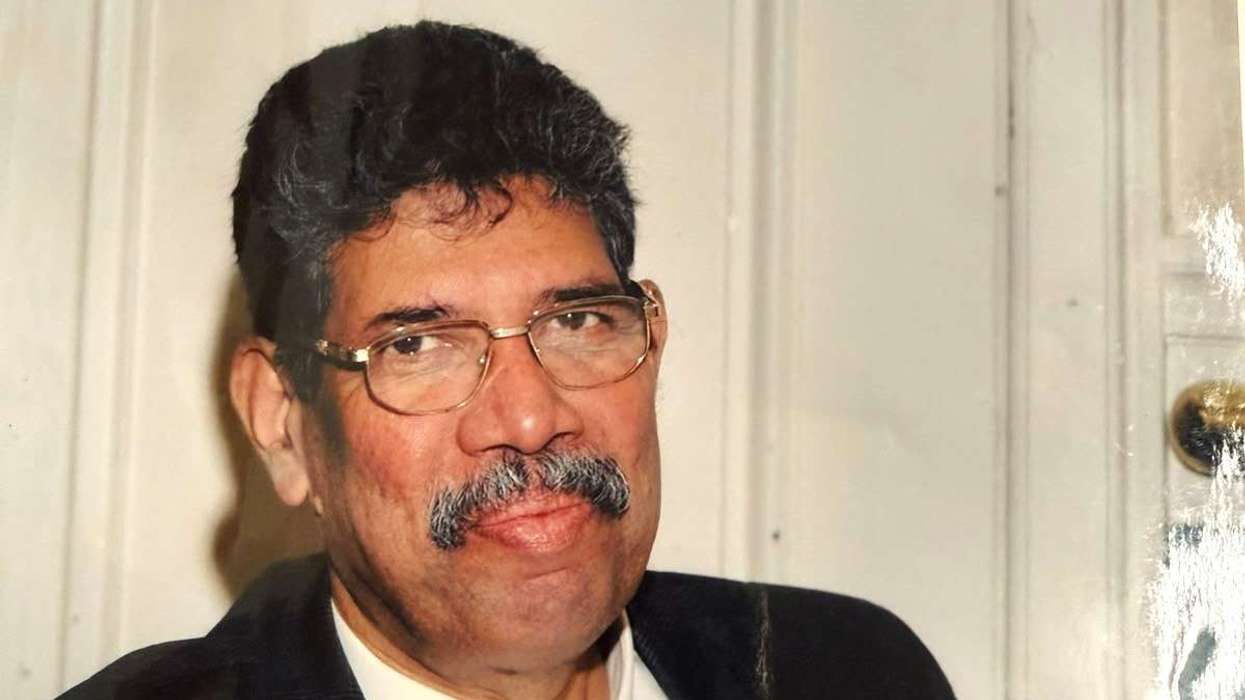

IT IS often said that journalists get to write the first draft of history. And this couldn’t be truer than of HS Rao, who died in London, aged 85, last Tuesday (27). He was the UK correspondent for the Press Trust of India (PTI) for many years.
In a 50-year career, he filed many stories, but there is one I think will stand the test of time – the assassination of Indira Gandhi, India’s prime minister, at 9.30am on October 31, 1984, at her official residence on Safdarjung Road, New Delhi, by two of her bodyguards, Satwant Singh and Beant Singh.
Rao, a tall, soft-spoken man, put his career on the line with a critical phrase he used in his report – “the worst is feared” – which later became a private catchphrase between us.
We met at events hosted by the Indian Journalists’ Association (IJA).
I had to gently tease the story out of him when I was editing the IJA annual yearbook for 2010. I invited members to submit articles recalling a memorable story they had covered.
Often, the story behind the story is fascinating. I encouraged Rao to write about how he was the first to break the news of Gandhi’s assassination.
When I received his raw copy, I read it carefully and submitted a number of questions.
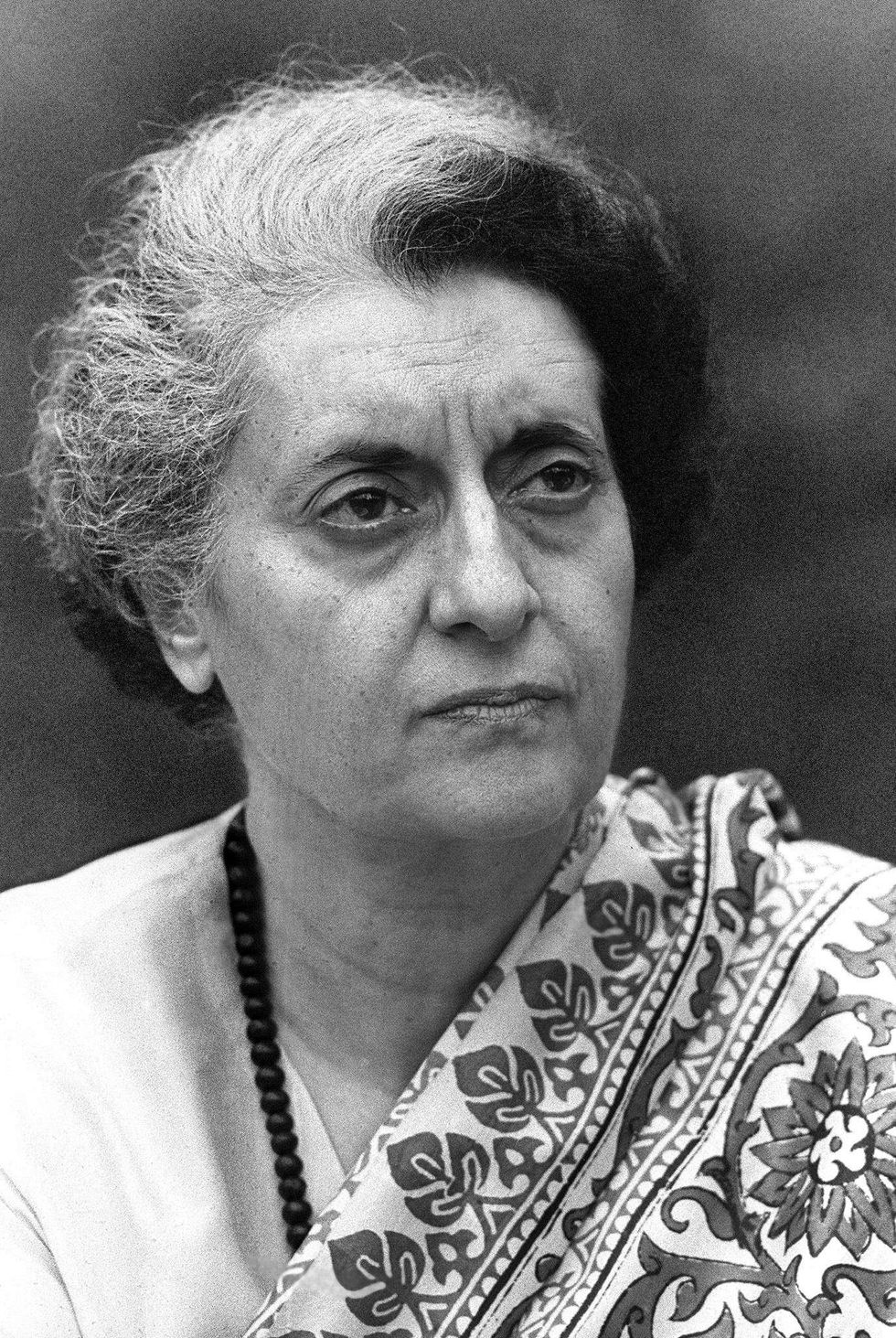 Indira GandhiTF/AFP/Getty Images
His story began: “For a professional journalist, there is nothing more satisfying than getting a scoop. But in the case of covering the assassination of the then prime minister Indira Gandhi, it was a world scoop, though personally the worst thing that could have happened for me. It was by a strange coincidence I happened to get the first tip on the incident. It was October 31, 1984, over a quarter of a century ago. But it is still fresh in my memory.”
He went on: “The then general manager of Press Trust of India, the late NR Chandran, had asked me the previous evening to come to office early so that we could go for a scheduled meeting with the then labour minister Veerendra Patil, whom I had known personally from my Bangalore days.”
His story continued: “I took an early bus to reach our office at No 4 Parliament Street around 9am.”
I emailed Rao with a question: “Please put in a bit on your Bangalore days here including the fact that you had brought your scooter with you – how old was the scooter and what was the make? Do you have a pic of it?”
This might appear trivial, but often it is the little detail that transforms a story.
The report continued: “Around 9.10am, a gentleman from the Reserve Bank of India, located next to our office, came running to me, saying that someone had made an attempt on the life of Mrs Gandhi.”
I read the next bit: “Though I did not believe him, I asked him what was the basis for the presumption. He told me he was an employee at the Reserve Bank of India and he was getting his shoes polished in front of the RBI building when a police officer came there to get his shoes polished with another shoe-shine boy. As he removed one for polishing, he got a message on his walkie-talkie asking him to rush to the PM’s house at No 1, Safdarjung Road. When he asked for details, he was told there was an attempt on the life of Mrs Gandhi and he should immediately rush back. The officer immediately got into his police van and left the place.
“As an agency journalist, speed and accuracy was the essence. I immediately contacted the prime minister’s residence and asked for Mr Sharada Prasad, the information adviser to the prime minister. The operator, who recognised my voice, immediately put me through to Mr Prasad. Since I had been covering the prime minister’s office for over four years and had travelled with the prime minister extensively, I could get easy access.”
Rao’s report said: “I asked Mr Sharada Prasad about Mrs Gandhi’s health. He said: ‘She’s been shot.’ Asked how serious she is, he said, ‘She has been injured.’ Asked where she is now, Mr Prasad said, ‘She has been rushed to AIIMS (All India Institute of Medical Sciences).’ At the same time, he asked me not to say where she has been taken.”
It is here that Rao’s report took its first twist in a day of high drama: “I immediately rushed to the good old typewriter to send out the first SNAP. When I wrote the words ‘SNAP SNAP’, I knew it was either Mrs Gandhi or me – only one would survive.”
Another email from me: “Please explain this was too important a story to get wrong. What was the typewriter, please say that was the time of manual typewriters, can you remember the make. Also, what does Snap mean and Snap, Snap?”
I carried on reading his report: “My first SNAP, saying ‘Prime Minister Mrs Indira Gandhi has been shot at’, went out at 9.17am, barely minutes after she was shot.
“After the first SNAP, I sent the second SNAP saying, ‘Mrs Gandhi has been injured and rushed to hospital.’”
The report went on: “After sending out the initial items, I ventured to go to the prime minister’s house, but the entire area was barricaded by the police. Then I went to see Mr UC Tiwari, the principal information officer to the Government of India.
“As I asked Mr Tiwari about the condition of Mrs Gandhi, he replied: ‘Mr Rao what do you expect? She has received as many as 17 bullets and all her vital parts have been punctured.’
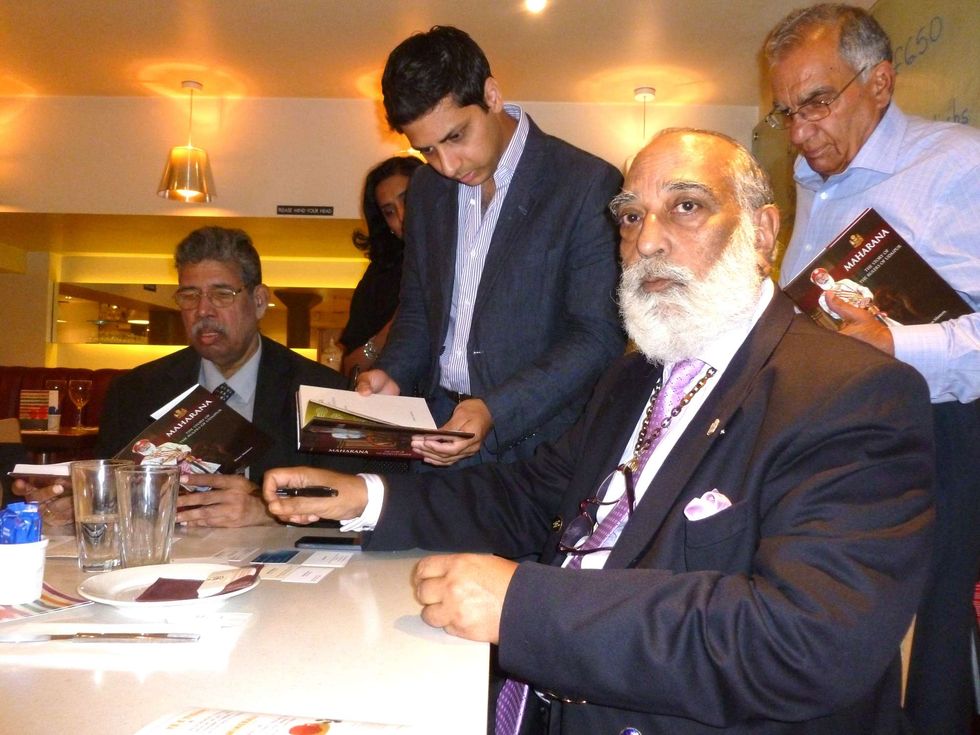 Rao with HH Arvind Singh Mewar of Udaipur at an IJA event in 2014Eastern Eye
“I immediately rushed to the office to put out a lead saying, ‘Prime Minister Mrs Indira Gandhi has been shot at and the worst is feared.’ It was around 10am. As the news was flashed all over, there were several threatening calls. Mr Chandran told me that he received one call saying if the news is incorrect, they would set PTI building on fire.
“Meanwhile, (PTI colleague) Mr Chaman Bhardwaj also managed to reach AIIMS telling the guards that he was carrying blood for Mrs Gandhi. As minutes ticked by, we had more information from Mr Balakrishna (another colleague) from the hospital saying ‘Mrs Gandhi is no more’. It was around 11am. Asked about his source, he said one of the doctors attending on Mrs Gandhi told him that besides her pulse, heartbeats, her eyelids had stopped functioning.
“While PTI was putting out a steady stream of stories connected with her assassination, the rival agency, UNI (United News of India), came out with its first Flash at 11.37: ‘A VVIP has been shot at.’ And All India Radio, for fear of what the repercussions would be, did not dare to break the news until 2pm.
“It was and will probably remain the biggest scoop of my life. But for someone who had known Indira Gandhi at close quarters, covering her assassination was deeply upsetting.”
Regarding my queries, Rao emailed me: “My main mode of transport in Delhi was my Lambretta scooter which I used for 25 years since 1971 from my Bangalore days.”
He also explained: “When we issue an important item with headline ‘snap snap’, the item breaks into an ongoing transmission of an item.
“It snaps the link and gets itself as the top most item. In transmission, there are different priorities such as snap, flash, priority, rush etc.”
Looking at his report now in the light of Rao’s passing, something I hadn’t noticed 16 years ago strikes me. It is that India’s most senior officials were willing to take him into their confidence on a matter of the highest national security.
It was a tribute to HS Rao, both as a reporter and a human being. He will be missed by his friends in the IJA.


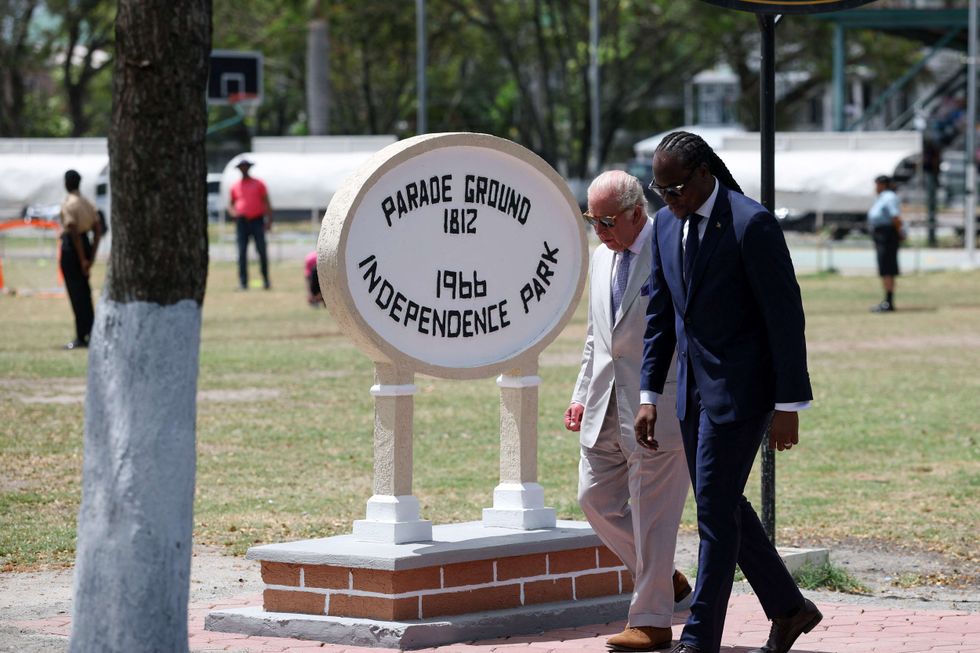 King Charles III, accompanied by Steven Jacobs, a Minister within Guyana's Ministry of Culture, Youth and Sport, visits Independence Park, which marks the site of public executions following the 1823 Demerara Slave Rebellion, during his tour of Caribbean nations on October 30, 2026 in Georgetown, Guyana. Getty Images