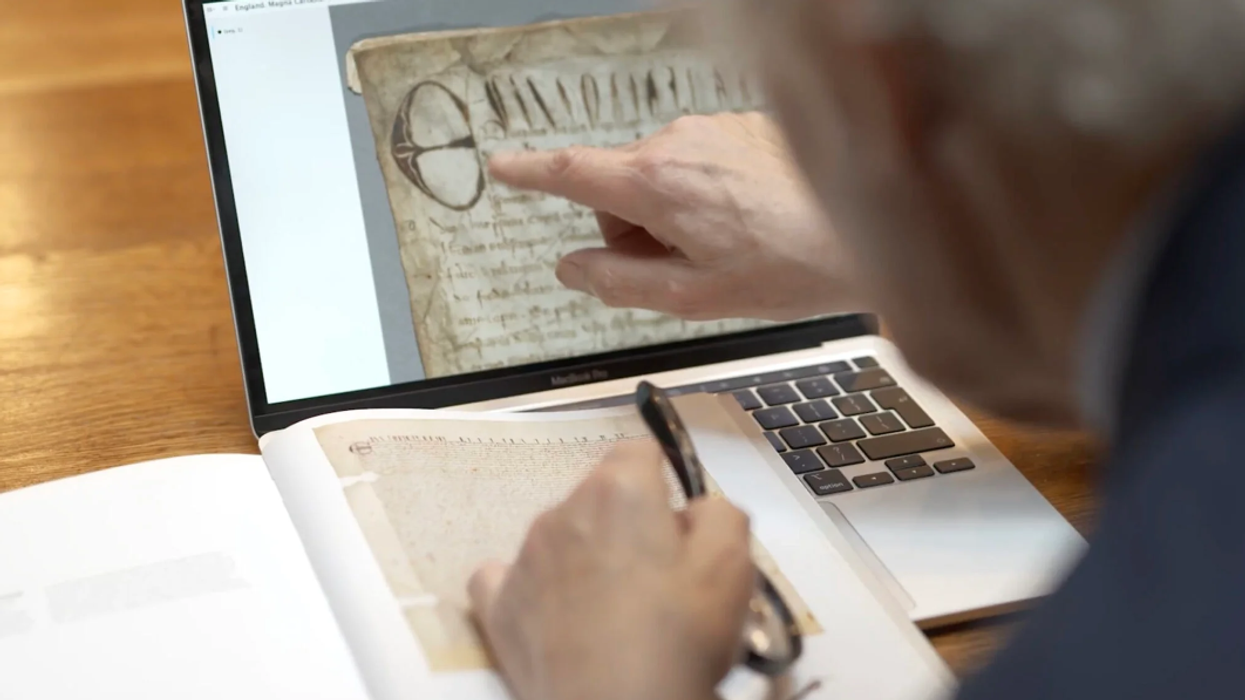

A document long believed to be a mere copy of Magna Carta has been identified as a rare original dating back to 1300, making it one of the most valuable historical manuscripts in existence, according to British academics.
The discovery was made after researchers in the UK examined digitised images of the document, which has been held in Harvard Law School’s library since 1946. At the time, the manuscript was purchased for just $27.50 – approximately £7 at the then exchange rate – and described as a damp-stained 14th-century copy. Today, that sum would be roughly $450 (£339) adjusted for inflation.
However, medieval history professors David Carpenter of King's College London and Nicholas Vincent of the University of East Anglia now believe the manuscript is an original Magna Carta from the year 1300, issued during the reign of King Edward I.
“This is a fantastic discovery,” said Professor Carpenter, who first began analysing the document after encountering its digitised version on Harvard’s website. “It is the last Magna Carta... It deserves celebration, not as some mere copy, stained and faded, but as an original of one of the most significant documents in world constitutional history – a cornerstone of freedoms past, present and yet to be won.”
Professor Carpenter said he was “absolutely astonished” by the finding and by the fact that the manuscript’s true nature had gone unrecognised for decades. “That it was sold for peanuts and forgotten is incredible,” he added.
Magna Carta, first issued by King John in 1215, is widely regarded as a foundational document in the history of constitutional law. It established the principle that everyone, including the monarch, was subject to the law, and it granted basic liberties and protections to the king’s subjects. The charter has had a lasting influence, shaping constitutional frameworks in countries around the world.
 The academics hope that the newly authenticated Magna Carta will be made available for public viewingHarvard
Following the 1215 version, the charter was reissued multiple times by successive monarchs, culminating in the 1300 edition issued under King Edward I. During this period, it is believed that around 200 original copies were produced and distributed across England. Only 25 of these originals are known to survive today, from the various editions between 1215 and 1300. Most are in the UK, with two in the US National Archives in Washington DC and one in Parliament House, Canberra.
“It is an icon both of the Western political tradition and of constitutional law,” said Professor Vincent. “If you asked anybody what the most famous single document in the history of the world is, they would probably name Magna Carta.”
The professors now believe the document discovered at Harvard originated in the town of Appleby, Cumbria. They traced its likely path through a prominent landowning family, the Lowthers, who are thought to have passed the manuscript to Thomas Clarkson, a leading anti-slavery campaigner in the 1780s. From there, the document entered the Maynard family estate.
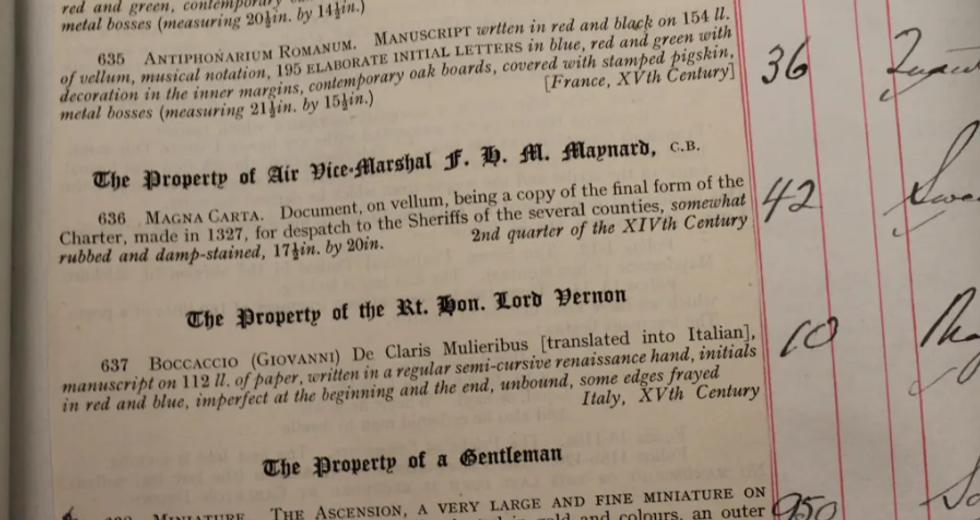
In late 1945, Air Vice-Marshal Forster Maynard sold it at auction through Sotheby’s, where it was purchased by a London bookseller for £42. Harvard Law School acquired it months later for a fraction of that price, and it was catalogued as HLS MS 172 – a “copy made in 1327”.
 The manuscript will become one of the most significant items in Harvard’s collectionHarvard
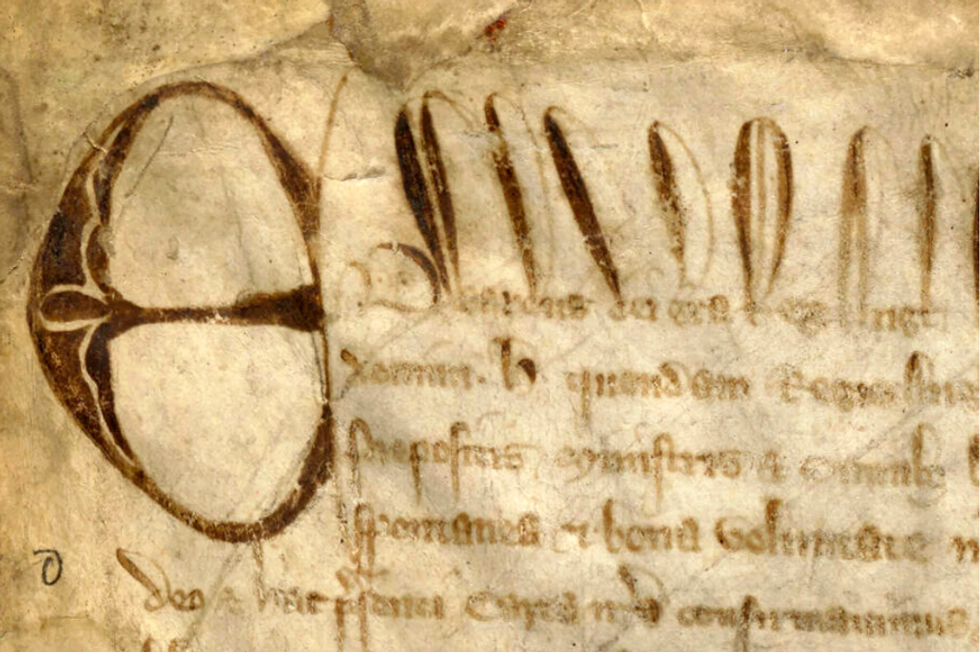
To determine the manuscript’s authenticity, Professors Carpenter and Vincent spent over a year analysing the text and comparing it to the six other known originals from the 1300 issue. Due to its faded condition, they did not work directly from the original but instead examined images taken using ultraviolet and spectral imaging techniques.
They found that the handwriting, dimensions and phrasing of the manuscript all matched the characteristics of the confirmed 1300 versions. The exact wording was critical to establishing its authenticity, as the text of Magna Carta was slightly altered with each reissue. The Harvard manuscript passed these tests “with flying colours”.
The value of the document could be extremely high. In 2007, a 1297 version of Magna Carta sold at auction in New York for $21 million – around £10.5 million at the time. While Professor Vincent declined to estimate the exact value of the Harvard version, he acknowledged it could be worth a similar figure.
Amanda Watson, assistant dean for library services at Harvard Law School, praised the discovery and the work of the academics involved. “This exemplifies what happens when collections are opened to brilliant scholars,” she said. “Behind every scholarly revelation stands the essential work of librarians, who not only collect and preserve materials, but create pathways that otherwise would remain hidden.”
The academics hope that the newly authenticated Magna Carta will be made available for public viewing, allowing more people to appreciate its historical significance.
“This document speaks to the very roots of legal liberty,” said Professor Carpenter. “It is more than just a piece of parchment – it’s a living symbol of the rights we enjoy and continue to fight for today.”
If confirmed by additional verification and widely recognised as an original, the manuscript will become one of the most significant items in Harvard’s collection and a key artefact in the history of global democracy.