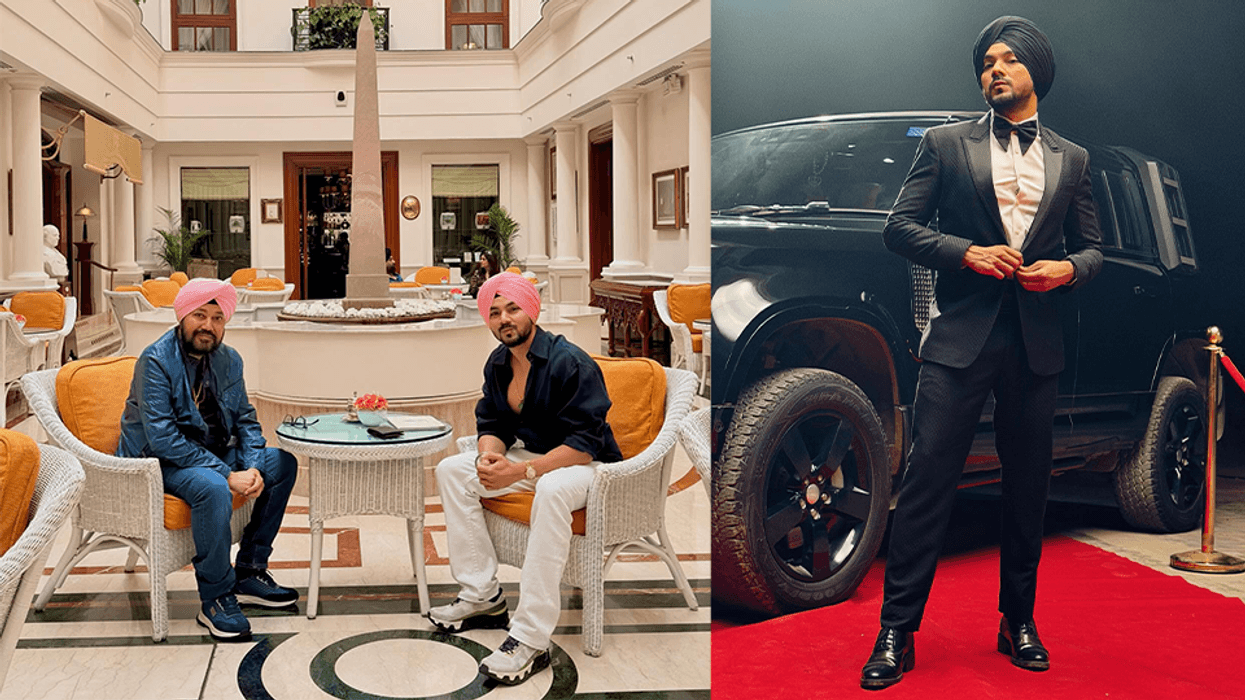

In an exclusive interview with Eastern Eye during his London visit for a concert, Gurdeep Mehndi, popular for his genre-hopping run-through of Punjabi, Gujarati, Marathi and Telugu music and for his recent duet with father Daler Mehndi on Na Na Na Re, opened up about legacy, language and his ambition to become a truly pan-India artist.
There was one condition Gurdeep refused to compromise on when the chance finally came to record with his father. He didn't want it to look like he needed the help.
For years, the son of Punjabi pop icon Daler Mehndi had wanted to collaborate with his father. But when the moment arrived, a duet on Na Na Na Re, from Vicky Vidya Ka Woh Wala Video, featuring popular Bollywood actors Rajkumar Rao and Tripti Dimrii, Gurdeep was adamant it should not read as a young artist riding on his father's name. It had to come from the producers, not the family.
- YouTube youtu.be
"I didn't want it to feel like I was forcing it or trying to use my father's legacy to create a hit," he tells Eastern Eye. "I wanted this collaboration to happen organically."
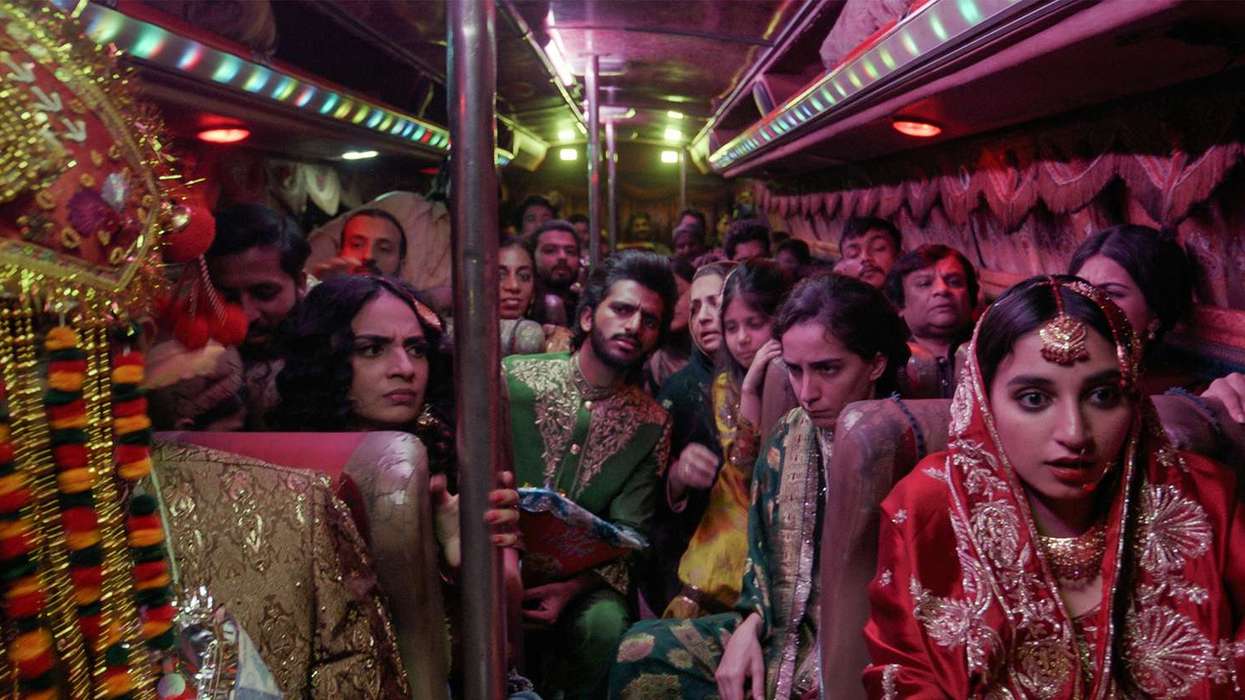
It did. The producers of Vicky Vidya Ka Woh Wala Video were searching for a fresh voice for Rajkummar Rao's character and landed on Gurdeep entirely on his own merit. Only afterwards did the song's other layer of meaning reveal itself: a father-son reunion, built on a track that is itself a modern extension of Daler Mehndi's own pop legacy.
"This song holds a very special place in my heart for three reasons," Gurdeep says. "First, I got the opportunity to collaborate with him. Second, it's one of the biggest songs in the indie-pop space. And third, in a beautiful way, it became a father-son collaboration, a continuation of that legacy."
It is a neat summary of the balancing act Gurdeep has been performing throughout his career: honouring where he comes from while insisting, quietly but firmly, on making his own way. Over a decade in which he has recorded in Punjabi, Gujarati, Marathi and Telugu and built a name in India's independent music scene, that has meant resisting the shortcut his surname could so easily offer him.
Growing up in the shadow of a legacy
Being Daler Mehndi's son was never going to mean an ordinary childhood, but Gurdeep insists the influence has shaped his character more than his career choices.
"It's actually more of an observation, more than that, it's the experience of seeing someone grow, achieve so much, do such amazing work, and accomplish something big," he says of watching his father's rise, both at home and off stage. "That experience has taught me to become a better human being, not just a better musician."
If there was ever pressure to follow a specific path, Gurdeep says it never came from his father directly. The advice, instead, was about independence.
"It has been about a father telling his son, or his children, to be the best in whatever field they choose and to stay focused on their own journey and their own work," he explains.
That philosophy has visibly shaped the choices Gurdeep has made since, not an attempt to recreate his father's Bhangra-pop dominance, but a determined search for his own sound across languages and genres.
Finding an audience beyond Punjab
Gurdeep has spent recent time performing in London, an experience that has sharpened his sense of how far Punjabi music's appeal now stretches.
"One thing I really appreciate about all these different countries where Punjabi music is doing really well is that non-Punjabis are also supporting it," he says. "Maybe they're enjoying the beat, maybe they're connecting with the language, or maybe they're simply in love with the vibe of it."
He is careful not to draw too sharp a line between British Asian audiences and everyone else. "I don't really want to differentiate between the two audiences," he says. "But yes, I definitely see a strong potential for a song to become a hit and go viral in England. I feel that Indians, non-Indians, and even people who were born and brought up in Britain have an amazing sense and appreciation for Indian music."
Making music without a target audience
It would be easy to assume an artist so attuned to international crowds writes with the diaspora specifically in mind. Gurdeep says the opposite is true.
"I don't consciously make music with a particular audience in mind, including the diaspora," he says. "I believe that if the music is genuinely good, it will connect with people, irrespective of where they come from or what language they speak. As they say, music has no language and no boundaries."
He points to Psy's Gangnam Style as the clearest proof of that theory: a Korean-language track that became a global phenomenon without ever being engineered for one.
"When it came out, it was in Korean, and most of the world didn't even understand the language," he says. "I don't think Psy made it thinking that he needed to connect with a particular international audience. He simply made a song that was exciting, unique and enjoyable, and people across the world connected with it."
"For me, it's the same," he adds. "If a song is good, it can become a connection to culture, language or even a sense of home — without the artist consciously trying to create that connection. That is the most beautiful thing about music: it finds people on its own."
Crossing languages without overthinking it
That same instinct explains why Gurdeep has never treated his moves into Gujarati, Marathi or Telugu music as a leap requiring justification.
"If someone has the potential to do something, then they should do it," he says. "I knew I had that potential, and I knew I could deliver it, so I simply delivered."
He is conscious, too, of the assumptions people sometimes bring to a turbaned Punjabi artist working outside his own language. "There's a certain stereotype people have when they see a Sardar boy doing something like this, and they feel that it has to be something extraordinary or different," he says. "But honestly, there's nothing more fancy than that. I simply knew what I was capable of, and I did it."
The ambition doesn't stop at India's borders, either. "I would love to collaborate with other international languages in Indian style," he says.
A softer sound with 'Chann Mahi'
Gurdeep's next release, Chann Mahi, again under the Saregama label, marks a deliberate change of pace.
"The lyrics and the overall genre are very soothing, soft, slow and romantic, but at the same time, the beat is up-tempo," he explains. "It has this interesting contrast between the softness of the lyrics and the energy of the music."
It's a departure from previous work such as Sajri, he says, and one he sees as evidence of range rather than reinvention. "This is a very different genre, and it has a completely different potential," he says. "For me, Chann Mahi is an opportunity to explore a different sound and show a different side of my music."
'I see myself as a pan-India artist'
What ties all of this together — the languages, the genres, the refusal to trade on his father's name, is a wider ambition. Gurdeep is happy to state plainly: he doesn't want to belong to one place.
"I don't want to be partial towards any particular city, genre, or even Punjabi music," he says. "I see myself as a pan-India artist. I can deliver in any language, and at the same time, I just want to make and create music that everyone can connect with, irrespective of their background."
Gujarati, Marathi, Punjabi, Odia, and Marwari, he lists the communities almost as if reciting a promise. "I want them to be able to listen to and connect with my music," he says.
For an artist raised inside one of India's most recognisable musical dynasties, the ambition he settles on is disarmingly simple: music that never asks where you're from before it lets you in.
"For me, it's about creating music that brings everyone together," he says, "and, more importantly, breaking those barriers — whether they are of language, region, culture, or genre."