
Highlights
- Flight BA2230 from Bangkok landed safely at Gatwick on Monday (19) morning after requesting priority handling.
- Dense fog reduced visibility, while air traffic control holding delays added to concerns over fuel reserves.
- A separate flight from Cyprus was diverted to Gatwick after a technical issue delayed its departure and it missed Heathrow’s curfew.
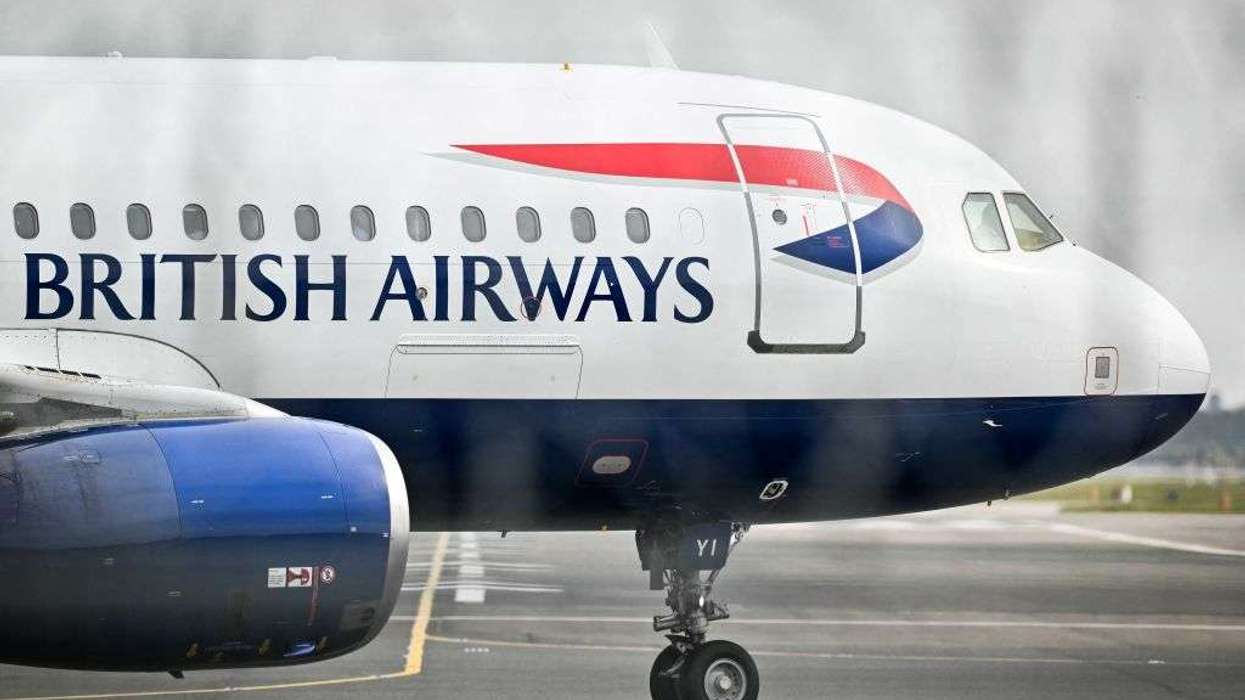
A BRITISH AIRWAYS Boeing 777 requested priority handling to land at London Gatwick after holding delays and dense fog raised concerns about its remaining fuel, according to reports.
Flight BA2230, operated by a Boeing 777-200ER registered as G-YMMA, departed Bangkok’s Suvarnabhumi Airport late on Sunday (18), following delays.
After entering UK airspace early on Monday (19), the aircraft was instructed by air traffic control to enter a holding pattern near Gatwick.
Heavy morning traffic and poor visibility contributed to the delays. Runway visual range reportedly fluctuated between 400 and 900 metres as fog affected the airport.
With its fuel reserves limited after the long flight and delayed departure, the crew told controllers that the aircraft could not remain in the holding pattern for an extended period.
The pilots requested priority routing for landing and warned that a missed approach or further delays could mean diverting to an alternative airport.
Air traffic controllers responded by directing the aircraft out of the holding pattern and towards its final approach.
The aircraft landed on Gatwick’s Runway 08R at about 7am and taxied to the gate. Passengers disembarked normally, with no further incident reported.
Cyprus flight misses Heathrow curfew
In a separate incident, British Airways flight BA707 from Larnaca, Cyprus, was diverted to Gatwick after a delay meant it could not reach Heathrow within the airport’s permitted operating hours.
The Airbus A320 was delayed by more than three hours on October 19 because of a technical issue, which was resolved before passengers boarded.
The flight departed at about 9.45pm local time and was scheduled to reach Heathrow after a journey of around four and a half hours. It instead landed at Gatwick shortly after midnight.
Heathrow said it had decided to allow the flight to land at Gatwick.
A British Airways spokesperson told The Independent: “We’re sorry for the disruption to our customers’ journeys.”
“Due to a delay, the flight was unable to meet Heathrow’s airport curfew and diverted to Gatwick instead. Our teams worked hard to arrange onward transport and get customers on their way as quickly as possible.”
Heathrow’s night-flight restrictions
Heathrow operates under government restrictions designed to limit aircraft noise for people living near the airport.
Although there is no complete ban on night flights, the airport is subject to an annual limit of 5,800 night-time take-offs and landings between 11.30pm and 6am, alongside restrictions on noise levels.
Heathrow’s scheduled operating hours are more limited. It does not schedule departures between 10.40pm and 6am or arrivals between 10.55pm and 5.05am.
The airport also has a voluntary restriction intended to prevent flights scheduled to arrive between 4.30am and 6am from landing before 4.30am.
Delayed flights can be considered for permission to operate outside normal hours. Requests are assessed individually, taking account of the reason for the delay, the effect on passengers and local communities, and potential disruption to the wider airline network.
The Department for Transport provides a framework for decisions on such requests, aimed at limiting disruption to passengers and preventing operational problems from affecting services the following day.
Special dispensation may also be available for additional night flights during serious weather conditions, emergencies or periods of air traffic congestion.