
Highlights:
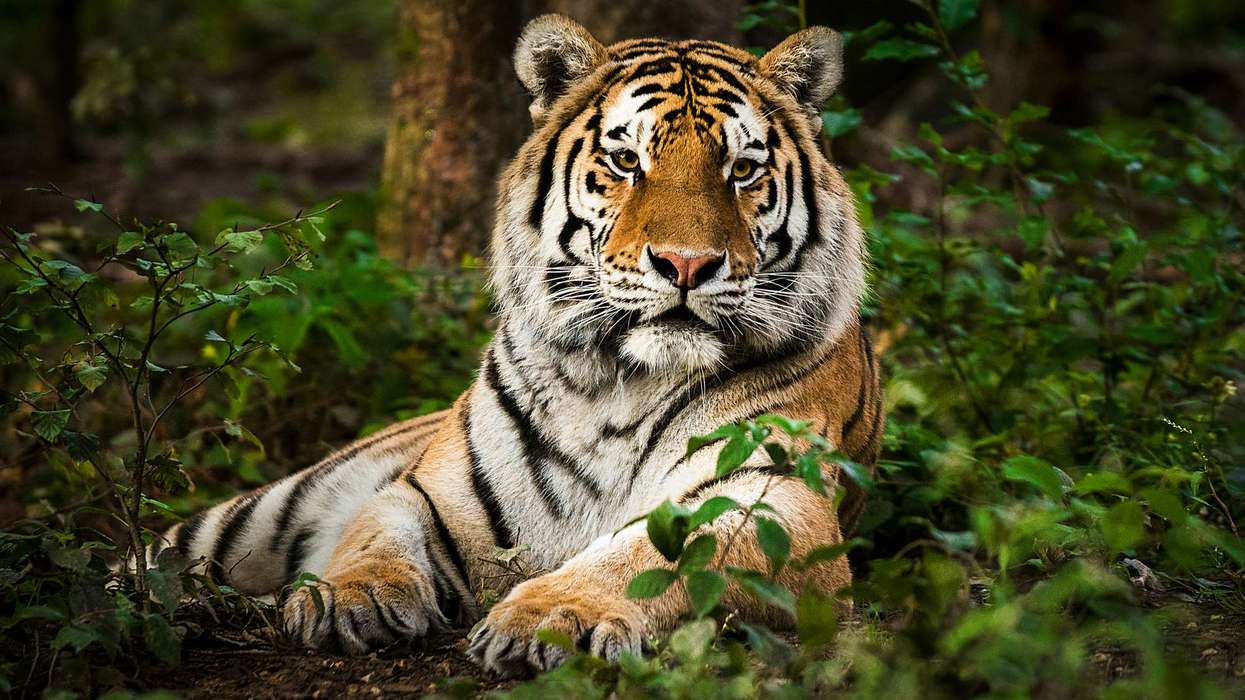
The fatal tiger attack at Yorkshire Wildlife Park in Doncaster has highlighted the dangers of close encounters with one of the world’s most powerful predators. The incident has also raised questions about human behaviour around wild animals and the risks of entering their space. While such incidents involving visitors are relatively rare, the threat of human–tiger conflict is a far more frequent concern in India, where dozens of people are killed by tiger attacks every year.
Official figures recorded 74 deaths in 2024 and 71 in 2025, with many victims being farmers, cattle grazers and villagers working near forests. From shrinking habitats and growing tiger populations to crowds gathering to film animals, several factors are contributing to these dangerous encounters across India.
.A tiger charging towards people or wandering into a village can quickly become a dangerous situation, as recent incidents in India have demonstrated. In late 2025 or early 2026, a three-year-old tiger injured a villager before entering a house in Choti Beldi village near the Panpatha buffer area of Bandhavgarh Tiger Reserve in Madhya Pradesh.
According to the Free Press Journal, a crowd gathered to film the animal despite repeated instructions from forest officials to move away. The tiger injured villager Gopal Kol before entering a house, where it was filmed lying on a bed. Forest officials eventually sedated it and moved it to an enclosure.
Another incident near Bandhavgarh had a more serious outcome. On 24 May 2026, a tiger entered Panpatha village in Umaria district, killing a woman, Phool Bai Pal, and injuring at least four others, according to The Daily Pioneer. Villagers reportedly criticised the forest department’s response.
Here are six factors contributing to human–tiger conflict in India.
1. Growing tiger populations and limited space
As tiger populations grow in some landscapes, competition for territory and resources can push animals towards human settlements. Conservationist Imran Siddiqui, a senior field conservationist with the Centre for Wildlife Studies-India, told Down To Earth that overcrowding, habitat loss and human activity can contribute to behavioural changes in tigers.
In Maharashtra’s Chandrapur district, Siddiqui estimated that the local tiger population had grown from around 30–40 in 2006 to approximately 250. Bandhavgarh is also known for its substantial tiger population, although claims about its density should be checked against official census figures.
When suitable habitat becomes crowded, some tigers may move beyond protected areas in search of territory, prey or mates.
2. Degraded habitat outside protected reserves
The problem is not simply how much forest remains, but its quality. Tigers moving beyond reserves may settle in scrubland and degraded forest where vegetation provides cover but prey is scarce.
Invasive lantana shrubs have spread across parts of India’s forest landscapes. Although dense vegetation can offer shelter, degraded habitats may not support enough prey to sustain predators effectively. Tigers moving through these areas can come into closer contact with villages, farms and people collecting forest produce.
Protecting wildlife corridors and improving habitat outside reserves are therefore important to reducing conflict.
3. People and tigers share the same landscape
Human activity frequently brings people into tiger territory. Farmers work in fields beside forests, cattle grazers take livestock into wooded areas, and villagers collect firewood and other forest produce.
The State of Environment 2026 report, as cited by The Quint, estimates that around 40% of tiger territory across tiger-range states is shared with approximately 60 million people.
Repeated attacks around Bandhavgarh illustrate the risks. In January 2024, a tigress with two cubs killed Bhuri Bai Kol and injured another woman who had entered the forest to collect wood. In March that year, Ram Bai was killed while collecting mahua flowers near the reserve. In March 2025, a tigress killed Daddi Kol while he was taking goats out to graze.
These incidents show how everyday work and the collection of forest produce can expose rural residents to danger.
4. Defensive reactions and unexpected encounters
Tigers do not necessarily attack because they are hunting humans. An unexpected encounter at close range can trigger a defensive response, particularly if an animal feels threatened, cornered or unable to escape.
Wildlife expert Anish Andheria told Down To Earth that some incidents may involve inquisitive young tigers still learning to hunt, while others may involve tigresses protecting their cubs.
People entering dense vegetation, approaching a resting animal or unknowingly moving close to cubs can increase the risk of a sudden confrontation. The circumstances vary, so not every attack can be explained by the same behaviour.
5. Crowds, selfies and people approaching tigers
The danger is not limited to villagers or forest workers. In the Bandhavgarh incident, witnesses reportedly continued filming the tiger despite forest officials’ instructions to move away. The crowd may have added to an already volatile situation, although the precise trigger for the attack has not been established.
A similar incident occurred in June 2025 at Ranthambore National Park in Rajasthan. According to OmmCom News, two people were injured after a crowd gathered around a tiger drinking at a pond. An agriculture supervisor was injured when the tiger lunged at him, while a home guard who tried to help was struck in the face. Witnesses said people had been watching and taking selfies with the animal.
Crowds can restrict an animal’s escape routes and increase the risk of a defensive reaction. Visitors should never leave designated areas or approach a wild tiger to take photographs.
6. Disturbance and changing behaviour
Human activity, habitat pressure and repeated encounters may affect how tigers use their surroundings and respond to people. Siddiqui has warned that overcrowding, habitat loss and human activity can cause behavioural changes.
In some cases, an individual tiger may repeatedly attack people, prompting forest officials to track it. Following two fatal attacks near Gudalur in Tamil Nadu in August 2026, officials deployed thermal drones, cages and camera traps while attempting to locate the animal believed to be responsible.
However, experts cannot attribute every attack to changing behaviour alone. Understanding individual incidents requires evidence about the animal, its habitat and the circumstances of the encounter.
The wider challenge is to protect both people and tigers. Better habitat management, safer farming practices, early warnings and responsible wildlife tourism can reduce dangerous encounters while allowing India’s tiger population to survive.





 Frances Segelman makes bust of Richard E GrantSophie Dunne
 Frances Segelman with maquette of Mulayam Singh Yadav Sophie Dunne
 Frances Segelman was dressed by KruszynskaSophie Dunne
 Frances Segelman live sculpting Richard E Grant in Actors' Church in Covent Garden.Sophie Dunne



