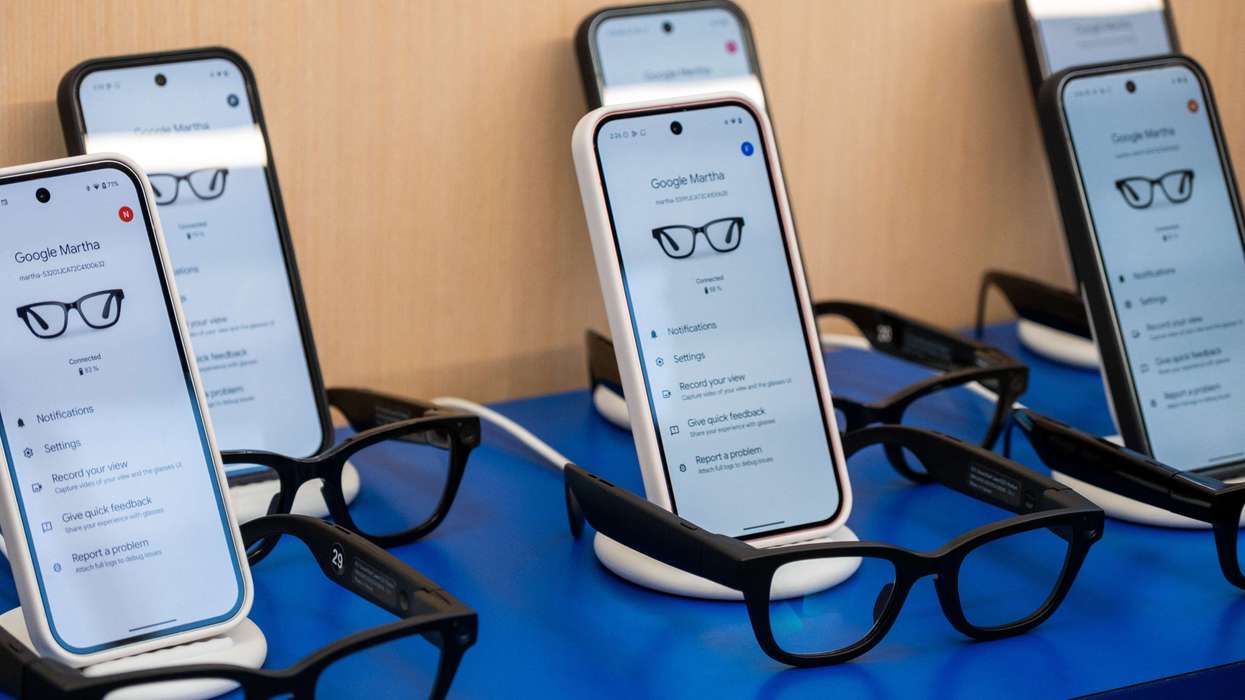

- Google and Samsung revealed their first Android XR smart glasses at Google I/O 2026.
- The AI-powered glasses are being developed with eyewear brands Warby Parker and Gentle Monster.
- The wearable device will rely heavily on Gemini AI and smartphone connectivity for navigation, voice assistance and daily tasks.
Google and Samsung have offered the clearest look yet at their upcoming Android XR smart glasses, revealing a new AI-powered wearable that could intensify competition in the growing smart eyewear market currently dominated by Meta.
The companies showcased the glasses during Google I/O 2026, confirming that the first models will launch in fall 2026 through partnerships with eyewear brands Warby Parker and Gentle Monster.
Unlike futuristic augmented reality headsets with screens built directly into the lenses, Google described the new product as “audio glasses”, signalling a more lightweight and practical approach focused on voice interaction rather than full visual overlays.
Gemini moves from phones to eyewear
The smart glasses will run on Google’s Android XR platform and integrate closely with Gemini, the company’s AI assistant.
Users will reportedly be able to carry out tasks such as navigation, cooking guidance and hands-free voice assistance while remaining connected to their smartphones.
Samsung said the glasses are designed to function as a companion device for mobile phones, allowing users to access AI support through voice commands in what it described as a familiar form factor.
The device appears to follow a similar approach to Meta’s existing smart glasses, where AI features and voice commands take centre stage rather than immersive display technology.
Shahram Izadi reportedly said intelligent eyewear represented a major step in Google and Samsung’s shared effort to make AI more accessible in everyday life.
He reportedly added that the partnership combines Google’s AI technology with Samsung’s hardware expertise and fashion-focused eyewear brands to create a more natural hands-free experience.
Fashion, AI and hardware come together
The collaboration also reflects how technology companies are increasingly trying to make wearable devices appear less experimental and more like ordinary fashion accessories.
Samsung is handling the hardware side of the project, while Google is supplying the Android XR software platform and Gemini AI integration.
Jay Kim reportedly said the glasses mark another step in Samsung’s broader AI strategy and expansion of the Galaxy ecosystem into new device categories.
While the companies confirmed a fall 2026 release window, pricing details and a precise launch date were not disclosed during the presentation.
The announcement comes as major technology firms continue searching for the next big consumer device beyond smartphones, with AI-powered wearables increasingly becoming a key battleground across the industry.