
Ladakh and Sikkim get compared a lot, which is a bit odd once you've actually been to both, because they don't really have much in common beyond sitting in the same mountain range. Ladakh runs at around 3,500 metres for most of a trip, dry and rocky, closer to the Tibetan plateau than anything you'd normally picture in India.
Sikkim is the opposite in almost every way, wet and green for most of the year, monasteries that sit inside clouds half the time, and you're rarely more than an hour from a plate of momos or a bowl of thukpa. Both places keep coming up when people search for Ladakh Tour Packages or Sikkim Tour Packages, and at Thomas Cook, the numbers for both have been climbing for the last two or three seasons.
Ladakh
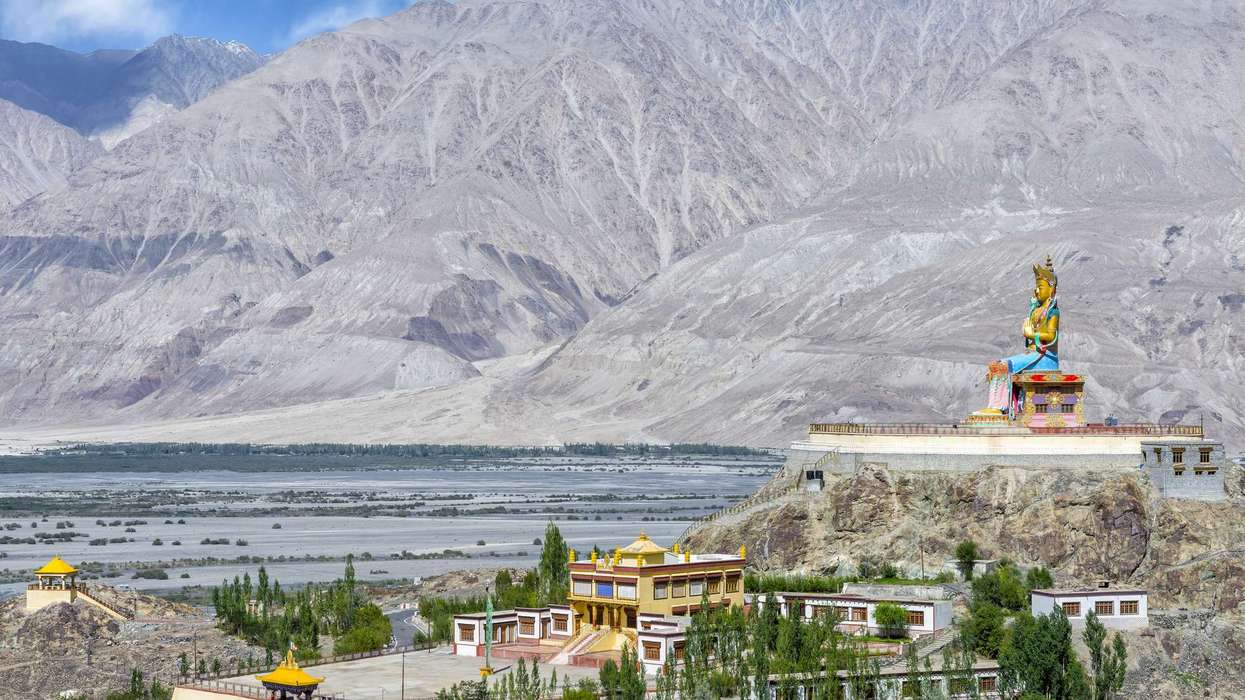
Leh sits at roughly 3,500 metres, and most people feel it within the first hour: a mild headache, some breathlessness even walking up a small flight of stairs; nothing serious usually, but enough that resting for a day or two properly matters more than people expect it to. Once the body settles, Leh itself is worth taking slowly. The old palace looks down over the market, a little faded now but still impressive from a distance. Tsemo Monastery sits further up the hill with a large seated Buddha inside, visible through the window if the light is right when you walk past.
A typical Ladakh trip, and this is roughly what most of our Ladakh Tour Packages end up covering, looks something like this, though the exact order shifts depending on which passes happen to be open that week:
Leh Market, Shanti Stupa, the narrow lanes around Leh Palace:
- Khardung La, on the way to Nubra, is one of the highest passes you'll sit in a car for
- Nubra's sand dunes, double-humped camels still walking old trade routes
- Pangong Lake at sunset, the water genuinely shifts colour two or three times in an hour
- Likir and Alchi monasteries, tucked well off the main road in Sham Valley
- Tsomoriri and Tsokar lakes, with the cold, thin air of Taglang La in between
| Region | Altitude | Known for |
| Leh | 3,500 m | Palaces, monasteries, and market life |
| Nubra Valley | 3,048 m | Sand dunes, camel safaris |
| Pangong Lake | 4,225 m | Colour-changing waters |
| Hanle | 4,500 m | Astronomical observatory, dark skies |
Most proper Ladakh Tour Packages run eight to ten days at a minimum, and that's not padding; shorter trips usually end up skipping the parts that make the region worth visiting in the first place:
Some travellers, especially families with older parents in tow, ask for the whole thing to be stretched further, and that works fine too; twelve-day versions of these Ladakh Tour Packages run without feeling rushed or dragged out.
Sikkim
Where Ladakh is stark, Sikkim leans soft. Gangtok manages to sit somewhere between old Buddhist ritual and a city that's clearly figured out how to move with the times, small cafes tucked next to old monastery walls, that kind of contrast. From Gangtok, the usual route heads toward Tsomgo Lake, over Nathu La, then bends toward Pelling's mist-heavy ridges before turning north into Lachen and Lachung. Up there, the rhododendron valleys and glacial lakes more or less take over the whole landscape, and it's a completely different register from Ladakh's bare rock.
A week's worth of Sikkim Tour Packages tends to move through some version of:
- Gangtok, Rumtek Monastery, and the steady buzz along MG Road
- Tsomgo Lake and Nathu La, right up against the Indo-China border
- Pelling, Pemayangtse Monastery, and the Rabdentse ruins nearby
- Yuksom, Sikkim's first capital, is quieter than people expect it to be
- Lachung and Yumthang Valley, which locals still call the valley of flowers
- Lachen and Gurudongmar Lake, one of the highest lakes anywhere in the world
| Destination | Best for | Ideal duration |
| Gangtok | Culture, monasteries, food | 2 days |
| Pelling | History, mountain views | 1 to 2 days |
| North Sikkim | High altitude lakes, valleys | 2 to 3 days |
| Namchi | Spiritual sites, statues | 1 day |
Sikkim Tour Packages tend to sit easier with first-timers who haven't dealt with altitude before. Roads climb slower, villages break up the drive more often, and there are basically always momos and thukpa somewhere close by when you need to stop. Quite a few of our Sikkim Tour Packages get stretched to fold in Darjeeling as well, turning what starts as a Sikkim loop into a fuller East Himalayan circuit.
Picking one first
People ask this a lot, whether Ladakh Tour Packages or Sikkim Tour Packages make more sense as a first big Himalayan trip. There's no clean answer. It comes down to what's pulling you. Scale and drama and that slightly dizzying feeling of being tiny against something enormous, that's Ladakh, and it's usually the far east circuit, Hanle and Tsomoriri, that people remember longest. Green valleys, closer villages, a gentler climb into altitude, that's Sikkim. Both work best roughly from June to September, though the higher passes on both sides tend to stay open a little later, sometimes into early October, before winter shuts the whole thing down again.
Getting the planning right
Both regions come loaded with permits to arrange, acclimatisation to build in, and drivers who actually know which pass opened that morning and which one didn't. That's usually the part people underestimate. At Thomas Cook, inner-line permits are sorted well in advance, and the drive to Pangong is especially timed to hit golden hour rather than the flat midday light most tourists end up stuck with. Whether it's Ladakh Tour Packages for a group of friends or Sikkim Tour Packages for a family with young kids, the itineraries get built around the terrain first, the traveller second, so once you land, the only real job left is watching the mountains go by. Ladakh gets under your skin in a way that's hard to shake off, but Sikkim has this warmth to it that keeps pulling you back sooner than you'd expect.
FAQ
- Which is better for a first Himalayan trip, Ladakh or Sikkim?
Depends on what you can handle altitude-wise. Sikkim eases you in more slowly; Ladakh throws you straight to 3,500 metres.
- Do I need permits for both?
Yes, inner line permits for parts of both regions, sorted in advance if you're booking through an agent.
- What is the best time to visit?
June to September for both, though North Sikkim and Ladakh's high passes stay open a bit longer, into early October some years.
- Can I cover Ladakh and Sikkim in one trip?
Technically, yes, but it's a long haul. Most people do them as separate trips a year or two apart.
Ref
- https://shashishanbhag.com/trek/ladakh-land-of-mountain-passes/
- https://www.incredibleindia.gov.in/en/trips/trip-listing/from-monasteries-to-mountains-a-week-in-sikkim
- https://www.terralaya.com/en/discovering-ladakh-monasteries-lakes-and-high-passes-8-days-india-himalaya-ladakh-tours.html
- https://trekinsikkim.in/article/exploring-the-wonders-of-sandakphu-and-markha-valley-trek
This is contributed content that has been reviewed and edited by the Eastern Eye editorial team to ensure it meets our editorial standards.