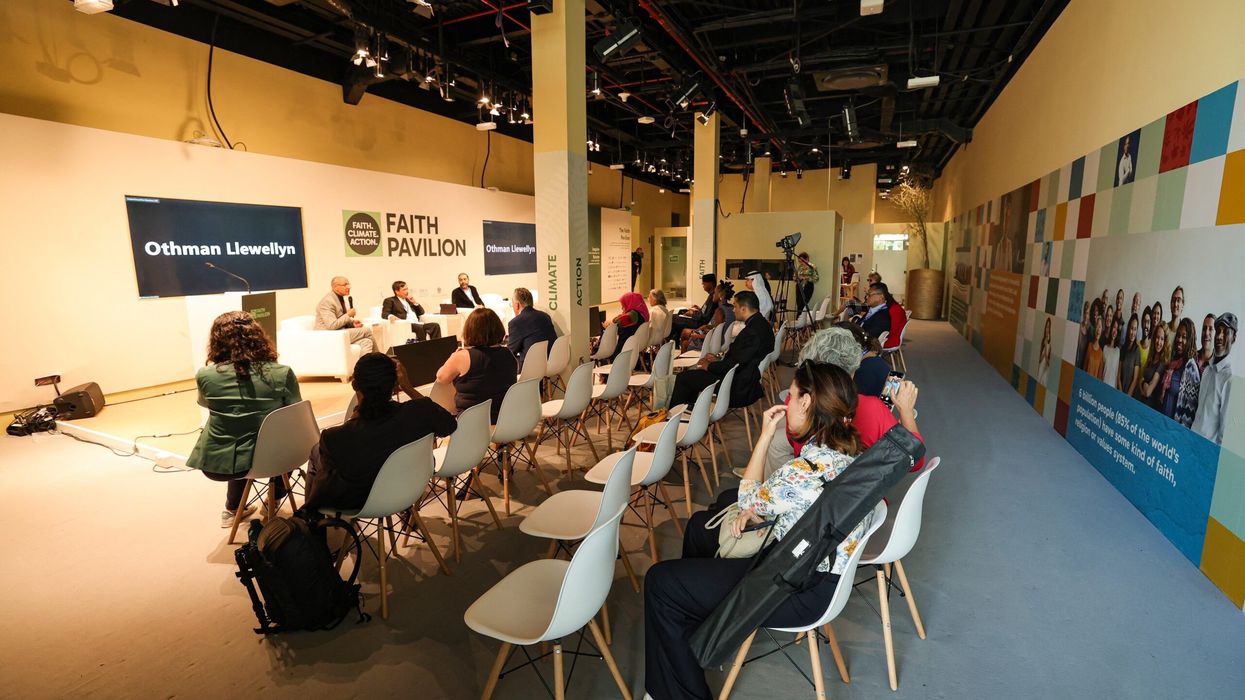

From meditation sessions to spiritual guidance and indigenous hymns, the atmosphere within the "faith pavilion" at COP28 stands in contrast to the high-stakes discussions at the UN climate talks in Dubai.
Orthodox priests rub shoulders with Emiratis in flowing white robes and Jewish rabbis in the quiet, air-conditioned calm of the pavilion, the first ever dedicated to religion at a COP conference.
Housed in a building of dark glass and geometric triangles, the pavilion offers a space for quiet reflection away from the frenetic diplomacy and flashy business shows that accompany the marathon climate negotiations.
It also offers something else sorely needed at COP -- unity and optimism.
"This testifies to the willingness to work together," Pope Francis said in a video message at the pavilion's inauguration on December 3 in a united call to action with senior Muslim cleric Ahmed al-Tayeb, the grand imam of Al Azhar.
"Today, the world needs alliances that are not against someone, but for the benefit of everyone."
Visitors joining daily "ritual relaxation" sessions or engaging with religious leaders in a lounge room are invited to consider the role of faith in addressing the challenge of global warming.
"For a fairer and more sustainable world, we trust and pray," one visitor wrote on a paper cut-out tree pinned alongside other messages of hope and solidarity to the pavilion wall.
- Spiritual crisis -
Organisers say more than 300 faith leaders from all major religions and traditional beliefs are expected to participate in the pavilion during the two-week-long conference being held in the Gulf city.
This is the first time in nearly 30 years of global climate talks that religion has been given its own venue, and the striking space has prime real estate in the heart of an enormous complex.
This COP is the largest ever and thousands of people walk by the pavilion every day, whether en route to meetings and expo shows, or to buy ice cream from a stall doing brisk trade out front.
The COP can be an overwhelming experience, and faith leaders hope attendees of all creeds embrace the pavilion as a respite from the haggling, heat, and anxiety over the planet's future.
Organisers say attendance at daily meditation sessions has so far been small but could uptick as negotiations toward a final climate deal intensify in the coming days.
On a recent day at the pavilion, Panamanian indigenous leader Jocabed Solano performed a spiritual song of her Guna people that extols respect and stewardship for the planet.
"It's not only the crisis of the climate, it's a crisis of the spirituality too," she told AFP after enrapturing audiences at the pavilion.
- Bridge the gap -
Behind the scenes, organisers say the pavilion is supporting progress toward an ambitious pact to limit global warming, that also ensures financial aid for the world's poorest on the frontlines of climate change.
Faith leaders are offering moral and pastoral services to diplomats working around the clock on the agreement, and for the first time have interfaith representatives attending the formal negotiation sessions.
"We want to bring that spiritual understanding to the decision-making process," Iyad Abumoghli, the director for Faith for Earth, an initiative within the UN Environment Programme said.
Panels at the pavilion have explored difficult themes including the climate-related loss of homeland, mining in Africa, and ethical investing, and speakers have included government ministers, academics and business leaders.
Faith leaders also issued an interfaith statement in support of reducing and eventually exiting fossil fuels -- a flashpoint issue at the conference overseen by an Emirati oil executive.
The pavilion seeks to foster trust -- a vital element at any COP -- between scientific and religious communities that haven't always seen eye-to-eye.
"I know it's all about science," Mohamed Bahr from the Muslim Council of Elders, said. "But we're trying here to bridge the gap between science and faith."
(AFP)