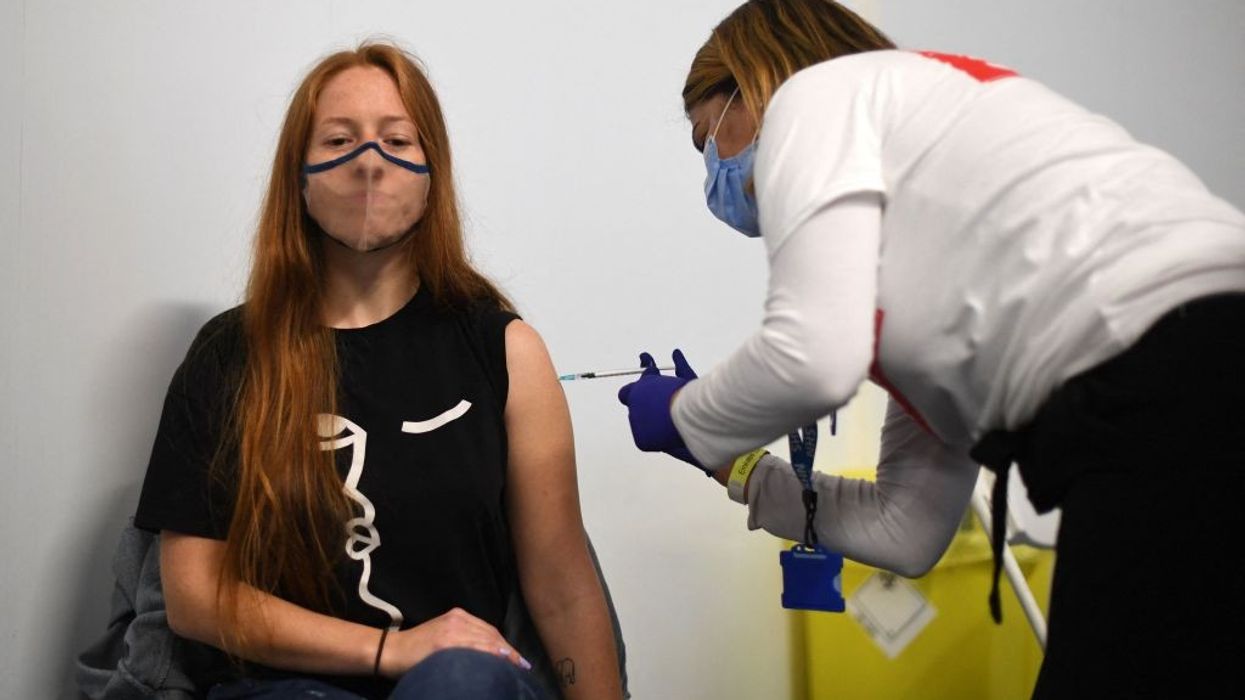

BRITONS who have taken the India-made AstraZeneca Covid-19 vaccine have to wait for a month before they can travel to nearly half of Europe, it has been reported.
The Pune-based Serum Institute of India (SII), which manufactured the jabs and was administered to nearly five million people in the UK, said it be weeks before the “politics” preventing the vaccine’s recipients from travelling is sorted out, The Telegraph reported on Wednesday (14).
A British couple was stopped from boarding a flight to Malta since their vaccine batch number was not recognised by the European Union (EU), the paper reported.
This happened despite the fact that the India-made product (called Covishield in India) is the same as the AstraZeneca vaccine manufactured in the UK – which is recognised by the European Medicines Agency.
Transport secretary Grant Shapps on Wednesday said Malta had decided to join 15 other countries that recognised the three batches in question. The list includes countries like Spain, Germany and Greece. However, major holiday destinations in countries like France, Italy and Croatia are yet to recognise the India-made vaccines.
The Telegraph saw a letter the Indian firm wrote to an anxious recipient saying Covishield was “identical” to the vaccine made in the UK.“Fifteen countries in Europe have already approved Covishield and these batches, the rest should be concluded within a month,” the letter said.
“Sadly, this is out of our hands – we are doing our best to expedite this and it is up to the countries really to accept our product as official vaccine certificates are not issued by us. This is a bureaucratic matter and political matter at the country level,” it added.
On July 2, prime minister Boris Johnson said there was no reason why people who received the Indian-made vaccine should be denied the vaccine passport schemes after the EU initially did not recognise it.
Millions of Britons were in the danger of getting rejected at EU border crossings when the batch numbers on their vaccines were checked digitally.
The Department of Health and Social Care also said no Britons who had taken the Indian-made jabs would be affected.
On Wednesday, Shapps told the BBC, “The [UK] medicines agency, the Medicines and Healthcare products Regulatory Agency, have been very clear that it doesn’t matter whether the AstraZeneca you have is made here or the Serum Institute in India.”
“It is absolutely the same product, it provides exactly the same levels of protection from the virus,” he added.
The transport secretary later tweeted: “The Maltese authorities have amended their travel advice, so anyone who has an Oxford/AstraZeneca vaccine in the UK (regardless of manufacture location) is able to travel without being turned away – with all vaccines having gone through rigorous safety and quality checks.”
A government spokesman also said: “This incident happened last week, and the Maltese authorities have since agreed to amend their travel advice so this should not happen again.
“All AstraZeneca vaccines given in the UK are the same product and appear on the NHS Covid Pass as Vaxzevria. The European Medicines Agency, as well as our own medicines regulator, has authorised this vaccine, and travel should not be affected.”