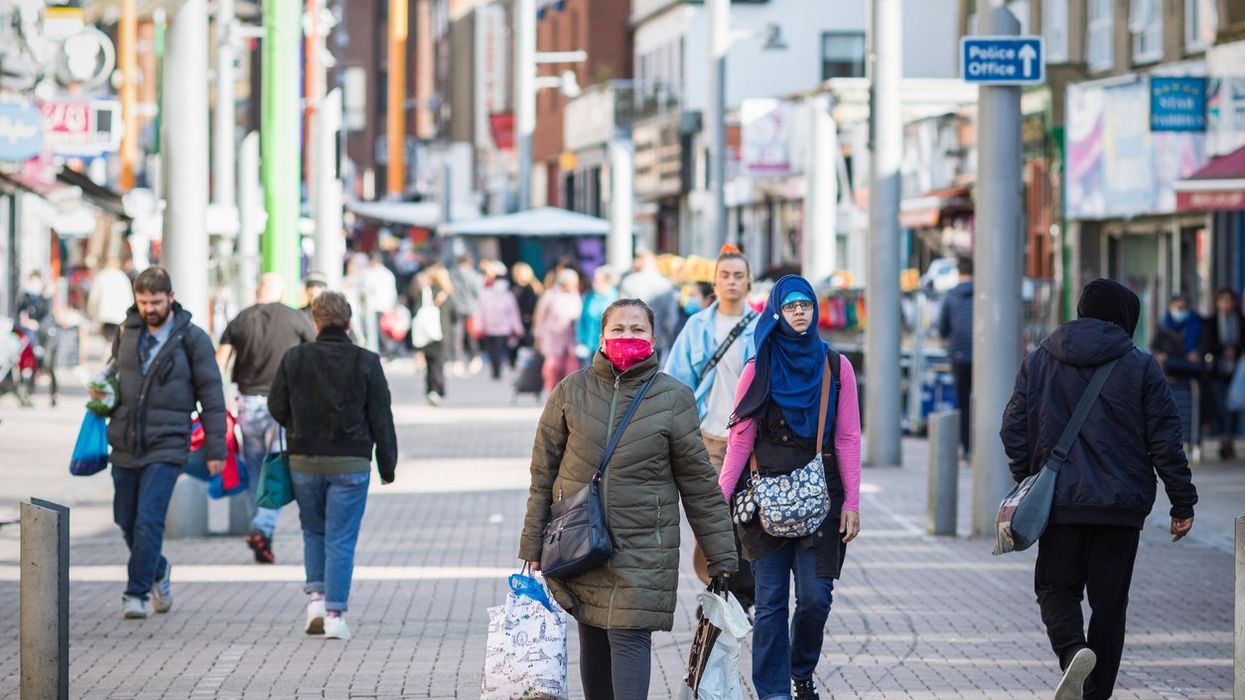

ETHNIC minorities, the self-employed and low-income families in Britain suffered greater deprivation levels during the coronavirus pandemic despite "surprisingly positive" living standards figures, a report published on Thursday (8) found.
The Institute for Fiscal Studies (IFS) think-tank's annual report on living standards, poverty and inequality identified these groups as the hardest-hit, even as unprecedented state support mitigated the worst effects of the crisis.
The research follows other studies showing that Britain's ethnic minorities were more likely to suffer worse health and economic outcomes during the pandemic and less likely to accept vaccines.
"How fast and to what extent these groups recover as the economy reopens will be a key determinant of the pandemic's legacy," said report co-author Tom Wernham.
Some 15 per cent of Britons from minority ethnic backgrounds were behind their household bills at the start of 2021, compared with 12 per cent before the pandemic.
The proportion of adults of Pakistan and Bangladesh origin living in households where all adults were unemployed or furloughed remained 10 per centage points higher at the beginning of 2021 than pre-pandemic levels, as many of these households relied on one income earner.
Household worklessness for black adults rose 2.4 percentage points, higher than the national average of 1.9, the report added.
The share of self-employed workers who lost all work in the first lockdown in March 2020 and fell behind household bills is now 15 percent, up from two per cent before the pandemic.
Despite the government's flagship furlough scheme, which has paid millions of workers' wages since March 2020, 36 percent of self-employed workers - many of whom work in the hard-hit events, arts and culture sectors - were ineligible for the government's self-employed income support scheme.
Researchers also found that more families suffering from in-work poverty fell behind on bills during Britain's first nationwide lockdown from last March, with the share jumping from nine to 21 per cent.
The figure receded to 10 percent in the first quarter of 2021, but 13 per cent of such families expect their financial situation to deteriorate in the near future.
One of the report's authors, Tom Waters, said the furlough scheme's success largely explained Britain's "surprisingly positive" deprivation and labour market statistics.
But he added that people's ability to return to their old jobs or find new ones would be the key factor for living standards as support was withdrawn.
The government's furlough scheme initially paid 80 per cent of employees' wages to prevent mass job losses but is to be phased out by the end of September.
An increase of £20 ($28, 23 euros) per week to its main social security payment, Universal Credit, is also due to end at that time.
(AFP)