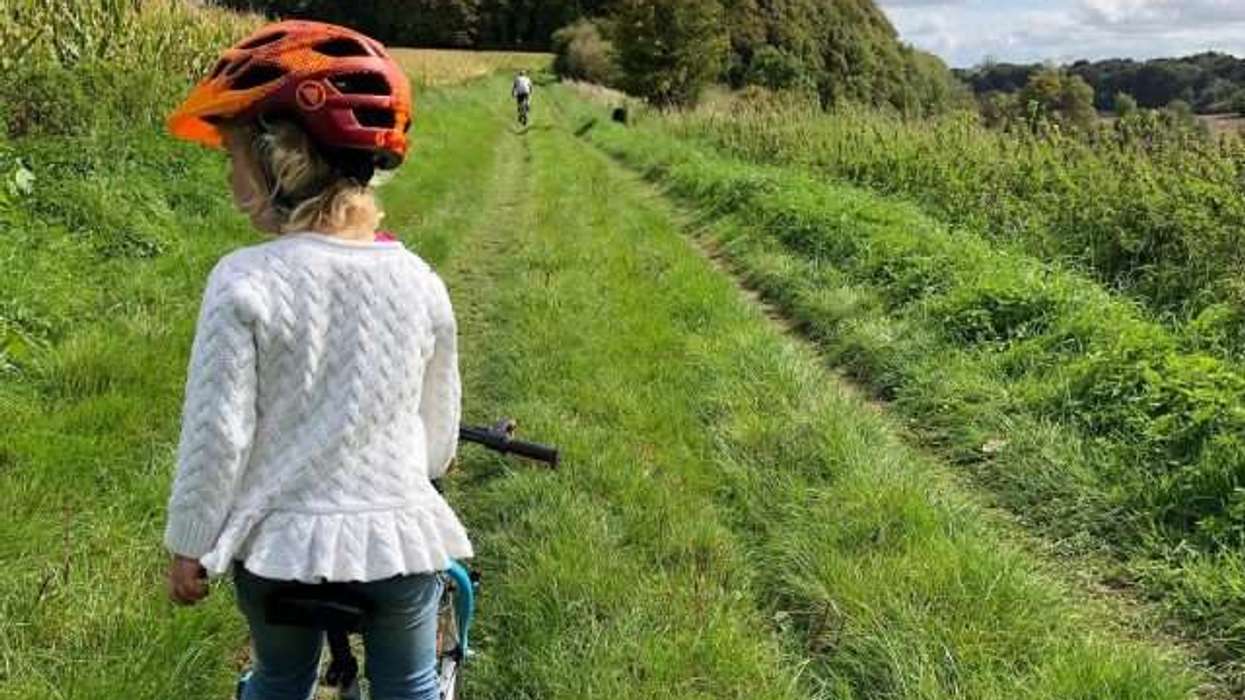

PROTECTED landscapes across England are developing strategies to make the countryside more welcoming to ethnic minorities and other underrepresented groups, according to plans published by regional authorities.
National Landscapes, a charity funded mainly by the Department for Environment, Food and Rural Affairs, oversees 46 areas previously known as sites of outstanding natural beauty. Management plans for these regions aim to tackle barriers that prevent diverse communities from visiting rural areas.
Reports published since a 2019 Defra study found many communities view the countryside as a place for white and middle-class people, the Times reported.
"The countryside is seen by both black, Asian and minority ethnic groups and white people as very much a 'white' environment," the Defra report said.
It warned that if this perception persists, the gap will widen as society changes and "our countryside will end up being irrelevant to the country that actually exists".
Cranborne Chase National Landscape, which spans Dorset, Wiltshire, Hampshire and Somerset, published its latest five-year plan last month saying it would develop strategies to reach communities with protected characteristics, including people without English as a first language and those from diverse ethnic backgrounds.
On Monday (2), National Landscapes published an update titled "Nature is for everyone".
"There are innumerable reasons why people don't spend time in the outdoors and National Landscapes teams are committed to reducing the barriers to access," the charity said.
The Malvern Hills management plan covering 2025-30, published in March, acknowledged that attitudes varied within ethnic minority groups.
"Many minority peoples have no connection to nature in the UK because their parents and their grandparents did not feel safe enough to take them or had other preoccupations," the report said.
It added that for some people with recent experience of subsistence farming in developing countries, "nature can be associated with hardship and struggle in having to work the land".
Nidderdale National Landscape in North Yorkshire said barriers stopping ethnic minorities from visiting include practical issues such as lack of transport and awareness, but also concerns about how they will be received when visiting an unfamiliar place.
The Chilterns National Landscape published research in 2024 that included proposals to invite more Muslims to the area, particularly from nearby populations in Luton and High Wycombe, as they were the community group which used green spaces the least.
According to reports, National Landscapes has completed several projects to encourage new visitors. The Generation Green 2 project in Northumberland Coast welcomed children from some of the UK's most deprived areas to pick litter and build sandcastles on the beach.
In Luton, the Nature Calling project coordinated visits from groups including people seeking asylum who had mainly been indoors since arriving in the country. The project led to the creation of Luton Henge and restoration work of surrounding chalk grassland.
Arnside & Silverdale National Landscape supports weekly Walks for All for people with dementia and brain injuries and their carers.
The charity noted that two thirds of England's population live within half an hour's journey of their nearest national landscape.




 Curator Emma Slocombe with ikat robes and arabachi coats in the Peter the Great Room in Blickling Hall Amit Roy
 View of the entrance to Blickling Hall on a rainy autumn dayAmit Roy
 Kente cloth from Ghana in the Long Gallery in Blickling Hall
 Decoration in the Great Hall at Blickling Hall Amit Roy
 Palampore fragment made in coastal south-east India in the Brown Room in Blickling Hall Amit Roy
 Bed valance dating from early 1700s in the Italian Print Room at Blickling Hall Amit Roy
 Indian inspired fabric draped on sofas in the South Drawing Room in Blickling Hall Amit Roy
 Indian inspired fabric draped on sofas in the South Drawing Room with Indian carpet in Blickling Hall Amit Roy
 Karun Thakar has picked out the geometric patterns in the bookcase and the Kente cloth in the Long Gallery in Blickling Hall Amit Roy
 Large tapestry depicting Peter the Great defeating the Swedish army at the Battle of Poltava in 1709 Amit Roy
 ikat robes and arabachi coats in the Peter the Great Room in Blickling Hall Amit Roy
 Baghs and kanthas made by women provide contrast to the men only portraits in the Great Hall at Blickling Hall Amit Roy
 Baghs and kanthas in the entrance Great Hall at Blickling Hall Amit Roy
 Baghs and Kanthas in the Great Hall in harmony with stained glass window at Blickling Hall Amit Roy
 Kimonos reflect Japanese influence in Upper Ante Room in Blickling Hall Amit Roy
 Kimono in Upper Ante Room in Blickling Hall
 A view of the Palace and fort at Agra shows romantic side of India Amit Roy
 Blickling Hall Amit Roy
 Table carpet, European 1670-1680 Amit Roy
 Unfinished 17th century Italian embroidery in the Print Room at Blickling Hall Amit Roy
 Picture of Kashmir shows a romantic view of India Amit Roy
 A panel of Ashburnham bed hangings made in Gujarat for sale in Europe in the Brown Room in Blickling Hall Amit Roy
 Colcha made in the 1600s by women in Bengal for the Portuguese market in the Long Gallery at Blickling Hall Amit Roy