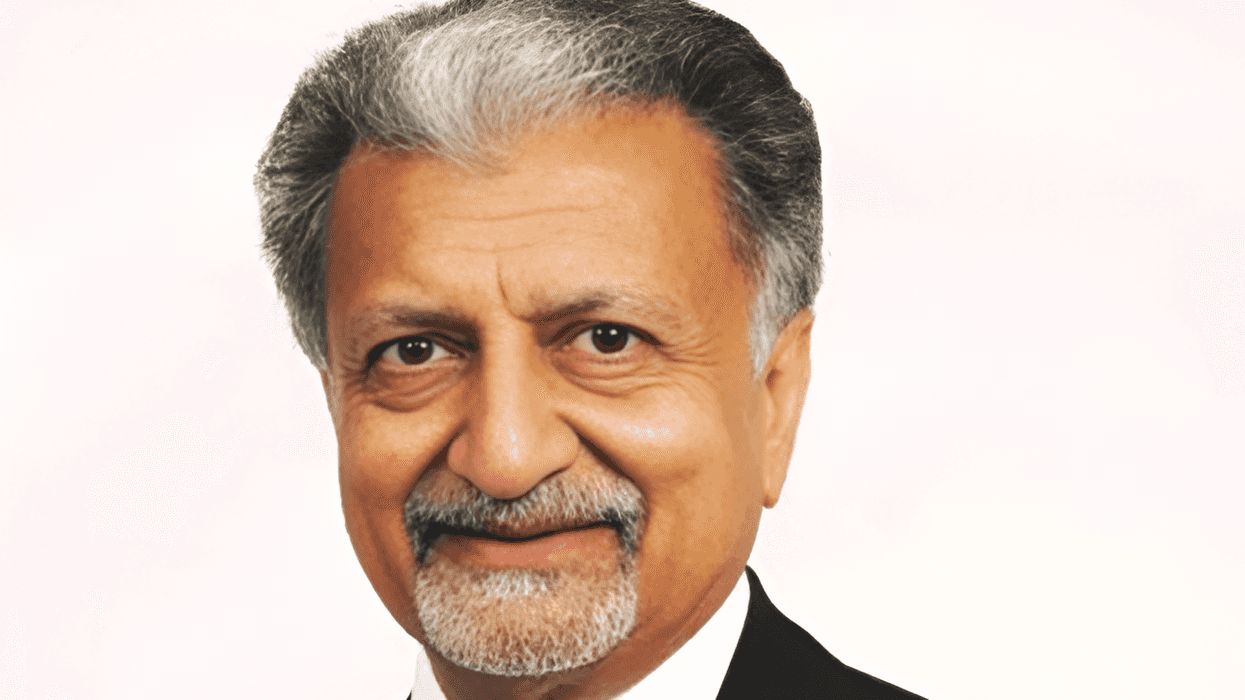

IN WHITEHALL’S upper corridors, power rarely shouts. It calibrates, convenes and quietly aligns the machinery of government. That is the register in which Emran Mian, permanent secretary at the Department for Science, Innovation and Technology (DSIT), now operates.
Appointed in June 2025 to replace Sarah Munby, Mian took charge at a moment when science and technology sit at the heart of the government’s growth strategy. The brief is formidable: steward an £86 billion research and development settlement, oversee a £3.25 billion transformation fund, and ensure that artificial intelligence and digital reform translate into tangible gains for working people. In other hands, that might read as technocratic housekeeping. In Mian’s, it becomes a systems project.
“I applied for this role because I am hugely optimistic about how science, technology and AI can improve lives, government services and economic growth,” he has said. “At this moment there is no cap on how ambitious we should be for our country.” Optimism, for Mian, is an organising principle.
As director general for digital technologies and telecoms at DSIT, he oversaw AI, cybersecurity, online safety and digital infrastructure – the contested terrain where innovation collides with risk. Earlier stints at the Department for Education and the former Department for Levelling Up, Housing and Communities sharpened his feel for place, productivity and public service delivery. Before returning to government in 2017, he ran the Social Market Foundation, honing an instinct for ideas and argument beyond Whitehall’s walls.
That dual exposure – to think tank provocation and departmental pragmatism – now shapes how he wields influence. Appearing before MPs in December 2025, he set out a three-tier model for corralling cross-government R&D: first, build “a really clear data picture”; second, use that clarity for “effective advocacy” across the government; and third, manage the portfolio collectively to avoid duplication and spot collaboration.
The stakes are human as well as fiscal. In March, DSIT launched what it called the world’s most ambitious consultation on children’s digital wellbeing, probing the impact of social media, gaming platforms and AI chatbots. Weeks earlier, it channelled £150 million into research programmes promising faster cancer diagnoses and cleaner energy. These are not abstract line items; they are political tests of whether technology can be made to serve society.
In a letter to the chair of the Commons Science, Innovation and Technology Committee, Chi Onwurah, Mian pledged openness and partnership, committing that his officials would work “in an open and transparent way.” The promise hints at his method: convene expertise, share data, lower the temperature, raise the ambition.
Power, in 2026, lies not only with ministers at the despatch box but with those who design the operating system of the state. Emran Mian’s influence rests in his ability to connect code to Cabinet, research labs to the Treasury, and long-term scientific bets to immediate public value. In the quiet choreography of modern government, he is setting the pace.