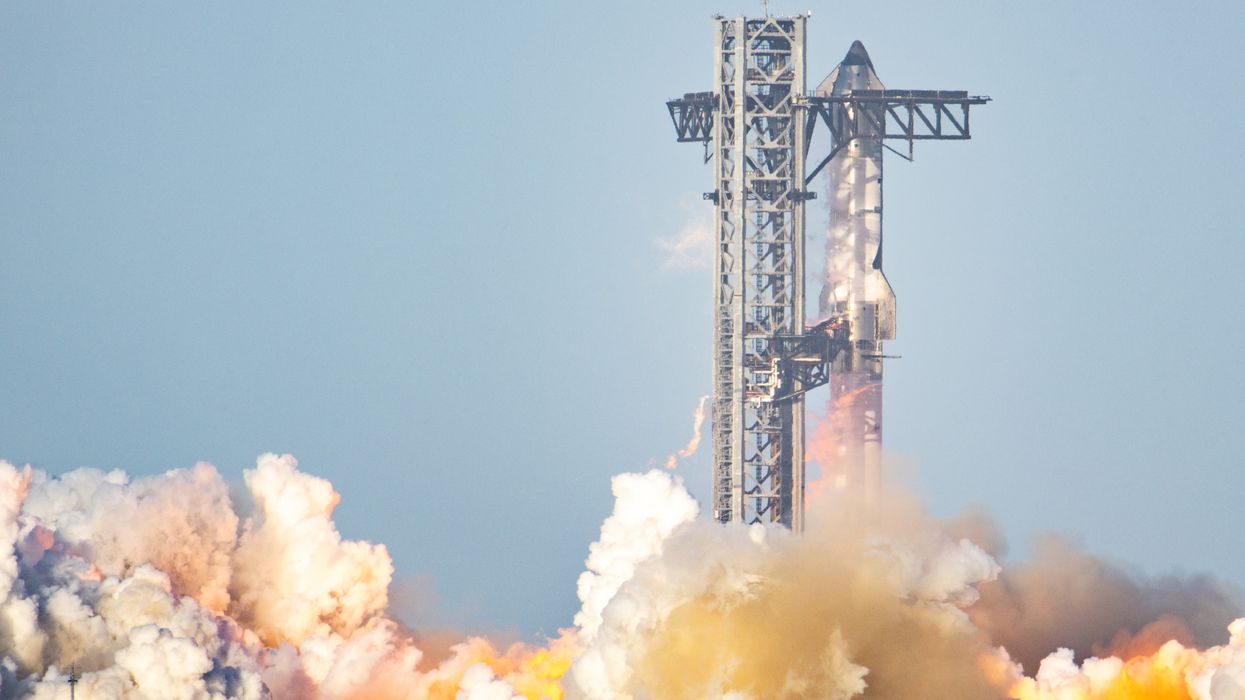

Elon Musk’s aerospace company SpaceX has suffered its third consecutive rocket launch failure after its Starship spacecraft lost control shortly after lift-off and crashed into the Indian Ocean.
The incident occurred on Tuesday night during an attempted mission to deploy satellites into orbit. Shortly after launch, the spacecraft experienced issues when the release door failed to open properly. This resulted in the rocket spinning out of control, ultimately leading to its destruction over the Indian Ocean.
SpaceX confirmed that the spacecraft experienced a “rapid unscheduled disassembly” – a term the company uses for mid-air break-ups. “Teams will continue to review data and work toward our next flight test,” the company said in a statement published online.
Despite the failure, Musk described the attempt as a “big improvement” on previous test flights, which ended with wreckage scattered over the Atlantic Ocean. He also announced plans to accelerate the testing schedule, with the next three launches expected to occur every three to four weeks.
This particular flight marked the first time a recycled booster was used as part of the rocket’s construction. Although SpaceX successfully demonstrated booster-catching technology last year, there were no plans to retrieve the booster during this flight. Instead, it disintegrated over the Gulf of Mexico.
Earlier this year, two previous Starship launches also ended in failure shortly after take-off, with both rockets crashing into the ocean before clearing the Caribbean. No injuries or major damage were reported, though the incidents did cause some disruption to air traffic.
In preparation for the latest attempt, the Federal Aviation Administration had approved the launch while expanding the safety hazard zone and scheduling the lift-off outside peak air travel hours. SpaceX also introduced upgrades to the spacecraft, including modified thermal tiles and new catch fittings designed for future recovery tests.
Although this flight was intended to end in the Indian Ocean, the modifications were part of long-term plans to return spacecraft to the launch site eventually.
The repeated failures come at a crucial time for SpaceX, which is under pressure to demonstrate progress with its Starship programme. Nasa is relying on the system for future lunar missions, including an uncrewed flyby of the moon next year, followed by a planned lunar landing with astronauts in 2027.