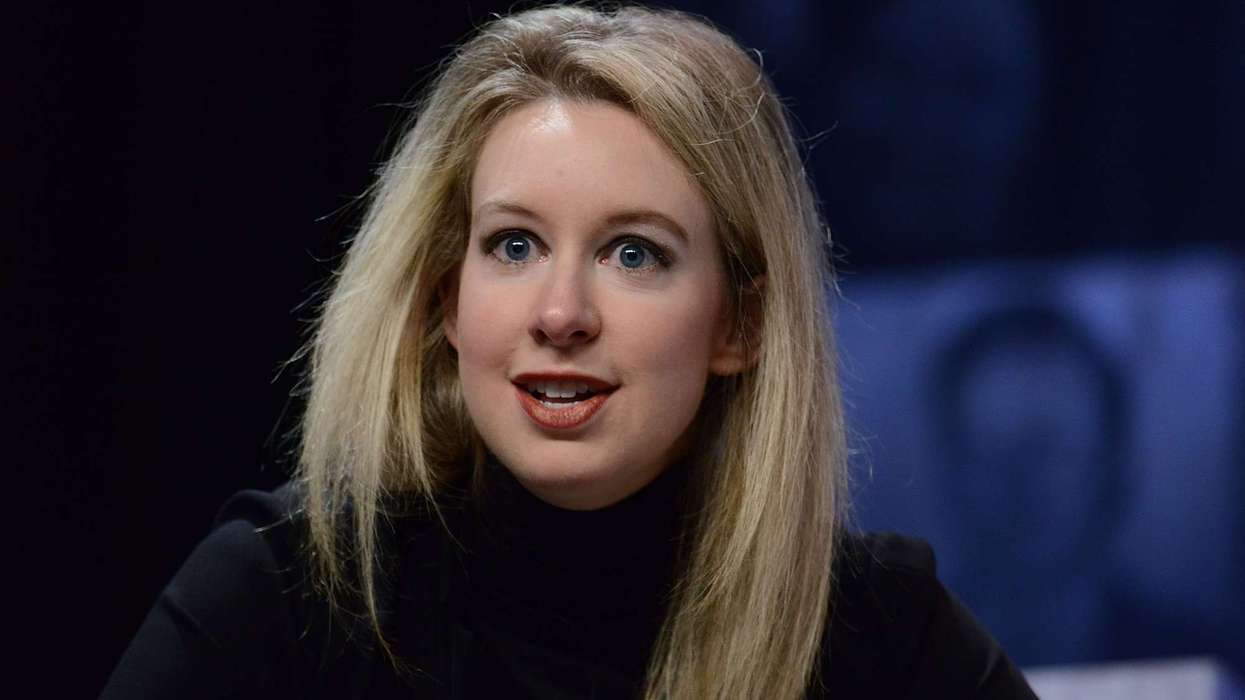

A new documentary about disgraced Theranos founder Elizabeth Holmes had a surprise, unannounced premiere at the Telluride Film Festival, and it has quickly become one of the most talked-about titles at the festival.
You Can See Everything, made by A24 and co-directed by comedian Nathan Fielder (known for The Rehearsal and The Curse) alongside documentarian Lance Oppenheim, follows Holmes in the weeks before she surrendered to prison in 2023.
Fielder and his crew were granted remarkable access: he lived with Holmes and her partner, hotel heir Billy Evans, at their home in Del Mar, California, filming over roughly five weeks before her sentence began, and staying involved with the project for three years afterwards.
The film runs close to three hours and mixes straightforward interviews with more unconventional techniques, including scenes in which actress Amanda Seyfried, who played Holmes in a previous dramatization, is brought in to help make sense of what the directors captured.
Early reviews describe it as unsettling and hard to categorise, less a conventional true-crime documentary than a study of how Holmes still talks about what happened.
For readers who remember the headlines but not the detail, here is a refresher on who Holmes is, what she actually did, what she says about it now, and where this new film sits alongside the books and dramas already made about her.
Who is Elizabeth Holmes?
Holmes was born in Washington DC to a mother who worked as a congressional staffer and a father who had held a senior role at Enron, the energy company that collapsed in a major accounting scandal.
She won a place at Stanford University and began working on early biomedical ideas there, founding what would become Theranos in 2003, when she was just 19. She dropped out of Stanford and used her tuition savings to build the company, having already filed a patent application as a student.
By the end of 2010, she had raised roughly $92 million (£73 million) in venture capital, on the promise that Theranos was building a device capable of running a full range of diagnostic tests from a few drops of blood taken with a simple finger-prick, rather than a full syringe draw.
She went on to build what one report at the time called one of the most prominent boards in American corporate history, including former US secretaries of state Henry Kissinger and George Shultz and former Pentagon chief Jim Mattis.
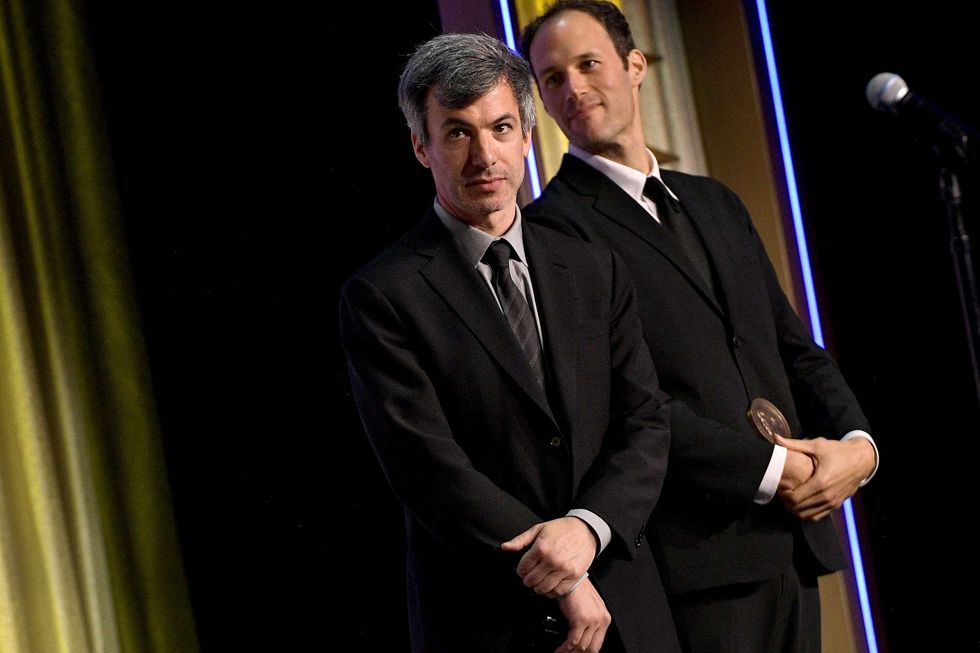 Nathan FielderGetty Images
By 2014 she was appearing on the covers of Fortune, Forbes and Inc., and Forbes valued her stake in the company at around $4.5 billion (£3.6 billion), naming her the youngest self-made female billionaire in the US.
What was her crime, and how did she pull it off?
Theranos's core promise was a machine that could run comprehensive blood tests from a pinprick sample, but it never actually worked as claimed. Holmes is understood to have based the idea on her own dislike of needles, and turned it into a product pitch before the underlying science existed to support it.
Central to how the deception was maintained was Ramesh "Sunny" Balwani, Theranos's chief operating officer, who was also Holmes's romantic partner for much of this period, though the relationship was not publicly disclosed at the time.
Multiple experts, including a Stanford medical professor, are understood to have warned early on that the science behind the pinprick concept could not work, but Holmes and Balwani continued to promote it regardless.
Balwani has been described as having run a demanding, controlling management style inside the company, and was tried separately from Holmes; he was also convicted of fraud and served a prison sentence.
To keep the story alive, Holmes personally added the logos of major pharmaceutical firms Pfizer and Schering-Plough to Theranos validation reports and shared these with investors, without the companies' permission or knowledge, giving the false impression that the technology had been independently endorsed.
Internally, the company is understood to have concealed how often its own machines failed, and to have run a significant share of patient tests on standard third-party lab equipment rather than its own device, while still marketing the results as Theranos's own breakthrough technology.
The fraud began to unravel following a series of Wall Street Journal investigations from 2015 onwards, which Holmes is reported to have tried to have stopped by appealing directly to the paper's owner, Rupert Murdoch, who was also a Theranos investor.
She was convicted in January 2022 of defrauding investors and, in November of that year, sentenced to 11 years in prison. She began serving her sentence in 2023.
What Holmes claims in the documentary
According to early reviews of You Can See Everything, Holmes maintains in the film that she has never lied and that the Theranos device genuinely worked, arguing that the hardware itself was sound and that only the chemistry needed to run specific tests remained unfinished, a problem she reportedly treats as a routine engineering task rather than evidence the technology never existed.
Reviewers describe her as unable to accept, or even engage with, an alternative reading of events, illustrated in the film by a scene in which Fielder shows her a classic comedy routine and finds she cannot explain why it is funny.
Critics reviewing the film stress that it does not attempt to argue Holmes is innocent, but instead explores why she appears to genuinely believe her own account, and it does not shy away from the potential harm patients could have faced had the faulty technology been more widely used.
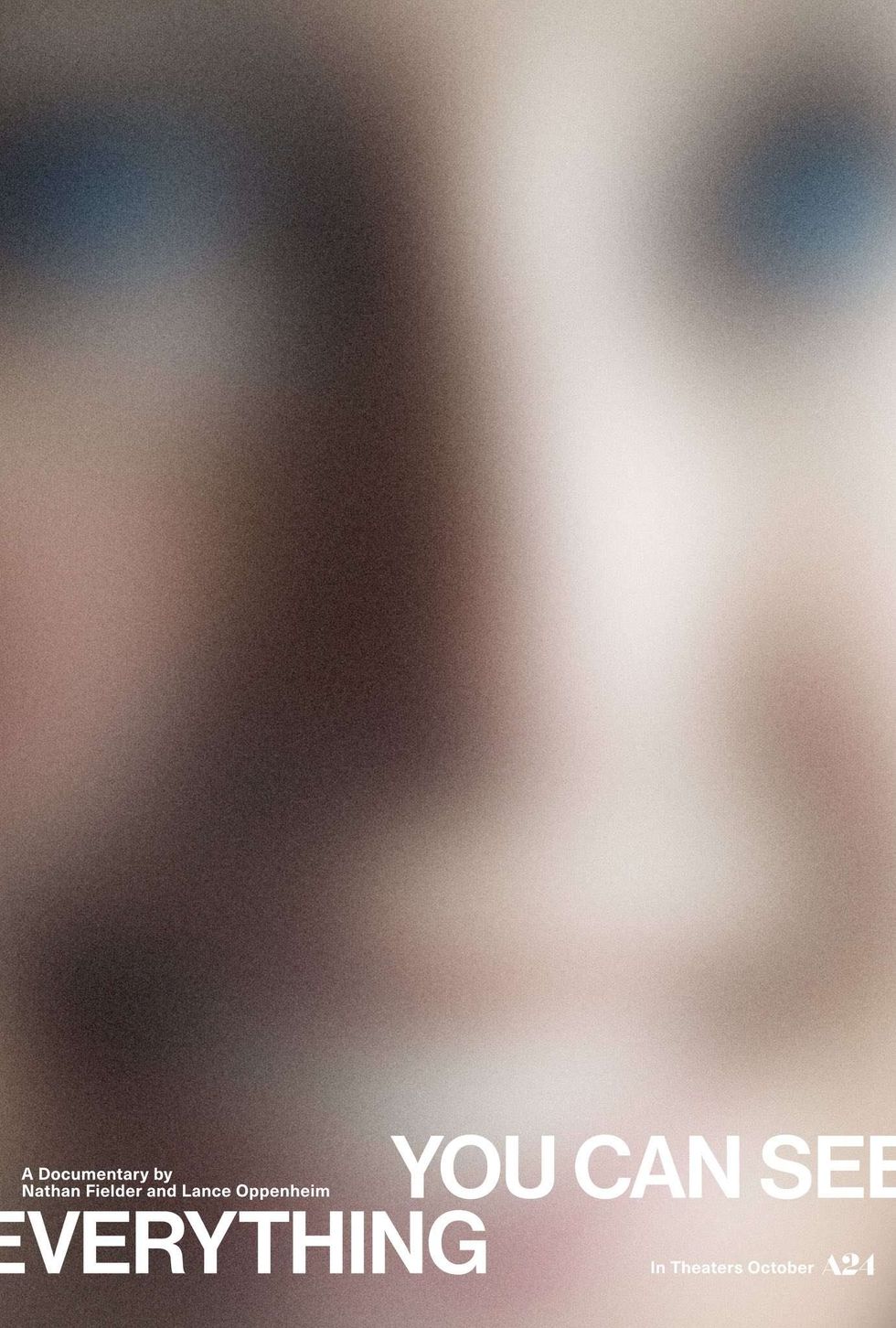 A poster of the documentaryA24
Earlier books and dramatisations
This is far from the first screen treatment of the Theranos story:
The Inventor: Out for Blood in Silicon Valley (2019): An HBO documentary directed by Alex Gibney, using archival footage and access inside Theranos to examine how the fraud took hold.
The Dropout (2022): A Hulu biographical drama miniseries starring Amanda Seyfried as Holmes and Naveen Andrews as her former business and romantic partner, Ramesh "Sunny" Balwani, tracing the company from its Stanford origins to its collapse. Seyfried won an Emmy and a Golden Globe for the role.
Bad Blood: Secrets and Lies in a Silicon Valley Start-Up: the investigative book by journalist John Carreyrou, widely regarded as the definitive account of the Theranos scandal and a key source for both screen adaptations.