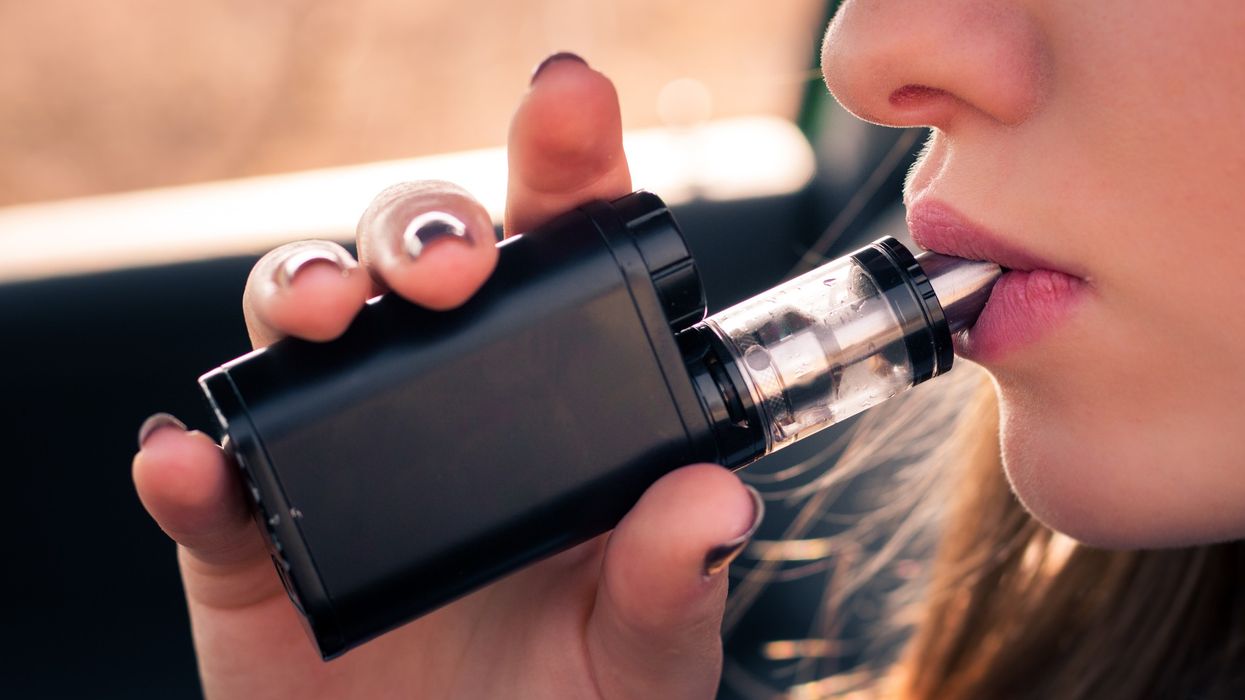

ENGLAND could soon become world’s first country to prescribe e-cigarettes as a medical product to help people stop smoking tobacco products.
With health secretary Sajid Javid welcoming the latest step towards the licensing process for manufacturers, e-cigarettes could be prescribed on the NHS.
Javid said: “This country continues to be a global leader on healthcare, whether it’s our Covid-19 vaccine rollout saving lives or our innovative public health measures reducing people’s risk of serious illness.
“Opening the door to a licensed e-cigarette prescribed on the NHS has the potential to tackle the stark disparities in smoking rates across the country, helping people stop smoking wherever they live and whatever their background.”
For licensing, the Medicines and Healthcare Products Regulatory Agency (MHRA) has invited manufacturers to submit their products for approval to be prescribed.
The regulator is also publishing updated guidance, paving the way for medicinally licensed e-cigarettes to be prescribed for smokers who wish to quit.
The MHRA approval will enable clinicians to decide on a case-by-case basis whether to prescribe an e-cigarette to NHS patients for smoking cessation.
However, non-smokers and children are strongly advised against using e-cigarettes.
The debate
There has been much debate over the years about whether e-cigarettes should be used for this purpose.
E-cigarettes contain nicotine and are not risk free, but experts from the UK and US say its regulated usage is less harmful than smoking, as they do not produce tar or carbon monoxide.
The aerosol used in e-cigarettes contains some potentially harmful chemicals also found in other cigarettes, but are at much lower levels, they say.
Moreover, a medically licensed e-cigarette will have to go through more rigorous safety checks than the ones sold commercially.
A report co-authored by Action on Smoking and Health (ASH) and Cancer Research UK (CRUK) has also recommended providing e-cigarette packs to smokers to help them quit.
In 2020, it was found that e-cigarettes were the most popular product used by smokers trying to quit in England. Amongst those trying to quit smoking, 27.2 per cent use e-cigarettes while 18.2 per cent use nicotine replacement therapy products such as patches and gum.
Smoking - big concern
Smoking remains the leading preventable cause of premature deaths with around 6.1 million active smokers in England.
Almost 64,000 people died from smoking in England in 2019 and the Office for Health Improvement and Disparities (OHID) is supporting efforts to improve public health and ensure communities across the country have equal health outcomes.
Besides, the government will soon publish a new Tobacco Control Plan to set out the roadmap for achieving a smoke-free England by 2030.