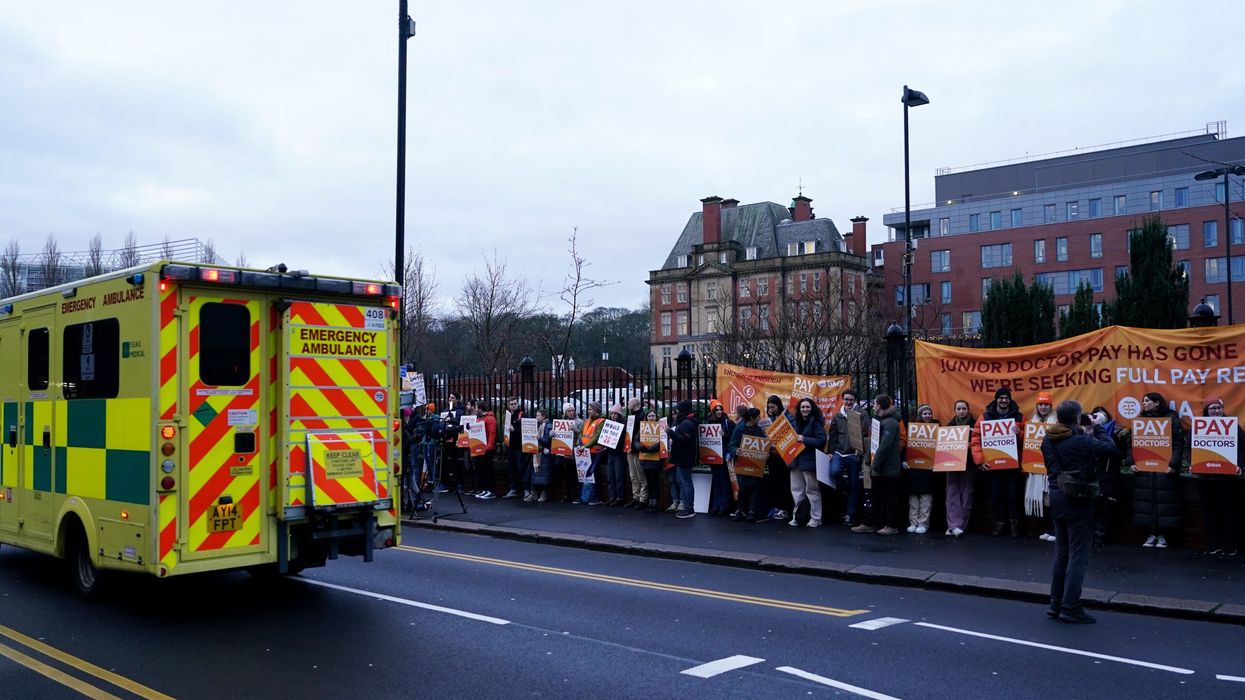

Junior doctors in England on Wednesday (3) commenced the longest consecutive strike witnessed in the seven-decade history of the NHS.
Junior doctors -- those below consultant level -- started a six-day walkout, in a major escalation of their long-running pay dispute with the UK government.
The industrial action comes at one of the busiest times of the year for the state-funded NHS, when it faces increased pressure from winter respiratory illnesses.
It also quickly follows a three-day strike held by doctors just before Christmas.
The NHS said the latest stoppage, which could see up to half of the medical workforce on picket lines, would have "a significant impact on almost all routine care."
"This January could be one of the most difficult starts to the year the NHS has ever faced," said its national medical director, Stephen Powis.
The strike is due to end at 0700 GMT next Tuesday.
The British Medical Association (BMA) announced the walkout in December after a breakdown in talks with the government.
The union said junior doctors have been offered a 3.0-per cent rise on top of the average 8.8-per cent increase they were given earlier this year.
It rejected the offer because the cash would be split unevenly across different doctor grades and would "still amount to pay cuts for many doctors".
Junior doctors have gone on strike at least seven times since March.
Prime minister Rishi Sunak and hospital leaders have criticised the action.
- 'Significant' -
Health policy is a devolved matter for the administrations in Scotland, Wales, and Northern Ireland, with the UK government overseeing England.
Junior doctors in Wales are due to walk out for 72 hours from January 15.
Those in Northern Ireland have voted for potential strike action.
Their Scottish counterparts have struck a deal with the government in Edinburgh.
The NHS typically sees a rise in the number of people in hospital in the two weeks after Christmas, due to people delaying seeking treatment in order to spend the festive season with loved ones.
The service is already facing huge backlogs in waiting times for appointments and surgery, blamed on treatment postponement during Covid but also years of under-funding.
Julian Hartley, the chief executive of NHS Providers which represents hospital groups in England, said the effect of the strikes on patients would be "significant."
"The vast majority of planned operations, appointments, and so on, will have to be stood down," he told BBC television.
Consultants will cover for junior doctors and emergency and urgent care such as maternity and intensive care services will be operating.
But there are fears that Covid, flu and other seasonal conditions could also hit staffing.
"We're deeply concerned about the kind of impact over the coming days," said Hartley.
(AFP)