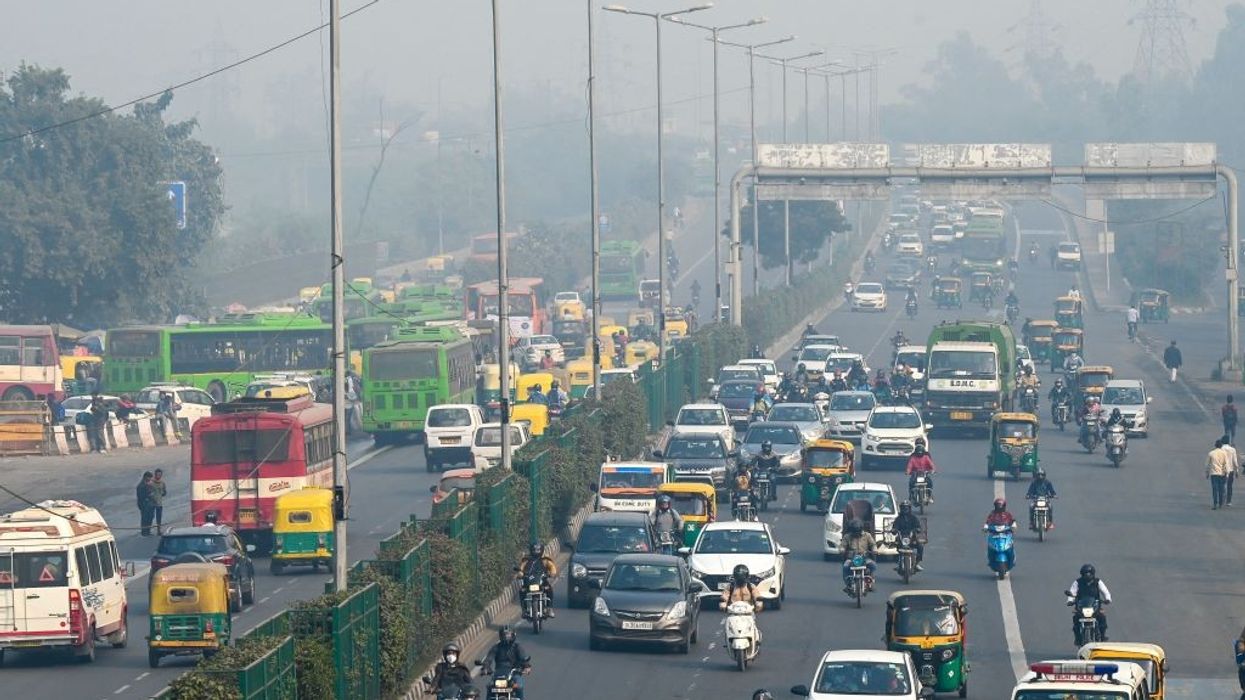

WORSENING air quality of Delhi has remained a consistent threat to its residents and even though the authorities have asked people to remain indoors to avoid the toxic air outside, a study has revealed that lives are not safe even behind closed doors.
The research has in fact shown that pollution inside homes is significantly worse than that outside and even the rich are not out of danger. It may be mentioned here that the month of November witnessed the air quality in the city plummeting to the worst level in six years with not even one “good” day.
Schools have remained shut; construction work has been reduced to the minimum and only goods vehicles carrying essential items have been allowed on the streets.
The Energy Policy Institute at the University of Chicago, the US, undertook a study of the pollution levels in Delhi between 2018 and 2020. It found the levels of particulate matter (or PM2.5) – the tiny particles that lodge inside the lungs – were “substantially higher” inside houses than those outside.
The PM2.5 levels ranged from 23 to 39 times the safe limit set by the World Health Organisation.
The well-off residents are not above danger either despite using devices like air purifiers round the clock. The institute said air purifiers used in households that are economically better placed could bring down the pollution level by a meagre 10 per cent compared to those households that do not have them.
“In Delhi the bottom line is, whether someone is rich or poor, no one gets to breathe clean air,” Dr Kenneth Lee, the author of the study, was quoted as saying.
The alarming findings have rattled the residents. For instance, Dhruv Agarwal, owner of an electronics shop in Delhi’s Khanna Market told The Times, the UK, “I held out against buying air purifiers till a month ago when the air became so foul you could smell the poisonous fumes because they are very expensive. But what’s the point if the difference is only 10 per cent.”
Experts have said that indoor pollution can be more concentrated than outdoors, the reason being that pollutants from outside are compounded by cooking, paint, incense, cigarette smoking, anti-mosquito coils, etc., The Times said.
“Even air fresheners release volatile organic compounds that lead to air pollution. And during winters we tend to keep all our doors and windows firmly shut, which makes it worse,” Jyoti Pande Lavakare, co-founder of New Delhi-based campaign group Care for Air, said.
Lavakare uses a gadget that assesses the air quality in every room of her house regularly. Most people avoid knowing how bad the air is and at most, look at apps that show the level of pollution in the city as recorded by government-monitoring stations but not inside their houses.






 Mahant Swami Maharaj arrives in France ahead of the Paris Mandir Mahotsav BAPS Paris Media
  Historic Jal Yatra starts at the iconic Eiffel TowerBAPS Paris Media
 Organisers called it the largest coordinated flotilla to sail the Seine since the opening ceremony of the Paris 2024 Olympic GamesBAPS Paris Media
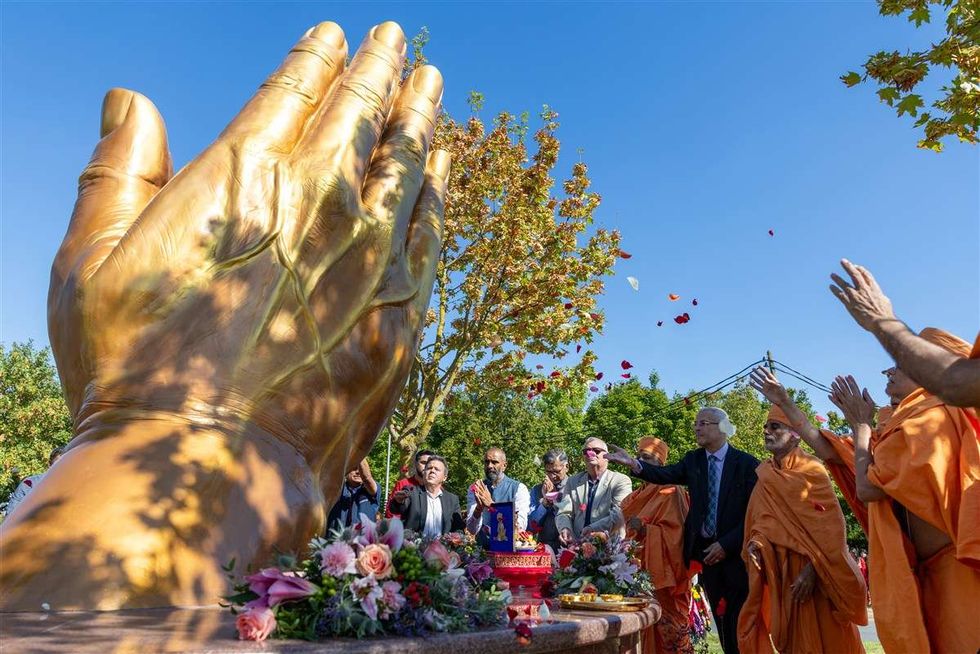 A sculpture of folded hands in the traditional Indian gesture of namaste was unveiled at a roundabout in Bussy-Saint-Georges this weekBAPS Paris Media