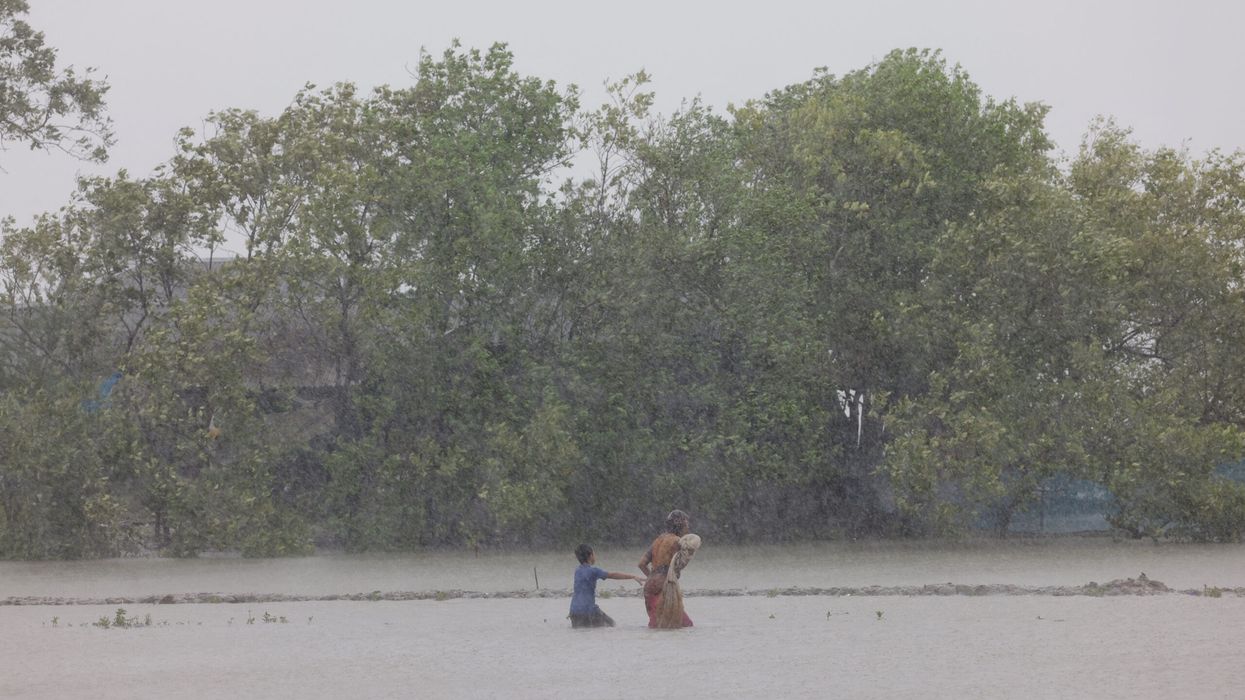

Torrential rains brought by cyclone Remal caused a collapse in a stone quarry in India's state of Mizoram, killing 15 people and trapping seven, while eight more died in landslides and other accidents elsewhere in the remote region, officials said.
Weather authorities said the powerful cyclone had weakened into a depression after devastating regional coastlines the previous day, when it killed at least 16 and cut power to millions in parts of eastern India and neighbouring Bangladesh.
But harsh weather was hampering efforts on Tuesday to rescue at least seven people trapped in the quarry on the outskirts of Aizawl, the capital of northeastern Mizoram, disaster management officials said.
"There have been incessant rains in the wake of cyclone Remal, which led to the quarry collapse," one of them told Reuters, speaking on condition of anonymity.
Seven more people were killed in landslides in Mizoram, which shares a border with Bangladesh, while a falling tree killed one person in nearby Assam, officials said, as schools and colleges shut.
Authorities in India's eastern state of West Bengal were working to restore electricity in the worst-affected areas, after Remal stripped power lines and uprooted trees. So far, eight peopole have died in this state.
In the state capital Kolkata, heavy rains led to flooding in the streets, and wall collapses were reported across the city.
Remal is the first of the frequent storms expected to pound the low-lying coasts of the South Asian neighbours this year as climate change drives up sea surface temperatures.
Read Also: Police mobilise 80 detectives for Post Office criminal inquiry
Many parts of coastal Bangladesh have no electricity and telecoms links, officials said, but crews were working to restore power as soon as possible.
"Mass evacuations significantly reduced potential casualties, but the storm left a trail of destruction," said disaster management chief Mijanur Rahman, adding that damages cannot be fully estimated unless communications are restored. (Agencies)






 Bhavan London
 Bhavan London