
- UK Business Secretary Jonathan Reynolds has warned that tariffs on Chinese cars could trigger retaliation against British exports.
- Cars were the UK's biggest goods export to China, worth £3.5 billion in the year to March 2026.
- The EU is considering voluntary limits on Chinese hybrid car exports as pressure grows on its own manufacturers.
Britain's electric vehicle debate has moved beyond the question of how many Chinese cars are entering the market.
The bigger question is what happens if the UK tries to stop them.
Business Secretary Jonathan Reynolds has warned that imposing tariffs on Chinese electric vehicles could prompt Beijing to retaliate against British exports, potentially putting some of the country's most recognisable car brands in the firing line.
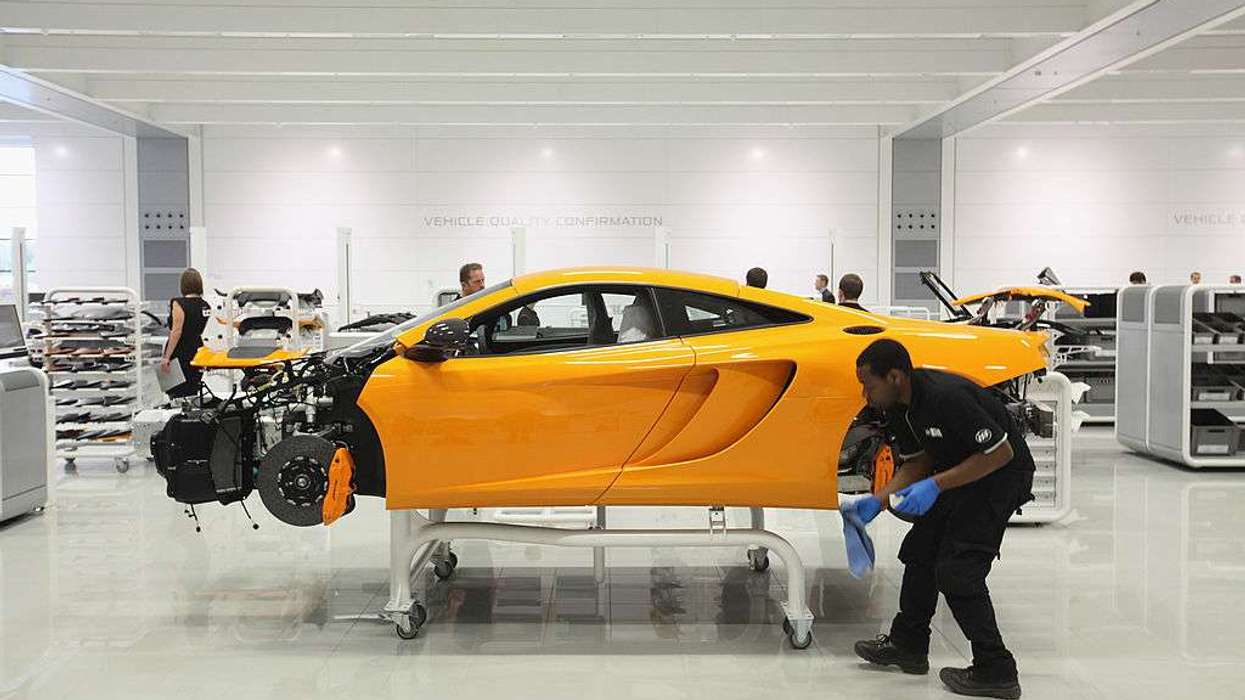
“The fundamental thing is, where are our interests in the UK?” Reynolds said while speaking at McLaren's factory in Woking.
His comments come as pressure builds on the government from parts of Britain's car industry to take a tougher approach to Chinese vehicle imports.
Nissan has called for tariffs on Chinese cars, arguing that protection could help support UK manufacturing. But the government is also looking at the other side of the equation: China is an important export market for British manufacturers, particularly premium and luxury carmakers.
Britain has something to lose in China
UK government trade figures show that Britain exported £31.4bn of goods and services to China in the four quarters to the end of 2025.
Cars were the UK's largest goods export to China, worth £3.5bn in the four quarters to the end of March 2026.
That means any retaliation from Beijing could potentially affect companies including Jaguar Land Rover, Bentley, Rolls-Royce, Aston Martin and McLaren, all of which have exposure to the Chinese market.
It creates an awkward calculation for the government.
Tariffs could make Chinese vehicles more expensive in Britain and potentially offer some protection to domestic manufacturers. But if China responded with tariffs or other restrictions on British exports, the same policy could create new problems for UK carmakers selling into one of the world's biggest automotive markets.
Reynolds has therefore argued that the government needs to consider the interests of British exporters as well as manufacturers competing against Chinese imports at home.
Europe is trying another route
Britain is not alone in struggling with the rise of Chinese vehicles.
The European Union has already imposed additional tariffs on Chinese electric vehicles, but Brussels is now considering a different approach for hybrids.
According to a report, the EU has asked China to voluntarily limit its hybrid vehicle exports so that they account for around 15 per cent of the European market. Chinese hybrids currently account for more than a third, according to the report.
An EU official was quoted as saying that if China did not limit its exports voluntarily, the bloc could impose restrictions itself.
The proposal is part of a broader attempt to manage the trade relationship without allowing the dispute to develop into a wider confrontation.
European Commission president Ursula von der Leyen said on Wednesday that the EU would use all available tools to address what she described as an “unsustainable” trade deficit with China.
The bloc's goods trade deficit with China reached €360.6bn (£312bn) in 2025, according to EU figures cited in reports, and widened further in the first half of 2026.
Von der Leyen said Europe was experiencing a second “China shock” through deindustrialisation.
China has rejected claims that its export growth is being driven by excess industrial capacity, describing such concerns as protectionist.
The pressure is coming from both sides
For Britain's car industry, the debate is becoming increasingly difficult to separate from the country's wider industrial strategy.
Nissan wants stronger measures against Chinese imports while also seeking changes to the UK's electric vehicle rules. The Japanese manufacturer is investing £170m in its Sunderland operation as it prepares for further electric vehicle production.
The government's position reflects a different concern.
Britain wants to maintain domestic vehicle manufacturing and employment, but it also needs to protect companies that depend on overseas markets. Luxury manufacturers in particular rely on international customers, making access to markets such as China commercially important.
The UK is therefore facing two competing pressures: Chinese manufacturers are becoming increasingly significant competitors at home, while China remains an important destination for British-made cars.
That is why the tariff question is not simply about protecting the cars built in Britain.
It is also about what might happen to the cars Britain sells abroad if Beijing decides to respond.