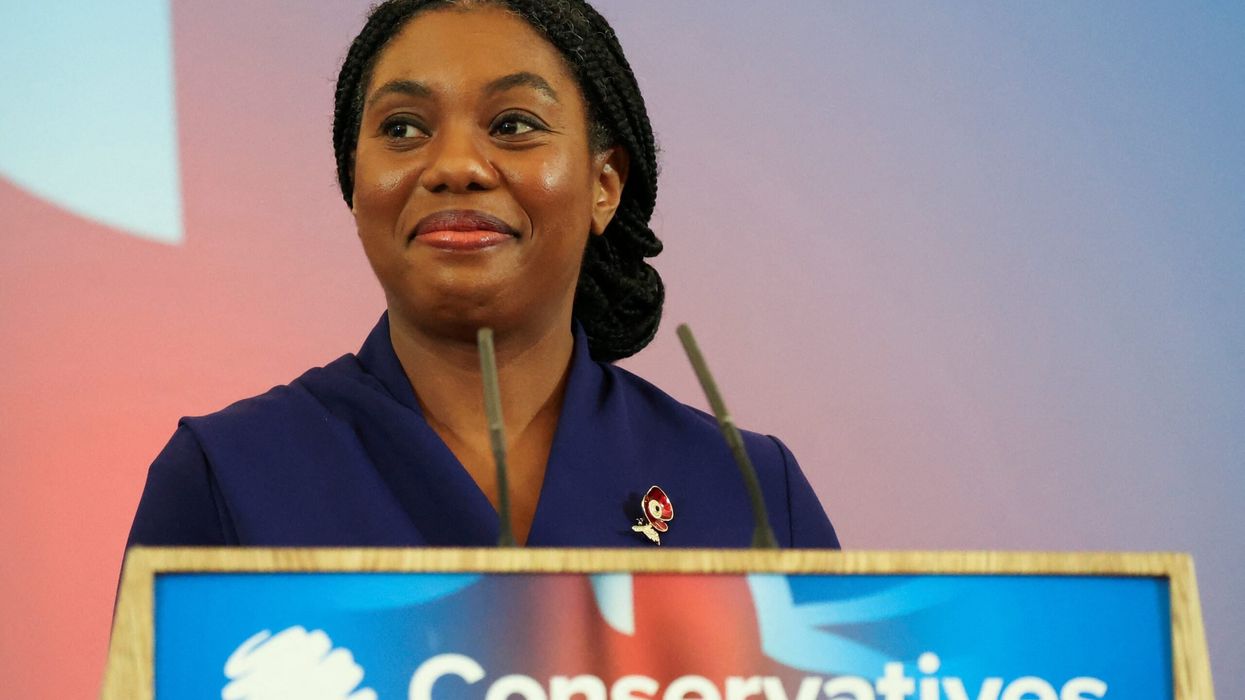

KEMI BADENOCH on Saturday won the vote to become the UK Conservatives' new leader, replacing Rishi Sunak who quit after the party's poor showing in July's general election.
As Britain's first Black woman leader of a major political party, Badenoch is certain to shake up the Conservatives.
Badenoch, 44, came out on top in the two-horse race with former immigration minister Robert Jenrick, winning 57 per cent of the votes of party members.
She said that becoming party leader was an "enormous honour", but that "the task that stands before us is tough".
"We have to be honest about the fact we made mistakes" and "let standards slip," she said.
"It is time to get down to business, it is time to renew," she added.
The combative former equalities minister now faces the daunting task of reuniting a divided and weakened party that was emphatically ousted from power in July after 14 years in charge.
Badenoch will become the official leader of the opposition and face off against Labour's Keir Starmer in the House of Commons every Wednesday for the traditional Prime Minister's Questions.
However, she will be leading a much-reduced cohort of Tory MPs in the chamber following the party's dismal election showing.
She must plot a strategy to regain public trust while stemming the flow of support to the right-wing Reform UK party, led by Brexit figurehead Nigel Farage.
Having campaigned on a right-wing platform, she also faces the prospect of future difficulties within the ranks of Tory lawmakers, which includes many centrists.
Hardliner
Born in London and raised in Nigeria until 16 by her Nigerian father and mother, Badenoch says growing up in a place where "fear was everywhere" made her appreciate the safety of Britain and become a true defender of Conservative principles such as "free speech, free enterprise and free markets".
She says the administrations of former prime ministers such as Sunak and Boris Johnson gave up those principles in favour of an approach that meant the party "spoke right and governed left", handing votes to other parties.
Badenoch has called for a return to conservative values, accusing her party of having become increasingly liberal on societal issues such as gender identity.
She describes herself as a straight-talker, a trait that has caused controversy on the campaign trail.
When addressing immigration, Badenoch said that "not all cultures are equally valid" when deciding who should be allowed to live in the UK.
She was widely criticised after suggesting that statutory maternity pay on small businesses was "excessive" and sparked further furore when she joked that up to 10 percent of Britain's half a million civil servants were so bad that they "should be in prison".
While some might see such slip-ups as a problem, Badenoch sees her straight talking as an asset, one she says has helped her work well in teams in government. (Agencies)