Skip to content
Search

Latest Stories

‘Common sense’ decision on gender-neutral toilets

Unisex toilets, where men and women mingle sometimes in intimate spaces, are not for British Asians, given they are conservative in such matters

‘Common sense’ decision on gender-neutral toilets

GENDER-NEUTRAL or unisex toilets, where men and women mingle sometimes in intimate spaces, are not for British Asians, given they are conservative in such matters. 

 The National Portrait Gallery in London, which had separate toilets, has come back after its £41.3 million renovation with unisex toilets. They have also been introduced at the Lyric Hammersmith. 


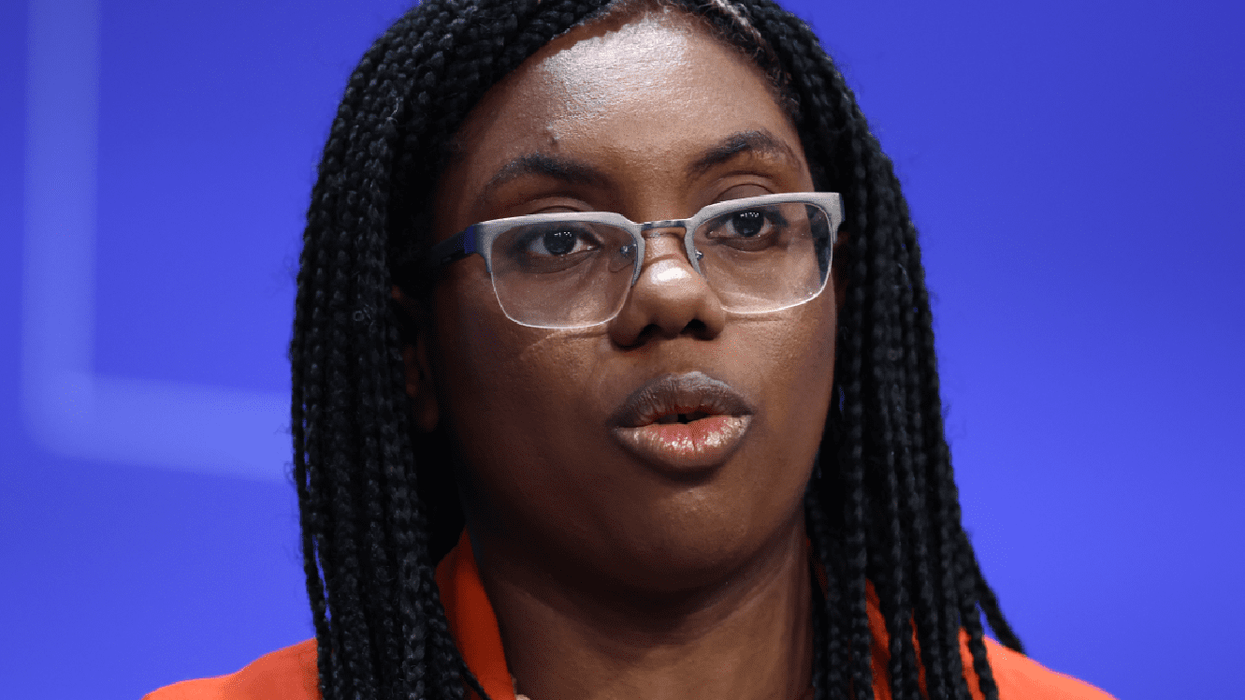
 Kemi Badenoch, the business and trade secretary plus the minister for women and equalities, has quite sensibly announced that all new buildings open to the public will have to include single-sex male and female lavatories. 

 She said the government must step in when “common sense disappears”. 

 Unisex toilets are fully enclosed spaces with lockable doors and sinks. Gender-neutral toilets, on the other hand, are mixed-sex facilities where both men and women use the same cubicles and sinks. 

 “My job is increasingly spent legislating for common sense and stopping those intent on causing harm,” Badenoch said. “Women should have exclusive access to public toilet facilities reserved specifically for them. Men should have the same. Female loos should have cubicles, while male ones can have urinals. 

 “Transgender individuals should have privacy. The signage on the door should clearly indicate what to expect.” 

 She criticised the Old Vic Theatre in London for its decision in 2019 to convert all of its male and female toilets to gender-neutral facilities. She also mentioned that doctors had recently reported instances where girls in certain schools either contracted infections or skipped classes entirely due to their reluctance to use gender-neutral toilets. 

 Once upon a time, it was the practice for upper class husbands and wives to have separate bedrooms with attached bathrooms. I remember in 1992 when Prince Charles and Princess Diana went to India on an official visit, an official from the Indian president’s staff briefed the British press party on the wing in Rashtrapati Bhavan which the Princess of Wales would occupy. Charles would be in an other wing of the presidential palace. “Ah, separate bedrooms,” exclaimed my tabloid colleagues. “This means their marriage is in trouble.” 

 As it turned out, it was, but others pointed out that among the British aristocracy, men and women had separate bedrooms. On a recent visit to Chartwell, the guide pointed out the bedroom that was occupied by Winston Churchill’s wife, Clementine. This allowed upper class women to have two advantages – maintain a certain romance and mystery in their marriage, and also slip in lovers in big mansions (like the fictional Downton Abbey) without the husband finding out. 

More For You

Baffling cabinet reshuffle

Piyush Goyal with Jonathan Reynolds at Chequers during the signing of the UK–India Free Trade Agreement in July

Baffling cabinet reshuffle

IN SIR KEIR STARMER’S cabinet reshuffle last week, triggered by the resignation of Angela Rayner, the prime minister shifted Jonathan Reynolds from business and trade secretary and president of the board of trade after barely a year in the post to chief whip, making him responsible for the party.

The move doesn’t make much sense. At Chequers, the UK-India Free Trade Agreement was signed by Reynolds, and the Indian commerce and industry minister, Piyush Goyal. They had clearly established a friendly working relationship.

Keep ReadingShow less
​Dilemmas of dating in a digital world

We are living faster than ever before

AMG

​Dilemmas of dating in a digital world

Shiveena Haque

Finding romance today feels like trying to align stars in a night sky that refuses to stay still

When was the last time you stumbled into a conversation that made your heart skip? Or exchanged a sweet beginning to a love story - organically, without the buffer of screens, swipes, or curated profiles? In 2025, those moments feel rarer, swallowed up by the quickening pace of life.

Keep ReadingShow less
Comment: Mahmood’s rise exposes Britain’s diversity paradox

Shabana Mahmood, US homeland security secretary Kristi Noem, Canada’s public safety minister Gary Anandasangaree, Australia’s home affairs minister Tony Burke and New Zealand’s attorney general Judith Collins at the Five Eyes security alliance summit on Monday (8)

Comment: Mahmood’s rise exposes Britain’s diversity paradox

PRIME MINISTER Keir Starmer’s government is not working. That is the public verdict, one year in. So, he used his deputy Angela Rayner’s resignation to hit the reset button.

It signals a shift in his own theory of change. Starmer wanted his mission-led government to avoid frequent shuffles of his pack, so that ministers knew their briefs. Such a dramatic reshuffle shows that the prime minister has had enough of subject expertise for now, gambling instead that fresh eyes may bring bold new energy to intractable challenges on welfare and asylum.

Keep ReadingShow less
indian-soldiers-ww1-getty
Indian infantrymen on the march in France in October 1914 during World War I. (Photo: Getty Images)
Getty Images

Comment: We must not let anti-immigration anger erase south Asian soldiers who helped save Britain

This country should never forget what we all owe to those who won the second world war against fascism. So the 80th anniversary of VE Day and VJ Day this year have had a special poignancy in bringing to life how the historic events that most of us know from grainy black and white photographs or newsreel footage are still living memories for a dwindling few.

People do sometimes wonder if the meaning of these great historic events will fade in an increasingly diverse Britain. If we knew our history better, we would understand why that should not be the case.

For the armies that fought and won both world wars look more like the Britain of 2025 in their ethnic and faith mix than the Britain of 1945 or 1918. The South Asian soldiers were the largest volunteer army in history, yet ensuring that their enormous contribution is fully recognised in our national story remains an important work in progress.

Keep ReadingShow less
Spotting the signs of dementia

Priya Mulji with her father

Spotting the signs of dementia

How noticing the changes in my father taught me the importance of early action, patience, and love

I don’t understand people who don’t talk or see their parents often. Unless they have done something to ruin your lives or you had a traumatic childhood, there is no reason you shouldn’t be checking in with them at least every few days if you don’t live with them.

Keep ReadingShow less