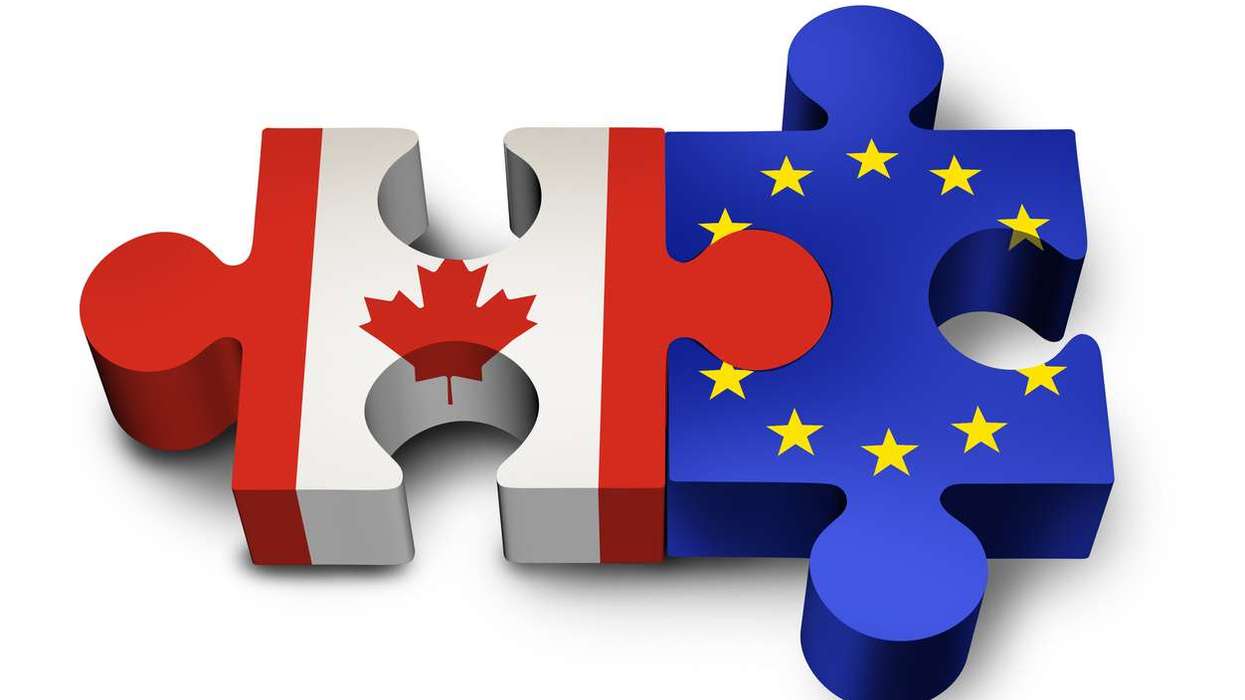

- Canada could become the EU’s first-ever “associate member” under a status that does not currently exist.
- The proposed partnership could cover defence, AI, energy, critical minerals and advanced technology.
- The offer comes as Canada looks to reduce its dependence on US trade and build closer ties with Europe.
Something unusual happened in the European Parliament on Wednesday: the European Union offered Canada a relationship that the EU does not currently have a formal category for.
European Commission president Ursula von der Leyen said she wanted to work with Canadian prime minister Mark Carney on making Canada the bloc’s first “associate member”. She said the EU and Canada “see the world with the same eyes”, pointing to shared democratic values and common positions on issues ranging from artificial intelligence and climate change to Ukraine and geopolitics.
The proposal was met with applause from European Parliament members, with Carney seated nearby. But what exactly would “associate member” mean?
Canada is not being invited to become a full EU member.
Carney had already said before his European trip that Canada was looking for a “unique alliance” with the 27-member bloc rather than EU membership. Full membership would also not fit the existing framework, with EU accession designed for European states.
Instead, von der Leyen is proposing something in between the EU’s existing relationships with non-member countries and full membership.
The catch is that there is currently no associate-membership category in EU treaties. That means the details — including what Canada would actually have access to and what rules it would have to follow — still need to be worked out. Any formal arrangement would also require agreement from all 27 EU member states.
So what could Canada get?
Von der Leyen outlined a relationship that could go well beyond the existing Canada-EU trade agreement, known as CETA.
She proposed closer cooperation on manufacturing, technology, defence, energy, critical minerals, batteries, AI, quantum computing, cybersecurity and economic security.
The two sides could also look at integrating their defence industrial bases and making the Arctic a joint project. For the EU, Canada's energy and natural resources are particularly relevant as Europe seeks greater security over supplies and critical materials.
Canada has already moved closer to the EU on defence. Carney's government says Canada is the only non-European member of the EU's SAFE defence procurement initiative, and he has described the broader goal as increasing Canada's strategic autonomy through partnerships.
Why Canada, and why now?
The timing is difficult to ignore.
Canada is trying to reduce its heavy dependence on the US as trade tensions with Donald Trump’s administration continue. Carney's government has said it wants to double Canada's non-US trade within a decade and is looking to strengthen relationships with Europe and other markets.
The EU, meanwhile, is looking for stronger relationships with countries that can contribute energy, critical minerals, defence capabilities and technology.
That makes the relationship potentially useful to both sides.
Carney's presence in Strasbourg also carried symbolic weight. He was the first non-European leader invited to attend the European Commission president’s State of the Union address, before being due to address the European Parliament himself.
The proposal does not automatically give Canada access to the EU single market, free movement or decision-making powers.
In fact, those could be among the most difficult questions to resolve.
The EU has previously resisted arrangements that would allow a country to enjoy parts of the single market while remaining outside the bloc's full obligations. Any deeper integration with Canada could therefore require Ottawa to align with EU rules in areas where it currently has its own regulatory approach.
There are also unresolved issues with the existing Canada-EU trade relationship. CETA, the trade agreement signed in 2016, has still not been fully ratified by all EU member states.
The proposed status could therefore take considerable negotiating.
For now, “associate member” is more of an idea than a finished legal arrangement. But the significance of the offer is that both sides are considering a relationship that goes beyond a conventional trade deal — without requiring Canada to become part of the EU itself.
The next major step is expected at the Canada-EU summit in October, when the two sides are due to work on the future shape of their relationship.