
Highlights:
- Banksy’s ‘Piranhas’ artwork, painted on a police sentry box, is being stored ahead of display at London Museum.
- The piece was originally one of nine works that appeared across London in August 2024.
- It will form part of the museum’s new Smithfield site, opening in 2026.
- The City of London Corporation donated the artwork as part of its £222m museum relocation project.
Banksy’s police box artwork in storage
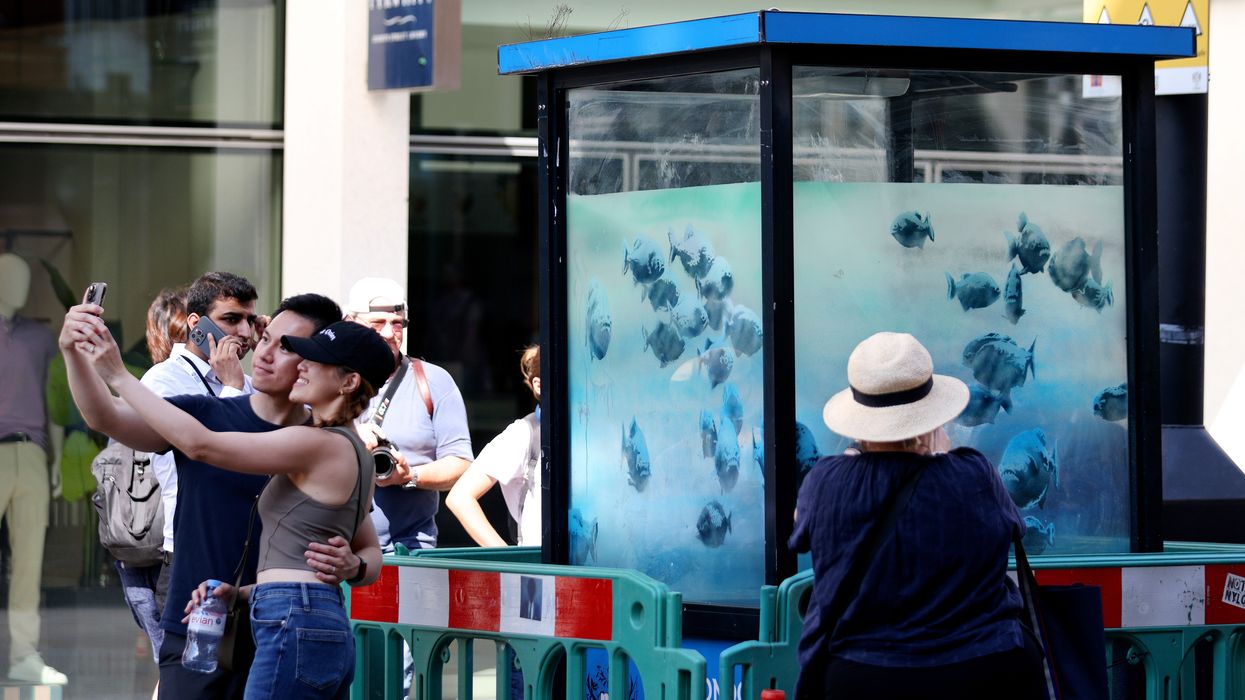
A Banksy artwork known as Piranhas has been placed in storage ahead of its future display at the London Museum’s new Smithfield site, scheduled to open in 2026. The piece features spray-painted piranha fish covering the windows of a police sentry box, giving the illusion of an aquarium.
From Ludgate Hill to Guildhall Yard
The police box, which had stood at Ludgate Hill since the 1990s, was swiftly removed by the City of London Corporation after Banksy confirmed authorship. It was initially displayed at Guildhall Yard, where visitors could view it from behind safety barriers. The Corporation has since voted to donate the piece to the London Museum.
Museum’s first contemporary street art
London Museum’s Head of Curatorial, Glyn Davies, said:
“With the arrival of Banksy’s Piranhas, our collection now spans from Roman graffiti to our first piece of contemporary street art. This work by one of the world’s most iconic artists now belongs to Londoners, and will keep making waves when it goes on show next year in the Museum’s new Smithfield home.”
Formerly known as the Museum of London, the institution closed its London Wall site in December 2022 as part of its relocation. It rebranded as the London Museum in July 2024, with £222m allocated by the City of London Corporation to support the move. The project is expected to attract two million visitors annually and create more than 1,500 jobs.
Part of Banksy’s animal-themed series
Piranhas was one of nine animal-themed works Banksy created across London in August 2024. The series also featured a rhino on a car, two elephants with interlocked trunks, monkeys swinging from a bridge, a howling wolf on a satellite dish, and a goat painted on a wall. Some of the artworks were later vandalised, removed, or covered up.
Preserving street art for the public
Chris Hayward, policy chairman of the City of London Corporation, said:
“Banksy stopped Londoners in their tracks when this piece appeared in the Square Mile – and now, we’re making it available to millions. By securing it for London Museum, we’re not only protecting a unique slice of the City’s story, but also adding an artwork that will become one of the museum’s star attractions.”