
Skip to content
Search

Latest Stories

Submit Guest Post

Bank of England maintains interest rate amid inflation rise

The decision to hold rates contrasts with the US Federal Reserve, which cut borrowing costs by a quarter-point on Wednesday while signalling fewer rate reductions for the coming year.

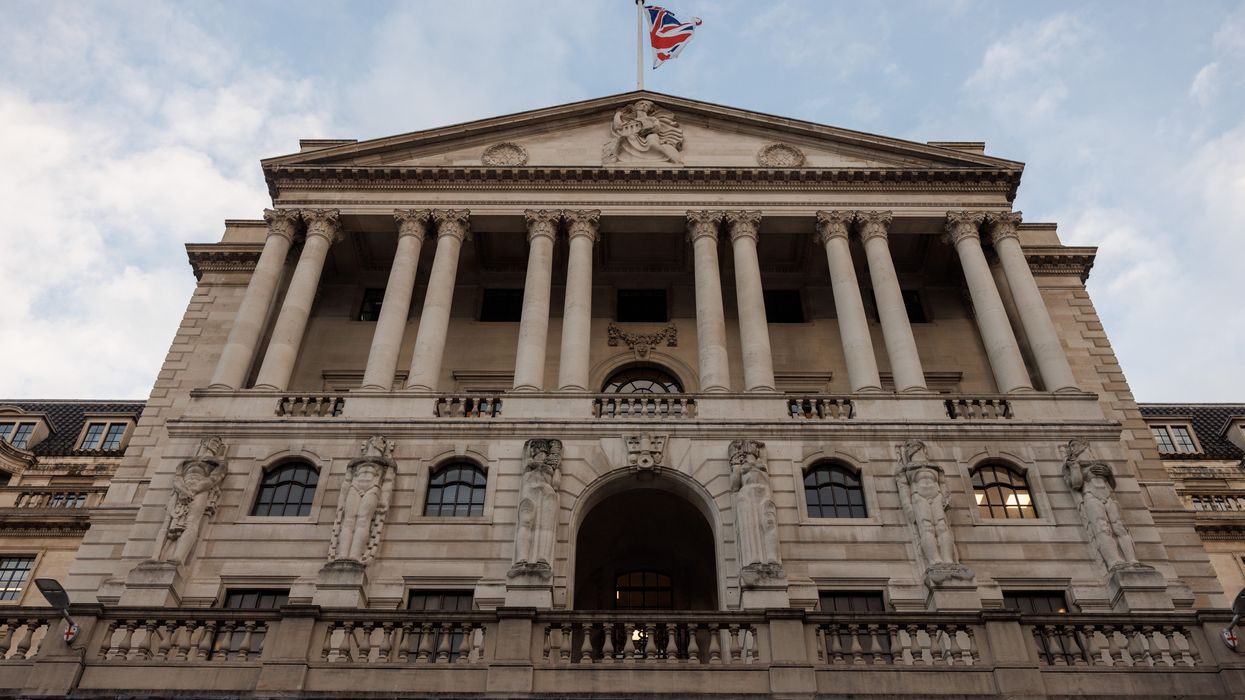
Bank-of-England-Getty

A general view of the Bank of England on December 19, 2024 in London. (Photo credit: Getty Images)

THE BANK OF ENGLAND (BoE) on Thursday kept its key interest rate unchanged at 4.75 per cent, opting not to follow the US Federal Reserve's recent rate cut, as inflation in the UK sees an uptick.

"We've held interest rates today following the two cuts since the summer," BoE Governor Andrew Bailey said in a statement.


Bailey emphasised the importance of meeting the two per cent inflation target, saying, "We need to make sure we meet the two-percent inflation target on a sustained basis."

His comments came after UK annual inflation rose to 2.6 per cent, according to data released earlier this week.

The decision to hold rates contrasts with the US Federal Reserve, which cut borrowing costs by a quarter-point on Wednesday while signalling fewer rate reductions for the coming year.

Last week, the European Central Bank also reduced eurozone rates, while the Bank of Japan left its rates unchanged in an announcement on Thursday.

Chancellor Rachel Reeves expressed support for the BoE’s decision, acknowledging the challenges it poses for households.

"I know families are still struggling with high costs," Reeves said. "We want to put more money in the pockets of working people, but that is only possible if inflation is stable, and I fully back the Bank of England to achieve that."

Had the BoE opted to lower its rate, retail banks might have reduced borrowing costs, including on mortgages, potentially easing pressure on consumers.

(With inputs from Reuters)

Add EasternEye As Your Trusted Source
preferred source on google news

More For You

Burnham's moment: How Makerfield redrew Britain's political map
Andy Burnham greets supporters at the Labour campaign HQ at Stubshaw Cross Community and Sports Club on June 18, 2026 in Ashton-in-Makerfield, England. Credit: Getty Images

Burnham's moment: How Makerfield redrew Britain's political map

Sunder Katwala

Makerfield proved to be the making of a new prime minister. This extraordinary by-election produced the pivotal moment of this parliament – while illuminating the challenges facing the competing political tribes now.

Andy Burnham ran as Labour’s candidate to change the Labour government – and its leadership, too. It was an unusually positive personal campaign – focused on his back-story, track record and commitment to public service, rather than attacks on his political rivals. His campaign messages - including “northern soul” – were rooted in the north-west of England, yet this often resembled an American candidate’s campaign. Burnham had somehow seemed to conjure up a midterm primary election to qualify to contest the party leadership, having nominated his home town to host it.

Keep ReadingShow less