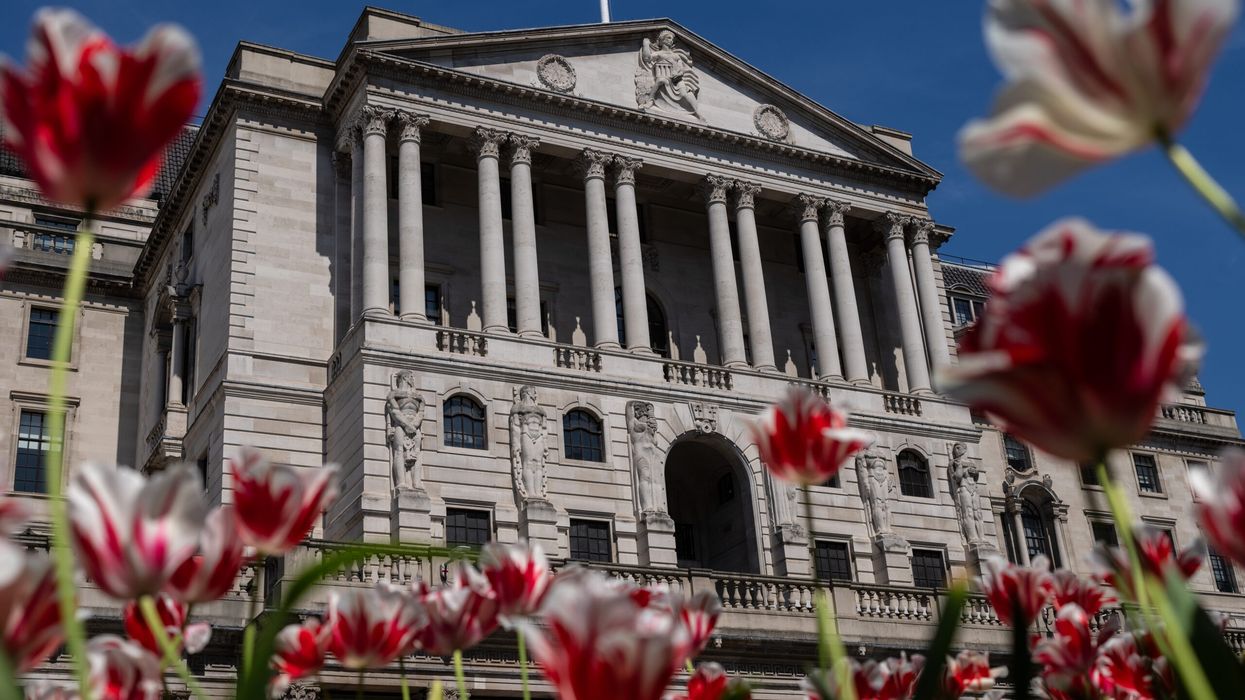

THE BANK OF ENGLAND is expected to keep interest rates unchanged on Thursday as it monitors the impact of US president Donald Trump’s trade tariffs and the UK government’s upcoming tax increase for employers.
UK inflation remains above the BoE’s 2 per cent target, and the central bank has cut interest rates less than the European Central Bank and the US Federal Reserve since last summer. This has contributed to slower economic growth.
The BoE lowered its benchmark Bank Rate to 4.5 per cent in February, stating that further cuts would be made gradually due to economic uncertainties.
Uncertainty has increased since then, partly due to Trump’s planned import tariffs on several US trading partners from April 2, which could affect global growth and inflation.
On Wednesday, the US Federal Reserve cut its economic growth forecast for the year, raised its inflation projection, and kept interest rates unchanged, citing increased uncertainty.
In the UK, a rise in social security contributions paid by employers takes effect on April 6. The BoE has noted that this could lead to higher prices, weaker hiring, or both.
The Monetary Policy Committee is also watching chancellor Rachel Reeves’ budget update next Wednesday, where she is expected to announce spending cuts, a key factor in Britain’s economic outlook.
“We expect the committee to hold rates steady, with little change to the guidance that will continue to favour caution and time optionality while the incoming cost shocks are digested,” economists at Citi said in a note on Wednesday.
Last month, the BoE said inflation could reach 3.7 per cent later this year, up from January’s 3 per cent. Some economists predict it could reach 4 per cent, challenging the BoE’s assumption that wage pressures will not drive long-term inflation.
Data on UK wage growth and the labour market will be released at 0700 GMT on Thursday.
Inflation concerns
“The BoE is far too sanguine about elevated long-term consumer inflation expectations,” Robert Wood, chief UK economist at Pantheon Macroeconomics, said. “We think extra inflation persistence is likely to result from faster price rises this year.”
A Reuters poll of 61 economists this month found all expected the BoE to hold rates at 4.5 per cent at its March meeting. The next cut is expected in May, followed by further reductions in August and November.
Financial markets suggest investors anticipate only two quarter-point rate cuts for the rest of the year.
Most economists in the Reuters poll expected seven MPC members to vote to keep rates steady, with two backing a quarter-point reduction.
In February, the committee voted 7-2 for a quarter-point cut, with the two dissenters calling for a half-point reduction.
Another factor in the BoE’s discussions this week is Germany’s announcement of a 500-billion-euro infrastructure and defence investment plan, along with a new 150-billion-euro EU-wide defence programme.
Large-scale spending in the euro zone could support economic growth, potentially benefiting the UK.
(With inputs from Reuters)