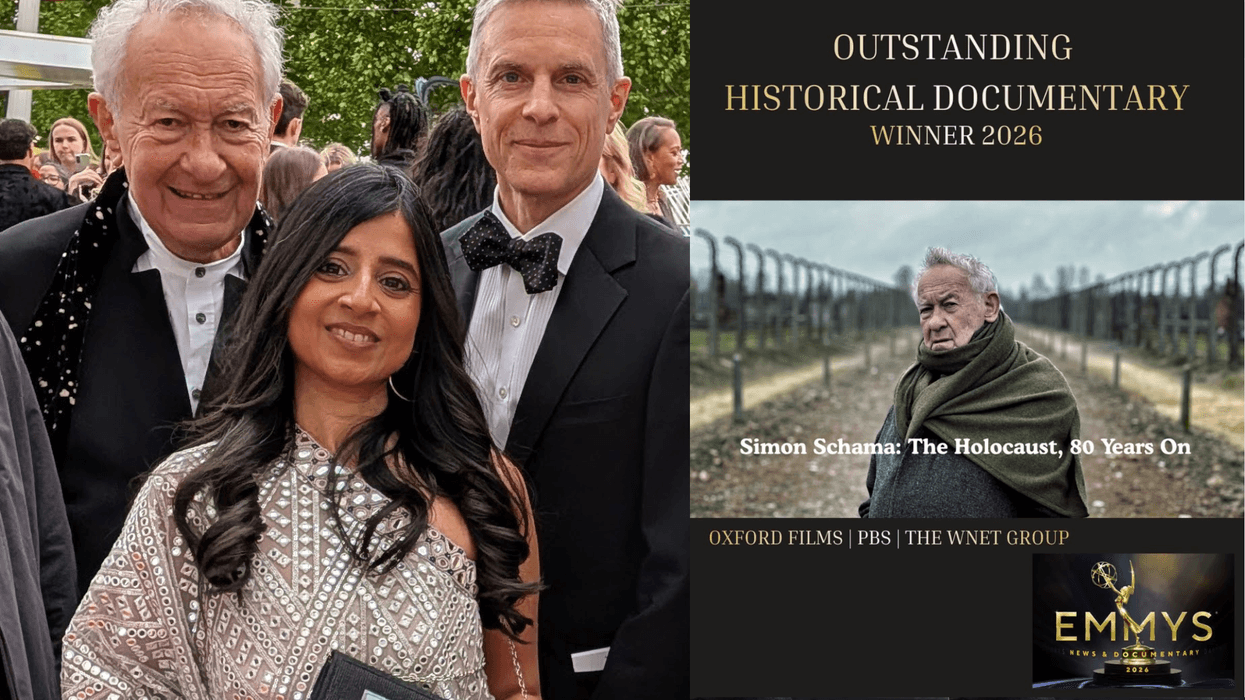

BAFTA and Emmy Award-winning producer-director Jyoti Mehta, recently honoured for her work on Road to Auschwitz, spoke in an exclusive interview with Eastern Eye, reflecting on a career shaped by persistence, identity, and a determination to tell difficult stories for global audiences.
Her 2026 wins at both the BAFTA and Emmy Awards mark a major milestone in a 13-year journey across the BBC, Netflix, National Geographic, Channel 4, and Disney+. Still, Mehta emphasises that the recognition is only one part of a much longer story defined by struggle, resilience, and navigating the British television industry as a British Asian woman.
While speaking to Eastern Eye, Mehta said the award felt both surreal and deeply earned, rooted in years of sustained creative work across factual storytelling.
“It is an honour I could never have imagined, and it still feels surreal. But I keep in mind the words of my colleagues and those who know me: that it is deserved and the result of my hard work throughout my career.”
For Mehta, Road to Auschwitz is not just an award-winning documentary but the culmination of a long intellectual and emotional engagement with questions of trauma, memory, and interfaith understanding. She traces this back to her university years, where reading Art Spiegelman’s Maus became a turning point in how she understood history and human suffering.
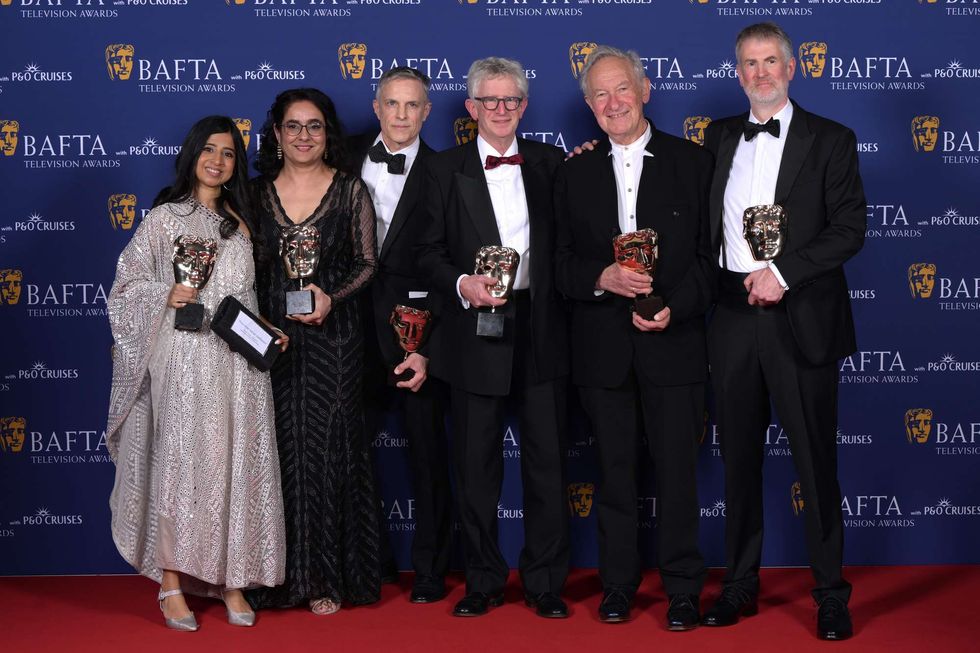 Jyoti Mehta with team of 'Road to Auschwitz' at Cannes Film Festival 2026.Getty Images
Her journey into the British television industry, however, was far from straightforward. Raised in a culturally rooted Indian family in the UK, Mehta describes a childhood shaped by Gujarati language, Jain and Hindu traditions, classical dance, and deep discussions around identity and history. Yet translating that background into a career in television required overcoming a system she describes as heavily dependent on informal networks.
“There was a tendency for me to be somewhat underestimated, despite repeatedly delivering excellent work. In an industry like TV, being a South Asian woman who is petite and looks younger than her age can I think influence people’s gut instincts about me. There is something all immigrants are raised knowing, that they need to be twice as good as their white peers to even compete with them.”
Before her breakthrough at the BBC, Mehta spent six years attempting to enter the industry, repeatedly applying for internships and entry-level roles without success. Unlike many of her peers, she did not have access to industry contacts or inherited networks.
“I did not have a network in television who could help me get my first job or open any doors for me. I had to do that all for myself.”
Her entry came unexpectedly through a documentary project on the Kumbh Mela, where her cultural knowledge and community access became her first professional gateway into television. That opportunity eventually led to her BBC interview in 2013, launching a freelance career that now spans more than 50 credits across major global broadcasters.
Mehta’s body of work includes original ideas and internationally recognised productions such as Pump Up The Bhangra, British Jews, German Passports, Secrets of the Museum, and Drain the Oceans. She has worked across genres ranging from history and music to museums, natural history, and cultural documentaries.
Despite her strong connection to South Asian narratives, Mehta is careful not to be confined by them.
“It is really important that the industry sees me as someone who can work on any project, just like anybody else in the industry. So I’m always going to be happy to champion Indian culture and history, but also give me completely random other things. I’ve made dinosaur documentaries, gardening documentaries, and Western classical music documentaries.”
Her current project, Ancient India By Train with historian Alice Roberts, reflects this broader approach. The series explores pre-colonial Indian history through travel and archaeology, focusing on stories often overlooked in British mainstream television.
A defining feature of Mehta’s approach is what she describes as a sense of "dharma", a responsibility toward the people whose stories she tells. This, she says, shapes her approach to sensitive and historical subject matter, particularly in documentaries dealing with trauma.
“I treat them with utmost respect and with a duty of care in a way which I interpret almost like my dharma. It’s like I consider it a sacred duty how I treat these people.”
Her work on Road to Auschwitz reflects this philosophy, shaped by her involvement in interfaith dialogue and long-standing engagement with questions of cultural memory and representation.
While she acknowledges progress in the British media, Mehta also points to persistent structural challenges for South Asian professionals in the industry, particularly women.
“I was amazed how many of them told me, ‘I’ll tell you this, because I can tell from your name that you aren’t white.’”
Looking at the broader landscape, Mehta sees increasing representation of British Indians in leadership roles within major broadcasters but emphasises that structural change is still incomplete.
“I hope that Indian-origin creatives move up the ladder into positions of power, especially positions where they can hire.”
For those entering the industry today, her advice remains grounded in realism shaped by experience.
“Know who you are. Surround yourself with a support network that can help you through the lows and can celebrate the highs with you.”
Mehta said she is particularly excited about highlighting India's diverse cultures and lesser-known communities for mainstream audiences. Alongside her upcoming work, she remains proud of Pump Up The Bhangra, a BBC documentary that began as her original idea.
The film will celebrate Bhangra's evolution in Britain, tracing how South Asian immigrants transformed traditional Punjabi music into a distinctly British cultural phenomenon.
For Mehta, the documentary was not only about music but also about the story of migration, identity, and the creation of a new cultural legacy by generations of British Indians.