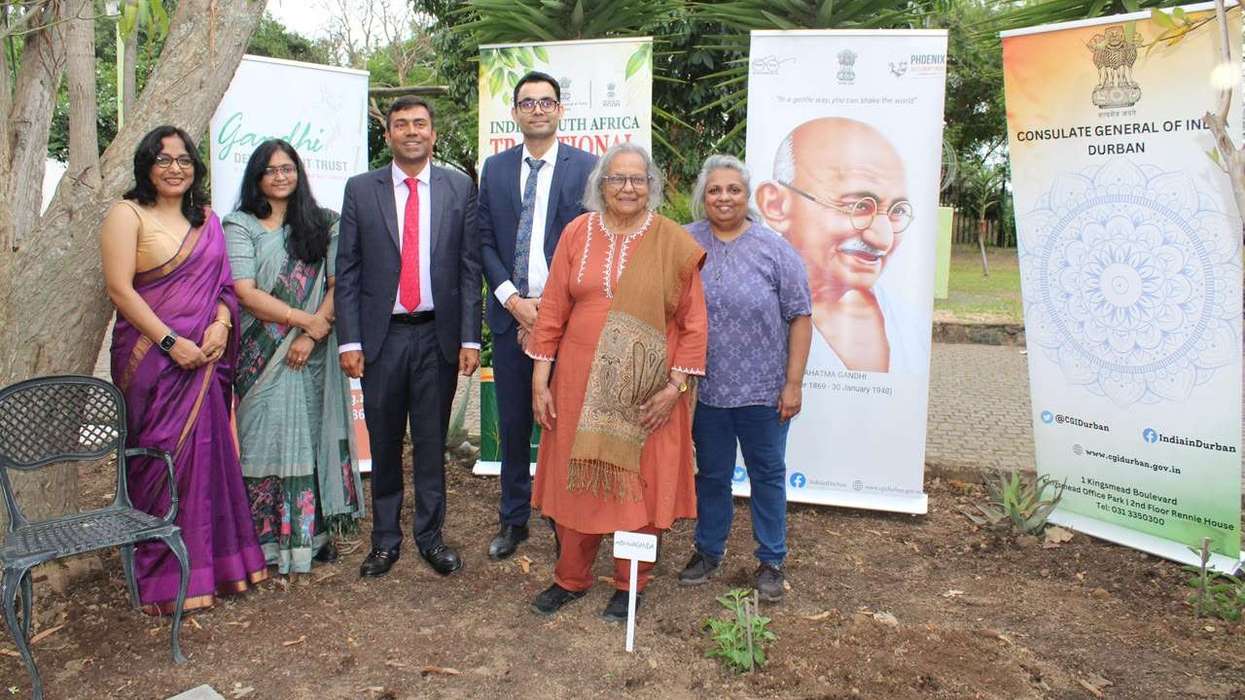

A garden of traditional Ayurvedic herbs has been inaugurated at Phoenix Settlement in Durban, South Africa, a historic site established by Mahatma Gandhi in 1904 during his early years as a lawyer in the country.
The inauguration took place on Sunday (11) and coincided with the India-South Africa Traditional Medicines Symposium and Exhibition. The event was jointly organised by the Consulate General of India in Durban and the Commission for Religious and Linguistic Rights, with support from India’s Ministry of Ayush.
Work on the herbal garden began around 2 October, marking Gandhi’s birth anniversary, before culminating in its inauguration nine days later.
The settlement continues to support community development projects under the Phoenix Settlement Trust, which is headed by Gandhi’s granddaughter, Ela Gandhi.
A garden inspired by Gandhi’s ideas
The new garden brings traditional medicinal herbs to a site associated with Gandhi’s ideas on health, sustainability and community living.
Consul General of India in Durban, Neetin Subash Yeola, highlighted the continuing relevance of Gandhi’s approach to environmental protection and sustainable development.
“Gandhiji's ideas of sustainable growth and environmental protection are of immense significance today as the world prepares for Climate Action,” Yeola said.
The initiative also reflects the historical relationship between the settlement and self-sufficient living. During Gandhi’s time there, he and his followers grew their own fruits, vegetables and herbs.
The addition of an Ayurvedic herb garden builds on that tradition while introducing a space dedicated to traditional medicinal plants and their place in community well-being.
Community welcomes a new healing garden
Asha Ramgobin, Ela Gandhi’s daughter and a board member of the Phoenix Settlement Trust, said the local community had welcomed the development.
She said there was considerable excitement among people using the settlement’s facilities about the addition of a garden focused on healing.
“In the spirit of Gandhiji's ideas on health and well-being, the Gandhi Development Trust and the Phoenix Settlement Trust, in partnership with the Consul General of India in Durban, opened this Ayurvedic and traditional medicinal herb garden,” Ramgobin said.
The project brings together the Gandhi Development Trust, the Phoenix Settlement Trust and the Indian consulate, highlighting cooperation between community organisations and Indian representatives in South Africa.
Preserving the legacy of Phoenix settlement
Founded in 1904, Phoenix Settlement was an important part of Gandhi’s life and the development of his philosophy. It was here that he developed ideas associated with Satyagraha, or the power of truth; Sarvodaya, meaning service to all; and Ahimsa, the principle of non-violence.
The settlement’s history of growing food and herbs reflected an emphasis on self-reliance and living in closer connection with the environment.
The new garden adds another dimension to the site’s community work, bringing traditional Ayurvedic plants into a setting shaped by Gandhi’s legacy.
Its inauguration also formed part of wider India-South Africa engagement on traditional medicine, connecting cultural heritage, community development and discussions about health and well-being.