Skip to content
Search

Latest Stories

Submit Guest Post

Asian arrested in South Africa for wedding scam

wedding scam

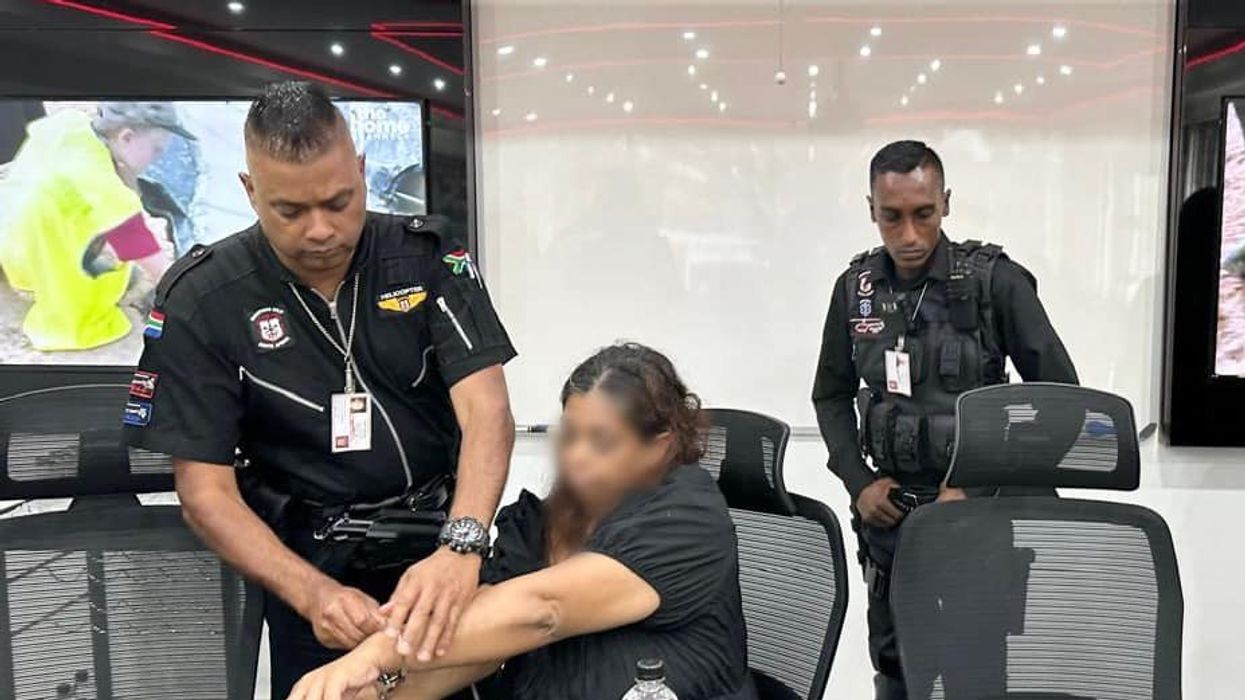
The disbarred attorney was tracked down by private security company Reaction Unit South Africa (RUSA). (Photo credit: Facebook/Reaction Unit South Africa))

A 53-YEAR-OLD South African of Asian origin has been arrested for allegedly scamming 17 couples by taking money from them for the same wedding venue on the same day.

The disbarred attorney was tracked down by private security company Reaction Unit South Africa (RUSA).


Despite her arrest, promises from her attorney and family to repay the victims could help her avoid serving jail time for fraud.

RUSA identified the woman as Prelyn Mohanlall after her attorney, Chris Gounden, contacted them, offering to arrange repayments for victims who could provide proof of payments.

According to RUSA, Mohanlall allegedly convinced couples to pay significant amounts in advance for a venue she had no affiliation with. When the couples arrived, they reportedly found the venue deserted, without water or electricity, ruining their wedding plans.

One of the victims, who wished to remain anonymous, approached RUSA in December last year to track down Mohanlall. Through social media, the company discovered 17 couples who had been scammed in this way.

“Complainants were from several provinces in South Africa. A detective from SAPS Boksburg North (in Gauteng province) informed us that the same suspect was wanted for two fraud cases in Gauteng in 2024. She had defrauded a car dealership of R200,000 and a couple for R26,000,” said Prem Balram, Head of RUSA.

RUSA revealed that Mohanlall claimed to be a former criminal attorney barred by the Law Society after misusing funds from a client’s trust account. “It was later established that the suspect has a criminal record and a history of scams spanning over 20 years,” Balram added.

Mohanlall denied running a scam, telling a local newspaper that her business faced financial difficulties. “It’s not a scam, and I am not a scammer. Late last year, I had nine cancellations and informed each couple they would get a refund. But I could not repay them on time because my partners pulled out in October,” she said.

She claimed to owe nine couples about R60,000 and insisted she planned to repay every cent.

A man who fell victim to the alleged scam shared the emotional and financial toll it took on him and his fiancée. “What she ‘stole’ from us drastically impacted our planning. What we hoped to be our dream day has now become an event where we have to settle for what we can afford,” he said.

(With inputs from PTI)

Add EasternEye As Your Trusted Source
preferred source on google news

More For You

Tackling hostility against Muslims matters for everyone

Anti immigration protesters attend the 'Glasgow Reclaims The Streets From Far-right Hatred And Violence' anti-racism protest on June 13, 2026 in Glasgow, Scotland.

Getty Images

Tackling hostility against Muslims matters for everyone

Sunder Katwala

Born in the mid-1970s I felt part of a lucky generation, which gained from pushing back the overt racism of that era. When we talk about stronger “social norms”, what we mean is that few people thought that monkey chants at the football or racist jokes on the telly were normal anymore – while more had Asian and black colleagues, neighbours and friends.

That past progress is put to the test today. A terrible crime in Belfast saw organised efforts at indiscriminate racist attacks on migrants and ethnic minorities, whose only connection to the crime was the colour of their skin. Those seeking to make racism fashionable again have the online megaphone of the world’s richest man, Elon Musk, on their side.

Past progress could be experienced unevenly, too. Being of mixed Indian and Irish Catholic parentage, I saw both identities rise in status once the BBC comedy Goodness Gracious Me inverted who could tell the jokes, and peace broke out in Northern Ireland. Yet, British Muslims of my generation felt under more intense scrutiny after the 9/11 terrorist attacks.

Efforts to tackle anti-Muslim hatred risked being stalled by arguments over what to call it and how to define it. The government’s new definition of anti-Muslim hostility seeks to transcend the confusion that the term “Islamophobia” could generate. But the challenge is not just to define the prejudice – but to find effective ways to shrink it.

There are sobering findings on the starting points in new research from British Future and the British Muslim Trust. More than half of British Muslims report experiencing prejudice based on their religion last year – a quarter in person and over a third online. A third of the public hold mostly negative views. One in six endorse sweeping and often indiscriminate hostility. Anti-Muslim hostility can have about twice the social reach as prejudice against other faith or ethnic minorities.

Tackling this hostility cannot be the responsibility of Muslims alone. It will take a whole-of-society effort. After all, this is foundationally about the attitudes towards a six per cent minority group, held among the 94 per cent of us who are not Muslim.

Keep ReadingShow less