By Amit Roy
NOW that Vikram Seth’s A Suitable Boy is on TV, it brings to mind the fact that he is supposed to be writing the novel’s sequel, A Suitable Girl.
Lata Mehra, the central character in A Suitable Boy, is 19, with her widowed mother, Mrs Rupa Mehra, determined to find a suitable husband for her daughter. The tale is set in 1951.
In A Suitable Girl, Lata is now 80, which means over 60 years have passed and India, in the year 2012, is a very different country. But some things have not changed. Lata is looking for a suitable girl for one of her grandsons.
At the London Book Fair a few years ago, Seth told me he wasn’t at all sure that a girl was what Lata’s grandson wanted – which made me think a little bit. It remains to be seen if and when Seth’s sequel is delivered.
Finding a suitable girl has also traditionally been the royal family’s concern in Britain. It was thought Prince Charles had found a suitable girl when he began dating Lady Diana Spencer in 1980. Like Lata, Diana was 19 at the time.
It is now generally reckoned by the establishment and the British media that, all things considered, Meghan Markle is not a suitable girl for Prince Harry. It seems the royal family has always had a problem with American women, especially divorced ones.
In 1936, after being king for a year, Edward VIII had to abdicate because he wanted to marry Wallis Simpson, who had been married twice before.
Although Meghan was divorced, the royal family initially appeared to welcome her in 2018. That she was mixed race was seen as a welcome sign that they were starting to reflect modern Britain. Since then, however, it has all gone wrong.
Reconciliation will be harder to achieve after the publication of a book, Finding Freedom, which gives an account of what led to the rift but only from one side. Harry and Meghan insist they did not cooperate personally with the hitherto unknown freelance journalists, Omid Scobie and Carolyn Durand, but it is being assumed that their friends and aides did so with the blessings of the now LA-based Duke and Duchess of Sussex.
It is being suggested that Harry will be welcomed back into the royal family but the door has closed for Meghan, who was never considered a suitable girl. One has a feeling that this is a story that is not going to end well.
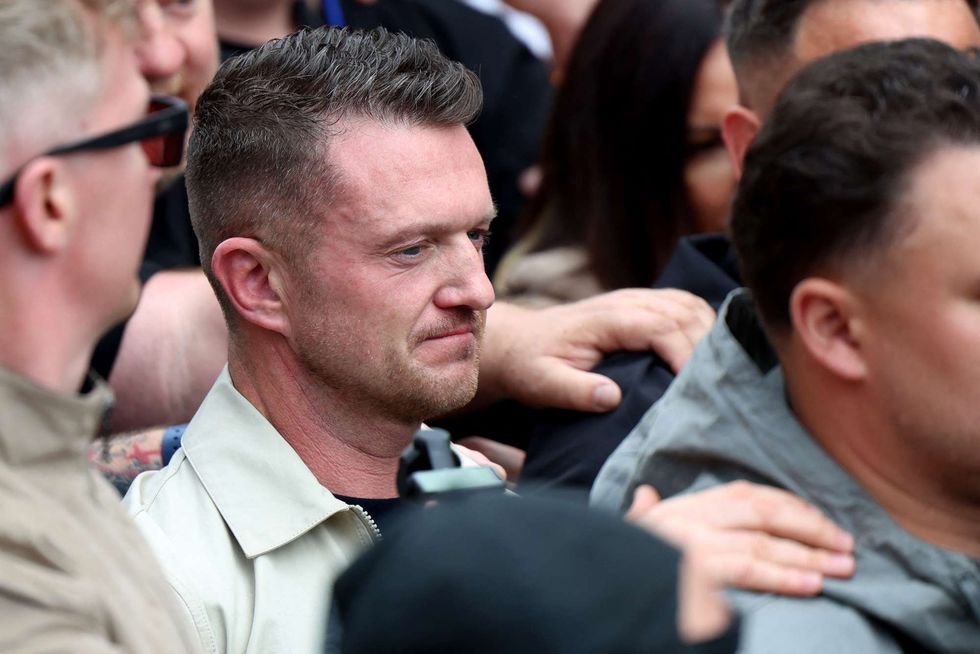 Tommy Robinson, real name Stephen Yaxley-Lennon, looks on during a rally organised by Unite The Kingdom, in central London on May 16, 2026.Getty Images