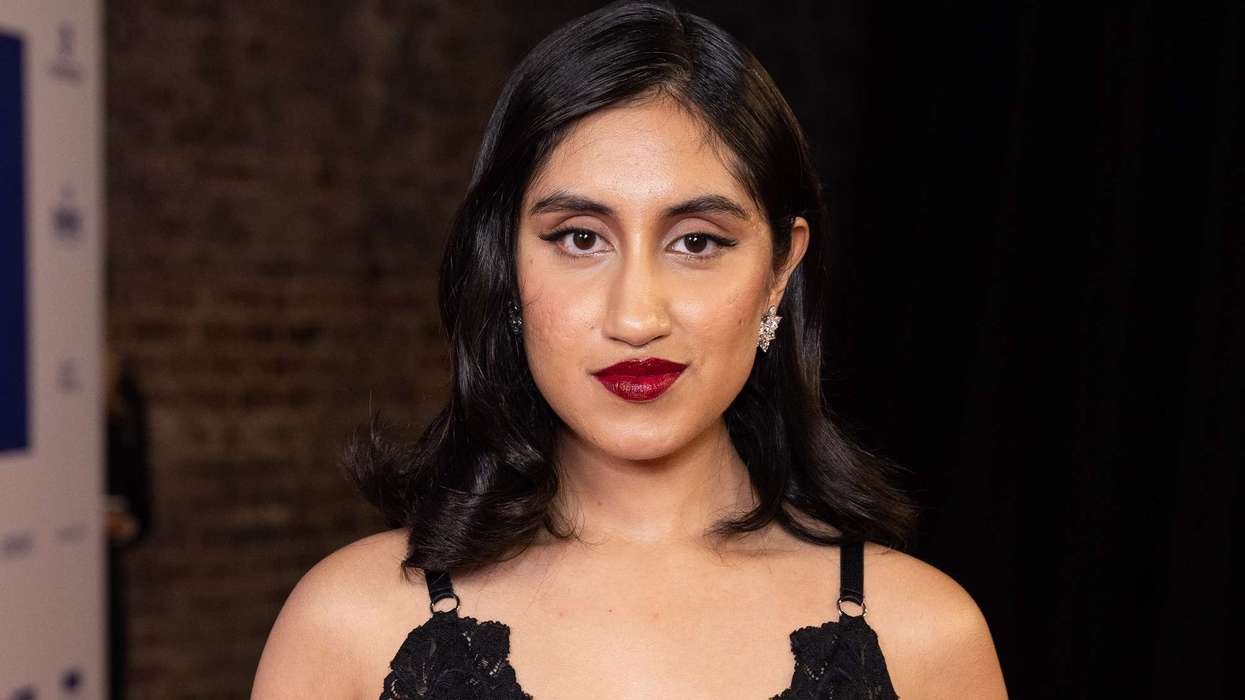

TWO years after starring in one of Netflix’s most talked-about romantic dramas, Ambika Mod remains something of an anomaly – critically acclaimed, globally recognised, yet still underestimated.
Her career since One Day has resisted the usual post-breakout logic. There has been no rush to capitalise on sudden fame, no scramble to remain constantly visible. Instead, Mod has moved with deliberate restraint, choosing projects that balance momentum with meaning.
That careful calibration is increasingly visible in her recent work. Mod has wrapped filming on the second season of Black Doves, Netflix’s espionage thriller led by Keira Knightley. Her role promises something sharper and more disruptive than the characters still disproportionately offered to South Asian actresses. The series arrives later this year and signals Netflix’s continued faith in Mod not merely as a symbolic casting choice, but as a performer capable of commanding mainstream drama.
Elsewhere, her appearance in Disney+’s The Stolen Girl drew strong reviews, reinforcing the sense that Mod does not rely on novelty or representation alone to hold the screen. Yet none of these projects fully explains the scale of attention attached to her name – attention that still traces back to the cultural impact of One Day.
When the romantic drama premiered in early 2024, it became a talking point almost overnight. Mod’s portrayal of Emma Morley quickly turned into a cultural flashpoint. Audiences embraced the character, but the reaction also reignited an uncomfortable industry debate: why was a South Asian woman playing a romantic lead still treated as unusual?
The irony is that One Day was cast without ethnicity as a guiding principle. Its creator, David Nicholls, later told Mod there was no character he cared more deeply about and no actor he felt better suited to play her.
Even so, the show’s success brought an avalanche of commentary. Mod has since made clear that she wants to be recognised first and foremost as an actor, rather than as a perpetual cultural talking point. She has also spoken openly about the racism and misogyny she faced online after the show’s release – abuse severe enough to prompt her to deactivate her Instagram account.
Raised in Hertfordshire by first-generation immigrant parents, Mod, 30, studied English at Durham before finding her voice in theatre and sketch comedy. She honed her craft in improv, performing at the Edinburgh Fringe and on London comedy circuits while holding down day jobs, including a stint as a personal assistant at Condé Nast. Comedy sharpened her timing and discipline, teaching her how to command attention without excess.
And that restraint now defines her influence.
Despite leading a global Netflix hit, Mod has said she continues to be offered a narrow range of stereotypical roles – often supporting characters orbiting white leads. Rather than quietly accepting those limits, she has chosen to speak about them with striking candour.
In doing so, she is quietly reshaping expectations – not just for herself, but for the generation of actors watching closely behind her.