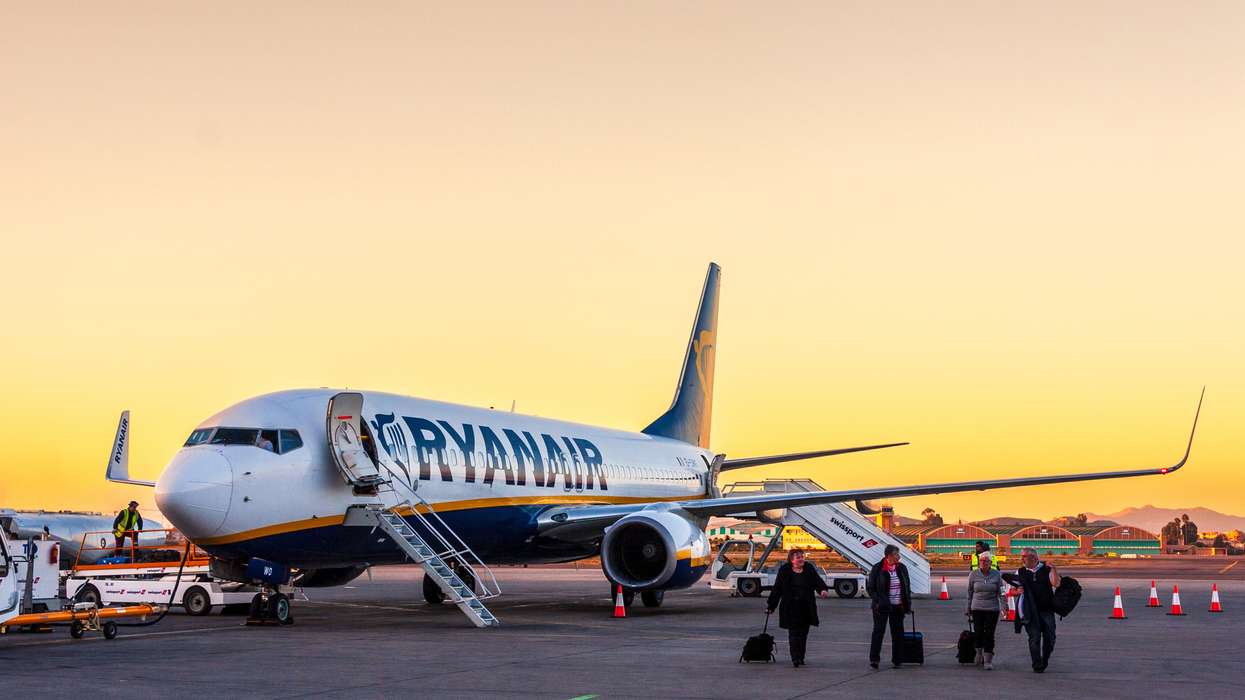

- Ryanair has warned the EU's new fingerprint-based border checks could trigger long airport queues this summer.
- Airlines and airports are urging the European Commission to delay the rollout during the peak holiday season.
- Seven airports, including popular destinations in Spain, Italy, France and Poland, are already facing disruption, Ryanair claims.
Anyone travelling to Europe this summer could face longer waits at airport passport control, as Ryanair has warned that the EU's new Entry/Exit System (EES) is not ready to handle peak holiday traffic.
The airline has urged the European Commission to delay the rollout of the new fingerprint and facial recognition border checks, warning that the system could lead to long queues, missed flights and travel disruption. The warning comes as the Commission has called an urgent meeting with the aviation industry next week to discuss growing concerns over the scheme.
Ryanair said passengers heading off on summer holidays should not become "guinea pigs" for what it described as a "half-baked" border control system.
A busy summer meets a new border system
The Entry/Exit System (EES) is designed to strengthen border security across the Schengen area by digitally recording the fingerprints and facial images of non-EU travellers when they enter and leave participating countries.
First-time visitors must register their biometric details before travelling. On future trips, their fingerprints or facial images will be verified at border checkpoints.
Although the system has been under development for nearly a decade, its introduction has been repeatedly delayed. It was rolled out last October, but member states have been allowed to introduce it gradually while testing the technology.
Ryanair believes the busiest weeks of the summer holiday season are the wrong time to expand the system. According to the airline, Tenerife South, Palma, Alicante, Málaga, Milan Bergamo, Kraków and Paris Beauvais are already experiencing significant disruption.
Neal McMahon, Ryanair's chief operating officer, reportedly said the system was not ready for peak summer volumes and warned it could result in lengthy queues and unnecessary stress for passengers.
Industry calls for a pause
The concerns extend beyond Ryanair. Airlines for Europe and Airports Council International have jointly asked the European Commission to suspend the rollout throughout July and August, with some industry representatives suggesting it should be delayed until next summer.
Airport operators are concerned that long queues could place additional pressure on frontline staff, while airlines fear delays could affect flight schedules during one of the busiest travel periods of the year.
The European Commission has sought to reassure travellers, saying airports can temporarily suspend EES checks if queues become excessive. Additional border officers can also be deployed where necessary, as happened recently at Lisbon Airport.
EU officials said biometric checks currently take an average of 70 seconds and insisted that most airports are operating without major problems. More than 100 million entries and exits have already been recorded under the system, out of an estimated 200 million to 300 million annual border crossings. Some countries, including France, Italy and Greece, have yet to implement the system fully.
With the holiday season gathering pace, the outcome of next week's meeting could determine whether travellers face smoother journeys or longer queues at some of Europe's busiest airports.