
Highlights
- AAIB says the investigation is in its final analysis phase and could complete the remaining work within six weeks.
- Draft final report is expected in October before being circulated to participating countries for comments.
- Investigators say media speculation blaming the pilots has affected witness cooperation.
INDIA's Aircraft Accident Investigation Bureau (AAIB) expects to prepare a draft final report into last year's Air India crash by October after entering the final stage of its investigation, according to a court filing.
The update, filed before India's Supreme Court on Tuesday (14), said investigators were now "engaged in the analysis phase" of the probe, with the remaining investigation work expected to be completed in about six weeks, subject to pending external inputs.
The draft report will then be circulated to participating countries for comments before it is finalised and released publicly.
Reuters reported that the US National Transportation Safety Board is among the agencies expected to receive the draft.
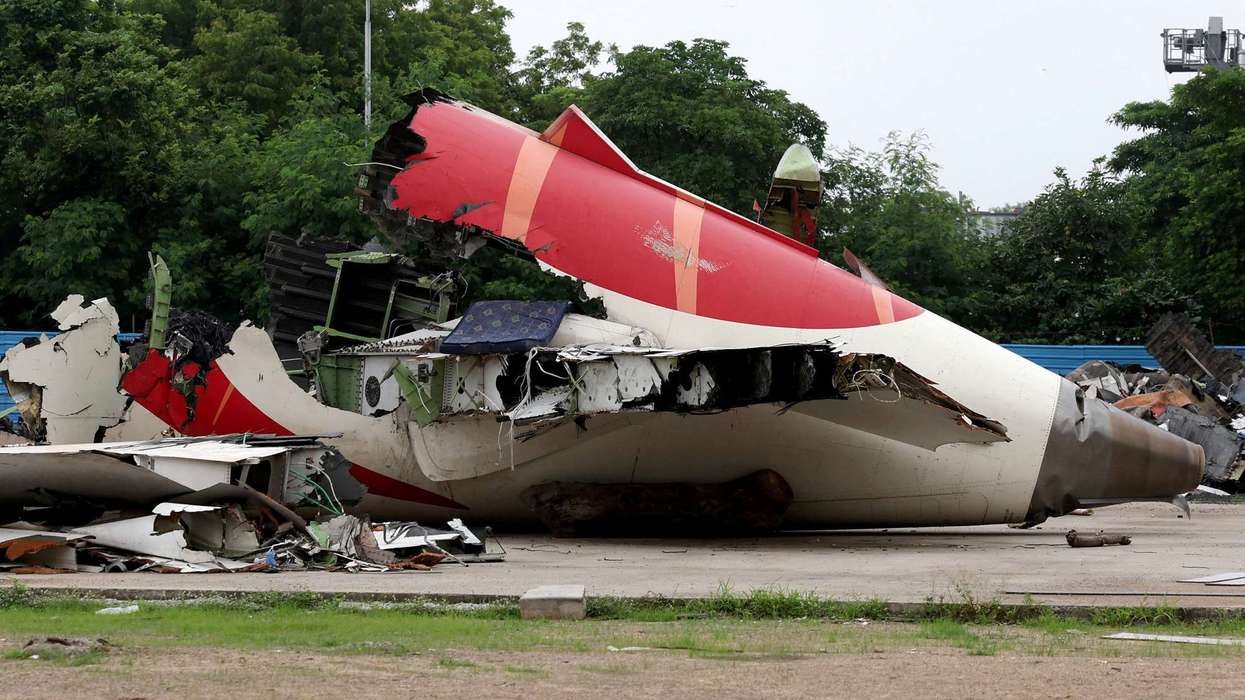
The crash occurred on June 12, 2025, when an Air India Boeing 787 Dreamliner bound for London crashed shortly after taking off from Ahmedabad, killing 260 people.
Around six kilometres from the airport, the aircraft came down, striking a doctors' accommodation building at a medical college. Of the 242 people on board, 241 died, along with 19 people on the ground. Leicester resident Viswashkumar Ramesh was the sole survivor.
AAIB said it had completed 49 of the 66 mandatory steps required in a serious aircraft accident investigation. According to the affidavit, investigators have examined the crash site and wreckage, recovered and analysed the flight recorders, reviewed operational and maintenance records, and examined the pilots' training and medical histories.
Investigators had also prepared a transcript of the cockpit voice recorder, the filing disclosed, and carried out "a review of organisational culture, human factors and safety practices". It added that "a psychological autopsy and evaluation were conducted, and the final report of the psychologist has been received".
'No conclusions about the cause'
Reports said that the filing did not identify whose psychological autopsy had been conducted or reveal any conclusions about the cause of the crash. It added that analysis of data recovered from an engine monitoring unit in late May and an assessment of certain organisational factors were still pending.
AAIB said investigators had interviewed Air India Boeing 787 pilots, crew members who had previously flown with the two pilots, technical personnel involved in preparing the aircraft, air traffic controllers, weather officials and human-factors specialists. It also confirmed that the flight crew's families had been visited during the early stages of the investigation.
Pushkar Raj Sabharwal, father of Captain Sumeet Sabharwal, filed a petition seeking an independent investigation into the crash, prompting the court filing. The petition followed concerns that investigators had implied his son was responsible for shutting off the aircraft's fuel supply.
AAIB said that "media speculation and narrative attributing blameworthiness to the pilots have, regrettably, caused some witnesses to become restrictive and non-responsive".
A preliminary report published in July 2025 found that seconds after take-off, the aircraft's fuel-control switches moved to the "cut-off" position, causing both engines to lose power. Cockpit audio captured one pilot asking the other why he had done it, with the other replying that he had not. Investigators did not identify which pilot made either remark.
Widespread speculation over the pilots' role followed the ambiguity, including media reports focusing on Captain Sabharwal. AAIB had previously criticised such reporting, saying it was "too early to reach any definite conclusions".
Investigators have not identified the cause of the crash in the latest filing, nor indicated what conclusions they are likely to reach. They only said that findings are now being developed across operational, technical, human-factors and organisational aspects of the investigation before the draft report is completed.
(with inputs from Reuters)