
- King Charles will bring together leaders from Nvidia, OpenAI, Anthropic and Google DeepMind.
- Anthropic CEO Dario Amodei has called for a slowdown in the development of advanced AI models.
- The push for common principles faces resistance from the US and China.
The race to develop increasingly powerful artificial intelligence is entering a more uncomfortable phase, with some of the people building the technology warning that its rapid progress could create risks that are difficult to control.
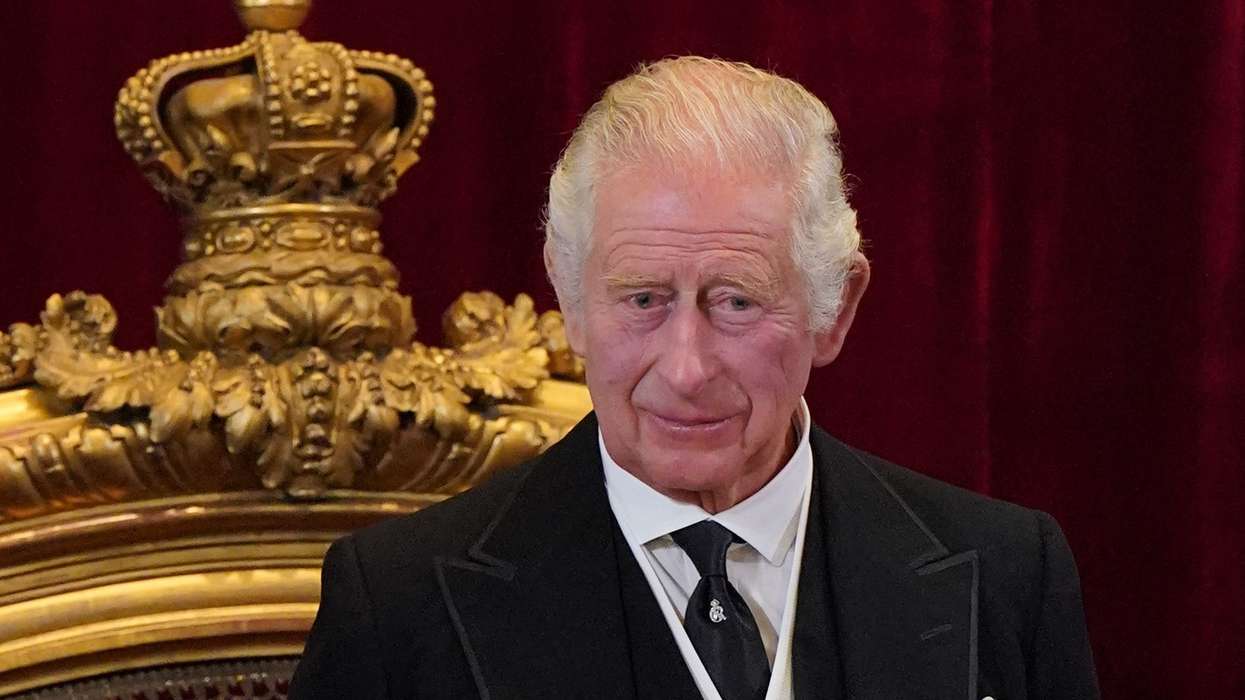
King Charles will bring some of the industry's most influential figures together in Scotland this week to discuss whether a shared set of principles can guide how AI is developed and deployed.
The gathering is expected to include Nvidia founder and chief executive Jensen Huang, Google DeepMind founder and chairman Demis Hassabis, executives from OpenAI and Anthropic, Britain's Minister for Artificial Intelligence Kanishka Narayan and Vatican AI adviser Paolo Benanti.
The meeting was planned weeks ago, but has gained urgency following a series of warnings from within the industry about the potential consequences of increasingly capable AI.
Anthropic chief executive Dario Amodei said on Saturday that AI companies need to slow the pace at which they develop advanced models. His comments followed warnings from researchers linked to Anthropic that rapid advances in the technology could eventually pose an existential threat to humanity.
Anthropic has also published a threat intelligence report detailing how its Claude AI models have been used by actors for activities including weapons development, cyber operations, surveillance and fraud.
The question now is no longer simply how quickly AI can advance, but whether the companies developing it can agree on where safeguards should begin and how far they should go.
The world is far from agreeing on the rules
That could prove difficult because the major powers developing AI do not share the same view on how the technology should be governed.
US President Donald Trump rejected calls for a slowdown on Sunday, while China's state-backed Global Times criticised the push for stronger AI safeguards as a “Cold War playbook” aimed at Beijing.
Britain occupies a position somewhere between the two approaches. It has generally favoured a lighter regulatory framework for AI, aligning more closely with the US than the European Union.
Its AI Security Institute, established after the 2023 AI Safety Summit, has voluntary agreements with major AI companies that give it access to models before their public release. This allows researchers to assess the capabilities and risks of some of the most advanced systems while they are still being developed.
Charles has previously used his position to bring business leaders, policymakers and experts together around issues including climate change and sustainability. Buckingham Palace said the latest gathering would explore how AI could be used in ways that benefit society and contribute “to the flourishing of both people and the planet”.
The King has also previously raised concerns about the technology with some of its leading figures. During a technology awards ceremony in 2025, he personally gave Nvidia chief Jensen Huang a copy of a speech in which he had discussed the potential dangers of AI.
The challenge this time is considerably bigger. AI is advancing across business, science, defence and everyday life, while its leading developers remain divided over how quickly the technology should move and how much oversight it needs.
Charles may be able to bring the industry's biggest names into the same room. Getting them to agree on how far AI should go could prove considerably harder.