IT IS now 25 years since the terrorist attacks of September 11, 2001. Many people who are old enough will remember how they first heard the news. I had the unusual experience of almost missing the news event that has shaped this century entirely.
I had got married just 10 days earlier and was on honeymoon, arriving in Barcelona on September 11 itself. We happened to catch a glimpse of images of smoke from the first tower on a TV news channel – when nobody knew what was going on – heading out before the impact of the second plane made that all too clear.
It was many hours later – seeing Spanish evening papers on the newsstand, with images from New York that looked like a disaster movie – that I began to grasp the enormity of what had happened. By the time I returned to work at The Observer newspaper a week or so later, it was clear how much the world had changed.
The 25th anniversary will see 9/11 remembered as a human tragedy, in which almost 3,000 people lost their lives. Many people not directly affected found those terrible images of people jumping from buildings haunting for days and weeks afterwards.
9/11 shaped the global politics of a decade – though its link to the war in Afghanistan was much clearer than its becoming a pretext for the war in Iraq.
Al-Qaeda did not begin on 9/11 – but Osama bin Laden was more familiar to foreign policy experts than to the general public. My intrepid Observer colleague, Jason Burke, had even tracked down bin Laden to reveal his new Afghan base and link-up with the Taliban two summers earlier, in 1999.
Most of the public would have needed an explanation of who he was. This spectacular atrocity made him overnight as famous as anybody in the world.
We reflected on how that reshaped community relationships in Britain at a recent event with the South Asian Bridgers Forum at British Future.
About half of the British public today were at least 15 years old when 9/11 happened.
“Almost immediately I feel those around me in my workplace began to look at me with different eyes and ask questions. Faith became a public category. One that came with a question mark attached,” Sughra Ahmed told us of her experience of what it changed.
The experience of 7/7 four years later in Britain was perhaps more intense still. The 9/11 hijackers went to America from Saudi Arabia. Our society had to grapple with how young people who were born, grew up and went to school here could prefer what was on offer from Al-Qaeda and its offshoots to the sense of belonging available in our society.
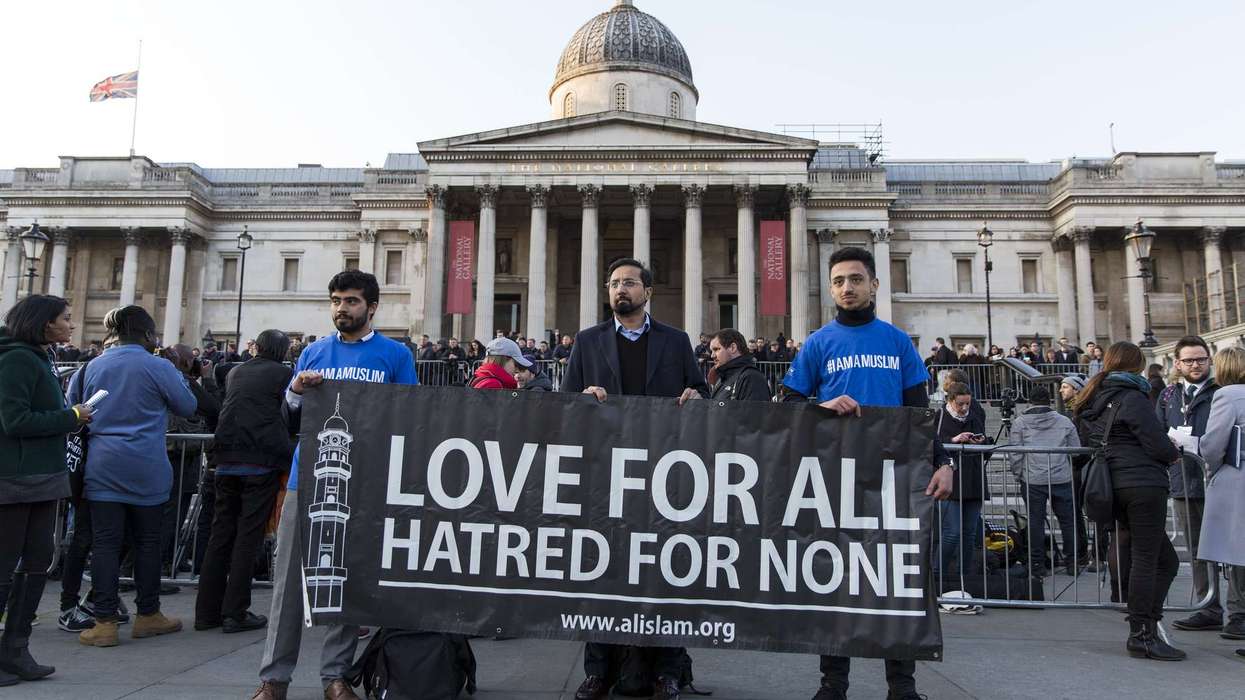
That intense scrutiny of Muslims presented those from other faiths and backgrounds with choices about solidarity – or keeping a distance. Professor Jagbir Jhutti-Johal recalled the use of the slogan “Don’t Freak, I am Sikh”. “A lot of Sikhs were angry about that, because it is throwing the other under the bus,” she told us.
Competing extremisms could often seem to have a symbiotic relationship too, as Avaes Mohammad had reflected in writing plays about the impact of the parallel extremisms of Islamist terror and the BNP on his home town of Blackburn.
It was vital to counter extremism – but counter-narratives are insufficient, and will not provide the foundations we need if “how do we stop you becoming an extremist?” seemed to be the first question being asked of a million young British Muslims – or their young counterparts in the white working class.
Sughra Ahmed explained how 9/11 and 7/7, while turning faith and ethnicity into grounds for suspicion, had also been a catalyst for change. “A generation of young British Muslims decided that if people had questions, the answer was to open the door and not hide behind it.” This shifted the share of voice across both genders and generations.
Yet about a third of our society today are aged under 26: that includes fully half of Muslims in Britain.
“Some of us experienced it on television live. For those for whom it was before they were born, that atrocity has been superseded by other atrocities,” as John Pandit, founder of Asian Dub Foundation, told us.
A generation that did not experience 9/11 as a moment of change has grown up surrounded by its complex legacies.
Terrorist attacks on the scale of 9/11 and 7/7 have thankfully remained once-in-a-generation events. Yet we now have a new media and online ecosystem that seeks to turn local incidents into national flashpoints on a monthly basis.
Efforts for cohesion can learn from what went right and wrong over this quarter of a century – but will demand political and civic leadership with a plan to do more than react to events.