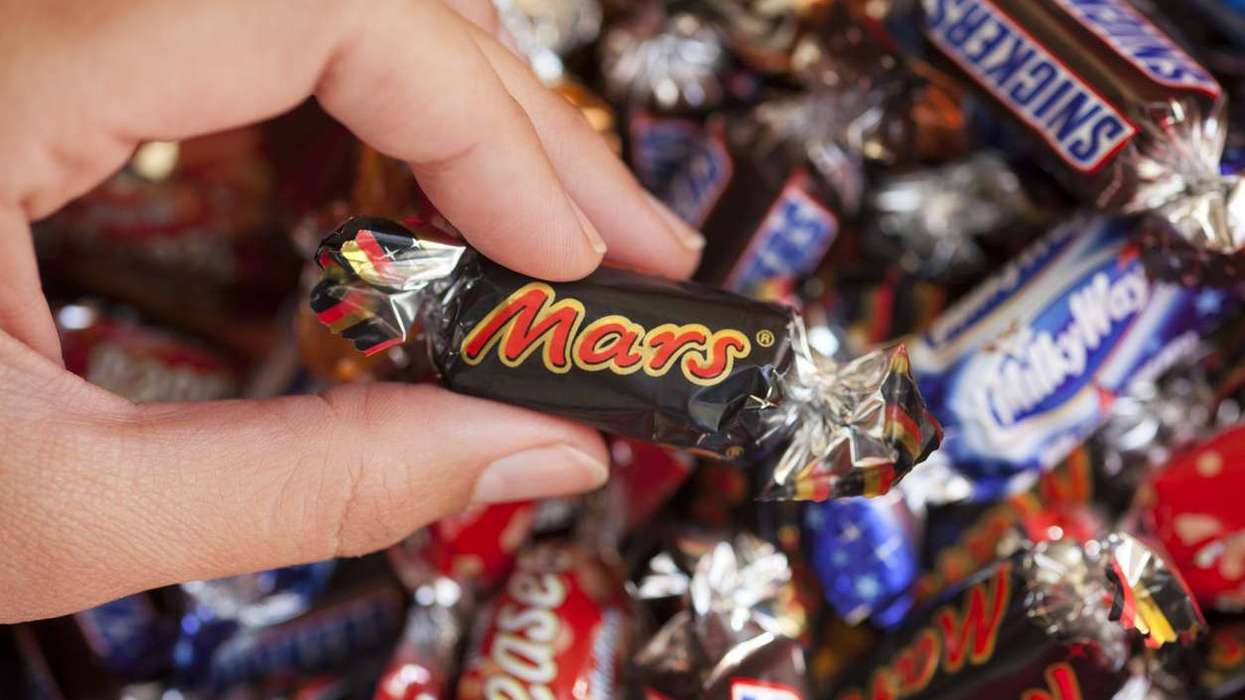

- The old Mars Bar weighed 62.5g, compared with 40g for today's version.
- The bar was found in a Scunthorpe house with a best-before date of 1991.
- Mars says bar sizes have changed over the years because of consumer demand and wider costs.
A 35-year-old Mars Bar found during a house clearance in Scunthorpe has gone viral after being compared with the modern version of the chocolate bar.
The old Mars Bar weighed 62.5g, while a current bar weighs 40g, meaning the 1991 version was around 56 per cent heavier. The discovery has prompted fresh discussion about shrinkflation, the term used when products become smaller or lighter while their prices do not fall by the same proportion.
The bar was found by Victoria Gordon, who runs cleaning service Pocket Rockets, while clearing a hoarder's house. It had a best-before date of 1991.
Gordon told BBC Radio Lincolnshire that the bar immediately caught her attention because it was almost the length of her hand.
She posted a picture showing the old bar alongside a modern Mars Bar, prompting thousands of reactions online.
Gordon reportedly said she almost threw the chocolate away but joked that she might now have a "gold mine" on her hands. She also suggested taking it on a UK tour after the discovery attracted far more attention than her usual hoarding-related videos.
Why the old bar looks so different
The size difference is striking, but it does not by itself establish how much consumers have paid for Mars Bars over the same period or whether the change represents shrinkflation in the strict economic sense.
Mars has acknowledged that the size and format of its bars have changed over the past 35 years.
A Mars spokesperson reportedly said the company had made "a number of updates" to bar sizes and pack formats to reflect consumer demand, while also taking into account factors including manufacturing costs and the price of cocoa.
That leaves the old Mars Bar as an interesting snapshot of how everyday products can change without consumers necessarily noticing the difference immediately.
The 22.5g gap between the two bars represents more than half the weight of today's version. For someone who remembers older chocolate bars, that difference may feel familiar. For younger shoppers, it is a reminder that the product sitting on supermarket shelves now is not necessarily the same size as the one sold decades ago.
Shrinkflation has become a more widely discussed issue as food manufacturers have faced higher costs for ingredients, energy, packaging and transport. Companies can respond by raising prices, reducing product sizes, changing recipes or using a combination of these measures.
But a comparison between one old Mars Bar and today's product cannot tell us how the price-to-weight relationship has changed over 35 years.
What it can show is something much simpler: the Mars Bar has got considerably lighter.
And Gordon's unexpected discovery has turned an otherwise ordinary house clearance into a small piece of evidence for a much bigger conversation about how much consumers actually get for their money.