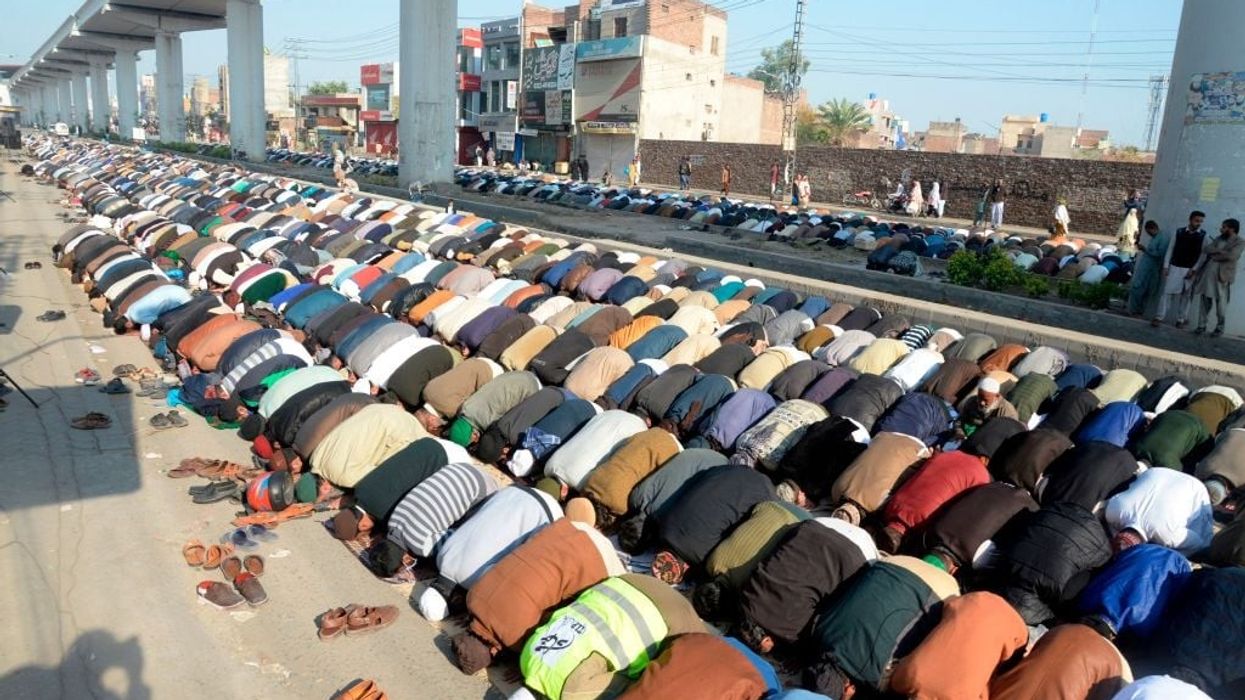

A total of 100 cases of forced faith conversion, forced and child marriage and abduction of girls and women belonging to the Christian community have been reported in Pakistan between January 2019 and October 2022, a new report said.
According to the report titled "Conversion without Consent" released by Conversion without Consent on Saturday, the 100 cases took place over a span of more than three years, of which 27 were recorded in 2019, 12 in 2020, 42 in 2021 and 19 till October 2022. The data showed that the highest number of 86, were reported in Punjab, followed by 11 in Sindh, two in Islamabad and one in Khyber Pakhtunkhwa, and no case was reported from Balochistan, reports DAWN.
According to the data, 67 per cent of the cases were reported from five districts alone. The districts, Lahore, Gujranwala, Sheikhupura from Punjab, Karachi from Sindh and Faisalabad, exhibit a high rate of cases of underage girls from the Minority community.
According to the report, sixty-one per cent of the girls were targeted before reaching 16 years of age, while 18 per cent became victims between the ages of 16 and 18 and 14 per cent became victims when they were above 18 years old of age.
The ages of the seven victims are not known.
According to DAWN, the report reveals that the majority of victims of forced faith conversions and child marriage are minors, however, the fabricated age of all victims is deliberately altered to 18 years or above by perpetrators on certificates of marriage to avoid criminal conviction under the Child Marriage Restraint Act 1929 according to which marriage to an underage child is illegal and punishable by imprisonment.
The report states that all minor girls are presented as economically independent adults. It also revealed that the marriages were executed without the consent of a legal guardian or in the absence of a lawyer.
The cases of Zarvia Parvaiz, Saba Nadeem, Chashman Kanwal and Sunaina James, underage girls who became victims of forced faith conversions, are also included in the report.
Zarvia Parvaiz told the court that she was heavily drugged, raped, beaten with a stick, burnt with cigarettes, and electrocuted by her abductors, according to a report in DAWN.
Saba Nadeem said she was abducted and raped. Her thumb impression was taken on the certificate of marriage and conversion without her consent. Nadeem's perpetrator's threatened her with dire consequences if she revealed the assault to anyone.
The report recommends that affirmative action must be taken for the protection, promotion, and fulfilment of minority rights, particularly in the context of reforming the existing civil and criminal justice system to render it more sensitive to the needs of victims of forced conversions and their families, writes DAWN.
The report "Conversion without Consent" says that it is the duty of the authorities to ensure that the observance of a state religion does not affect any minority religion or results in discrimination in law, policy, and jurisprudence against those who profess a faith or set of beliefs contrary to the majority religion.
(ANI)






 Curator Emma Slocombe with ikat robes and arabachi coats in the Peter the Great Room in Blickling Hall Amit Roy
 View of the entrance to Blickling Hall on a rainy autumn dayAmit Roy
 Kente cloth from Ghana in the Long Gallery in Blickling Hall
 Decoration in the Great Hall at Blickling Hall Amit Roy
 Palampore fragment made in coastal south-east India in the Brown Room in Blickling Hall Amit Roy
 Bed valance dating from early 1700s in the Italian Print Room at Blickling Hall Amit Roy
 Indian inspired fabric draped on sofas in the South Drawing Room in Blickling Hall Amit Roy
 Indian inspired fabric draped on sofas in the South Drawing Room with Indian carpet in Blickling Hall Amit Roy
 Karun Thakar has picked out the geometric patterns in the bookcase and the Kente cloth in the Long Gallery in Blickling Hall Amit Roy
 Large tapestry depicting Peter the Great defeating the Swedish army at the Battle of Poltava in 1709 Amit Roy
 ikat robes and arabachi coats in the Peter the Great Room in Blickling Hall Amit Roy
 Baghs and kanthas made by women provide contrast to the men only portraits in the Great Hall at Blickling Hall Amit Roy
 Baghs and kanthas in the entrance Great Hall at Blickling Hall Amit Roy
 Baghs and Kanthas in the Great Hall in harmony with stained glass window at Blickling Hall Amit Roy
 Kimonos reflect Japanese influence in Upper Ante Room in Blickling Hall Amit Roy
 Kimono in Upper Ante Room in Blickling Hall
 A view of the Palace and fort at Agra shows romantic side of India Amit Roy
 Blickling Hall Amit Roy
 Table carpet, European 1670-1680 Amit Roy
 Unfinished 17th century Italian embroidery in the Print Room at Blickling Hall Amit Roy
 Picture of Kashmir shows a romantic view of India Amit Roy
 A panel of Ashburnham bed hangings made in Gujarat for sale in Europe in the Brown Room in Blickling Hall Amit Roy
 Colcha made in the 1600s by women in Bengal for the Portuguese market in the Long Gallery at Blickling Hall Amit Roy




