
Highlights
- US plans to livestream his December 3 execution by firing squad.
- It would be the first US military firing squad execution since 1945.
- Experts have questioned the unprecedented plan to broadcast an execution.
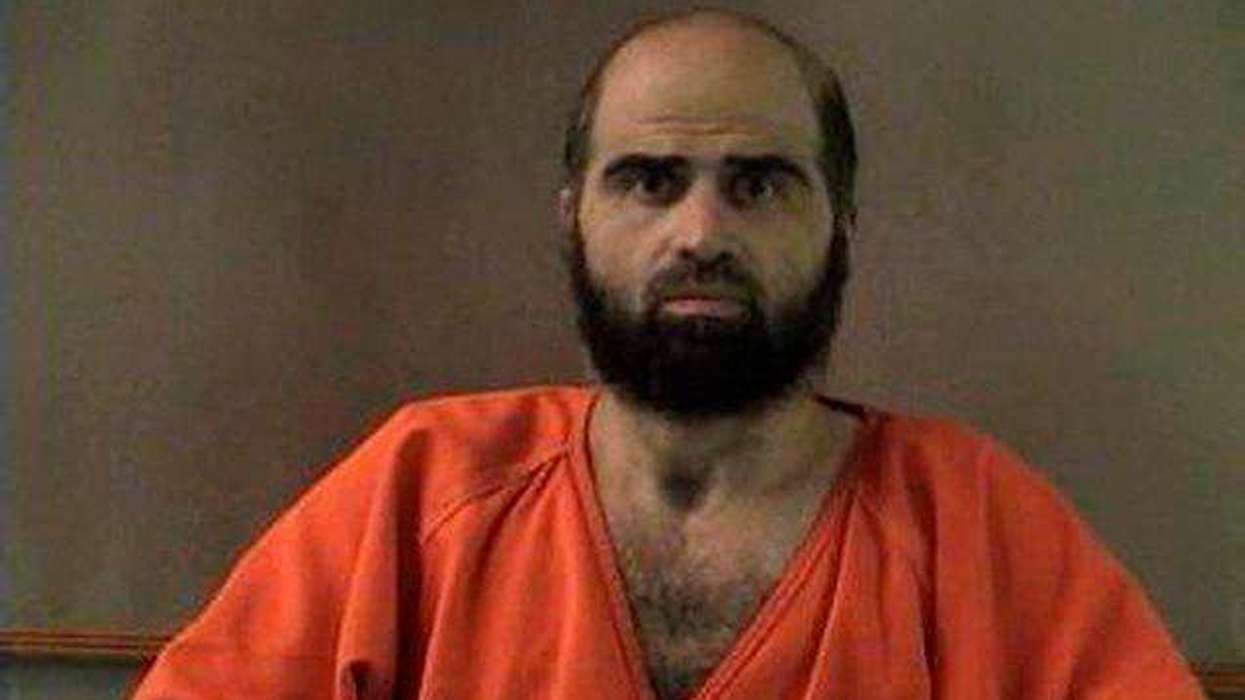
THE US plans to livestream the execution of Nidal Hasan, the former Army psychiatrist sentenced to death for killing 13 people at Fort Hood in Texas in 2009, in what would be an unprecedented broadcast of an American execution.
Hasan, 56, is scheduled to be executed by firing squad at the military base on December 3, according to defence secretary Pete Hegseth. The execution would be the first by a US military firing squad since 1945.
A Pentagon official confirmed the livestreaming plan, while Hegseth also announced it in a post on X.
The decision comes amid renewed debate over capital punishment in the US following a botched lethal injection attempt in Tennessee last week.
Who is Nidal Hasan?
Hasan was an Army psychiatrist who opened fire with a laser-sighted handgun at a medical facility at Fort Hood on November 5, 2009, killing 13 people and injuring others.
He was due to be deployed to Afghanistan weeks after the shooting. Police shot him during his arrest, leaving him partially paralysed and confined to a wheelchair.
A military jury found Hasan guilty of 45 counts of premeditated murder and attempted premeditated murder. He was sentenced to death in August 2013.
President Donald Trump approved the firing squad execution on the recommendation of Hegseth, the Pentagon said earlier this week. Under US military law, presidential approval is required for such an execution.
Hegseth said the decision to hold the execution at Fort Hood on a Thursday at 1pm, around the time and day of the week of the 2009 shooting, was a “no-brainer”.
“We’ll make sure that people can watch it, that it’s public. Because people need to understand that ... there’s serious consequences for these types of things,” he told the Human Events Daily programme.
Asked whether Hasan had made any final requests, Hegseth said: “Don’t care. We’ll see him on December 3.”
Why is the livestreaming controversial?
The plan would mark a departure from the practice in the US, where executions have never been televised, despite previous attempts by media organisations to obtain permission to broadcast them being blocked by courts.
Experts said they were unaware of any other country that televises or livestreams a legal execution. Public executions have become rare worldwide, although they are reported to take place in countries including Iran and Taliban-run Afghanistan.
Eugene Fidell, a lawyer and military law expert who lectures at Yale Law School, described the proposed broadcast as “extremely, extremely strange”.
He said livestreaming an execution would be unprecedented, as far as he knew, and Hasan would need to bring a federal court case if he wanted to challenge the public display of his death.
“The Supreme Court has never addressed this question,” Fidell said, raising the possibility of a legal challenge over whether such a broadcast would be permissible.
Jonathan Lurie, an author and historian of military justice, also questioned the need to make the execution public.
“What’s the point of it? Who would want to see that?” he said.
When was the last US military execution?
The last known executions by firing squad carried out by the US military took place in 1945, according to the Death Penalty Information Center.
However, the group Death Penalty Action, which opposes capital punishment, said Hasan’s execution would be the first military execution since 1961. That execution was carried out by hanging.
Firing squads remain a permitted method of execution in several US states. South Carolina carried out the first firing squad execution in the country in 15 years in 2025.
The Trump administration has also expanded the methods available for executions in federal cases involving the gravest crimes, adding firing squads, electrocution and gas asphyxiation to the options available alongside lethal injection.
The changes came partly in response to difficulties in obtaining drugs for lethal injections and problems carrying out the procedure.
The debate has intensified following events in Tennessee last week, when an attempt to execute Christa Pike by lethal injection went wrong. Her lawyers said she awoke in hospital “angry and confused” and remained seriously ill and shackled to her hospital bed.
(with inputs from agencies)