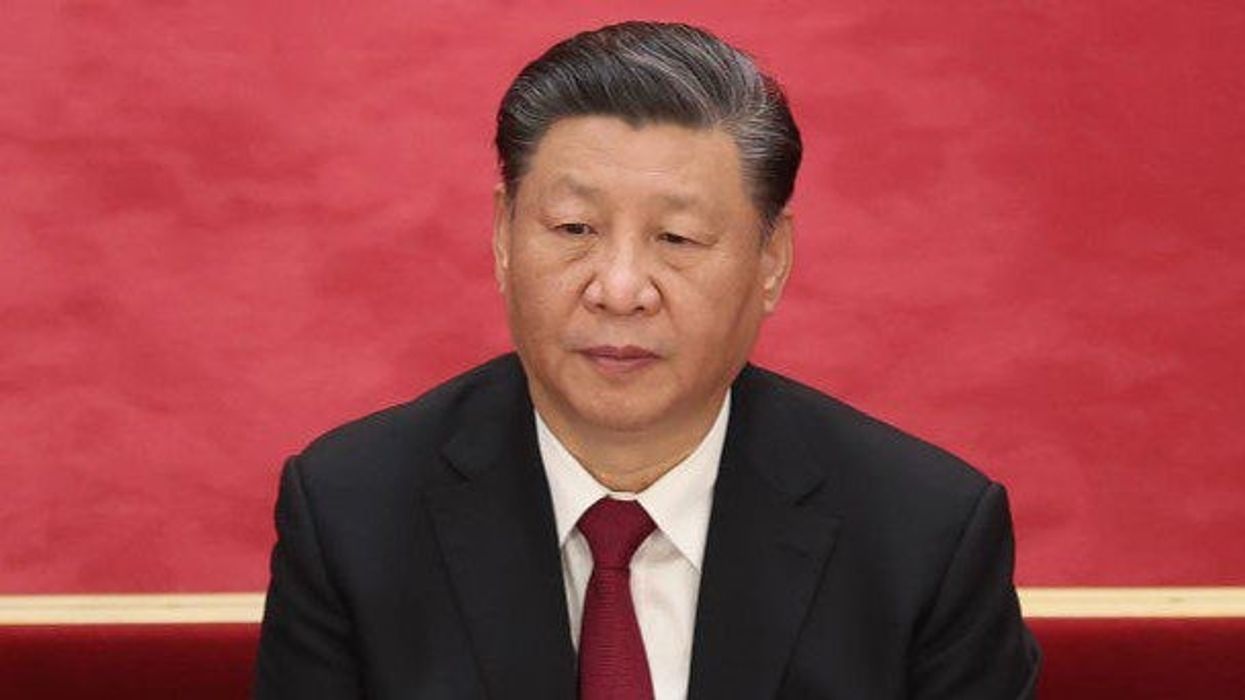

Xi Jinping has made history by securing a third term as China's president, cementing his status as the longest-serving head of state in the communist nation's history.
The 69-year-old leader was the sole contender for the post and was unanimously re-elected by the 3000-member parliament, the National People's Congress (NPC) on Friday.
The outcome comes as no surprise as Xi was elected to continue as the general secretary of the Communist Party and chairman of the Central Military Commission (CMC) in October last year - these are two of the most influential political positions in the country.
In comparison, the role of the president is just ceremonial.
Xi's third term as president comes at a time when China confronts numerous domestic and foreign challenges. The approach he adopts to address these issues will undoubtedly influence global economics and geopolitics.
An Inward-looking Economic Policy
China's economic growth has recently suffered a significant setback, with the world's second-largest economy recording a three per cent growth rate in 2022.
It remains to be seen how Xi will address an economy that is teetering. Some observers are concerned Xi may prioritise ideology over growth, given his recent emphasis on the "dual circulation" strategy, which supports state-led growth.
A more self-sufficient China could mean other countries will experience a decrease in economic activity, as the Communist country would be inclined to buy its own products, rather than import them.
US, Russia and A Polarised World
Tensions between Washington and Beijing have risen recently, particularly following the US Energy Department's report that supported the Covid lab leak theory and the Chinese spy balloon incident.
Last week, president Xi directly rebuked Washington, accusing "Western countries led by the United States" of attempting to impede China's progress.
The increasing diplomatic ties between China and Russia suggest a world that is becoming more polarised and dangerous. It is worth noting that Russian President Vladimir Putin was among the first world leaders to congratulate Xi on his re-election.
Taiwan and Semiconductor Supply
In October of last year, the Communist Party, for the first time, officially included its opposition to Taiwanese independence in its constitution.
Taiwan is an important country for the US and Western nations, as it is one of the primary suppliers of semiconductors. Any tension on the island could greatly impact multiple industries that rely on electronics.
If Xi remains determined to take control of Taiwan, it could significantly reshape the global economy and disrupt the balance of military power.
(With inputs from agencies)