
AS COUNTING in the West Bengal assembly elections confirmed the BJP heading towards a landslide win, a Bengali gentleman in Kolkata joked: “I think I have a saffron panjabi (kurta) somewhere – perhaps I will dig it out when I go out.”
He expressed hope that things might now get better: “Let’s see if the BJP can bring about any unnotti (progress). People were fed up with Mamata. There has been no progress - especially in the last five years.”
In a 294 seat assembly, 148 is needed for a majority. As darkness fell, the BJP was leading in 204 seats, while Mamata Banerjee’s Trinamool Congress Party (TMC), leading in 83, appeared to be struggling to get to even 100. The turnout was an unprecedented 92.4 per cent, a record even for India. Even the poorest of the poor exercised their democratic right to vote, putting to shame the traditional 20-30 per cent turn outs in local elections in the UK.
The Election Commission has ordered repolling in one seat – Falta constituency of South 24 Parganas.
After 15 years in power and three successive election victories, Mamata (as she is commonly referred to) or “Didi”, elder sister, is out.
ALSO READ: India state polls: BJP ahead in Bengal, Assam; Tamil Nadu and Kerala show shifts
The BJP victory – and especially its scale – represents not only a political earthquake but a cultural one. So much of what the Bharatiya Janata Party stands for is seen as “non-Bengali”, a dismissive term to describe anything considered alien to the Bengali way of life.
It is fair to say many people didn’t vote for the BJP so much as against Mamata. While she is still respected, there was a widespread feeling that under TMC rule there had been little or no economic progress.
With a population of about 106m and a highly educated middle class, West Bengal was lagging way behind other states such as Maharashtra, Tamil Nadu, Andhra Pradesh, and Gujarat, the home state of the prime minister Narendra Modi. The aspirational have to leave the state to get a job.
The West Bengal result is one of Modi’s sweetest victories.
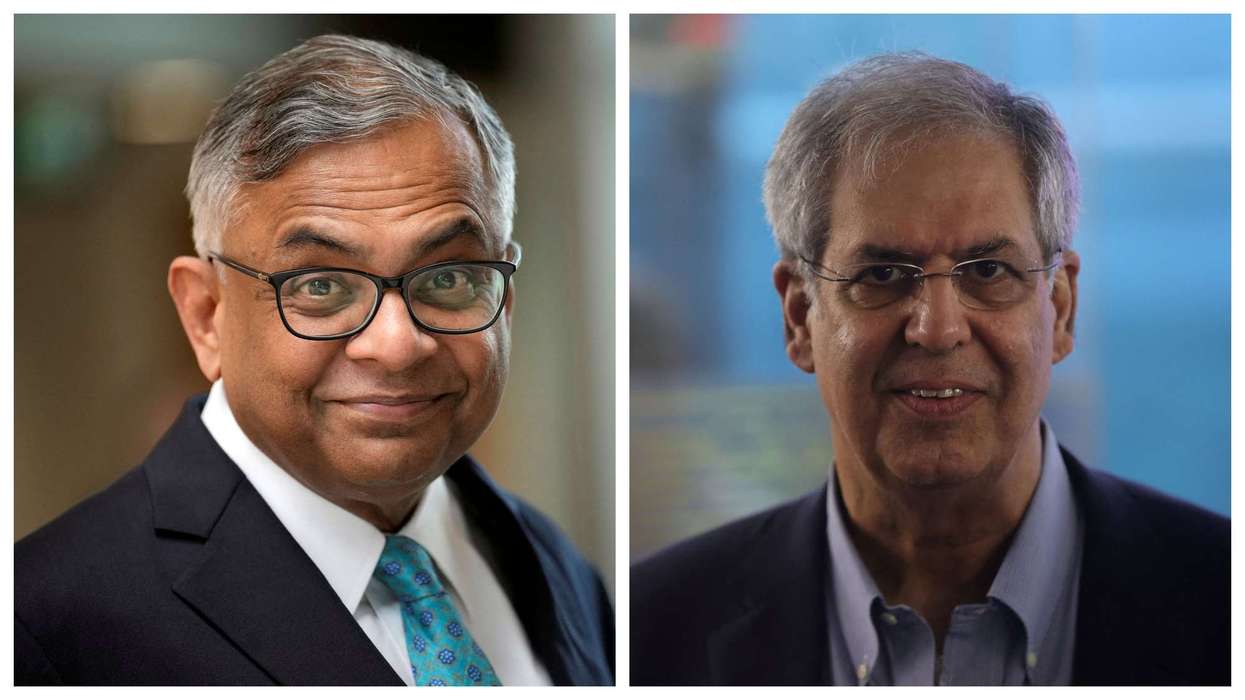
Years ago, when I interviewed Ratan Tata, he was very keen to established a car plant for his small Nano car in Singur just outside Kolkata. The late Lord Swraj Paul bought land in Singur so that his firm, Caparo, could manufacture automobile parts. Had Tata been allowed to build his Nano factory in Singur, the area could have become something like the steel town of Jamshedpur. Other investors would have followed Tata’s example and come into West Bengal. Rebuffed by Mamata, Tata was welcomed by Modi in Gujarat.
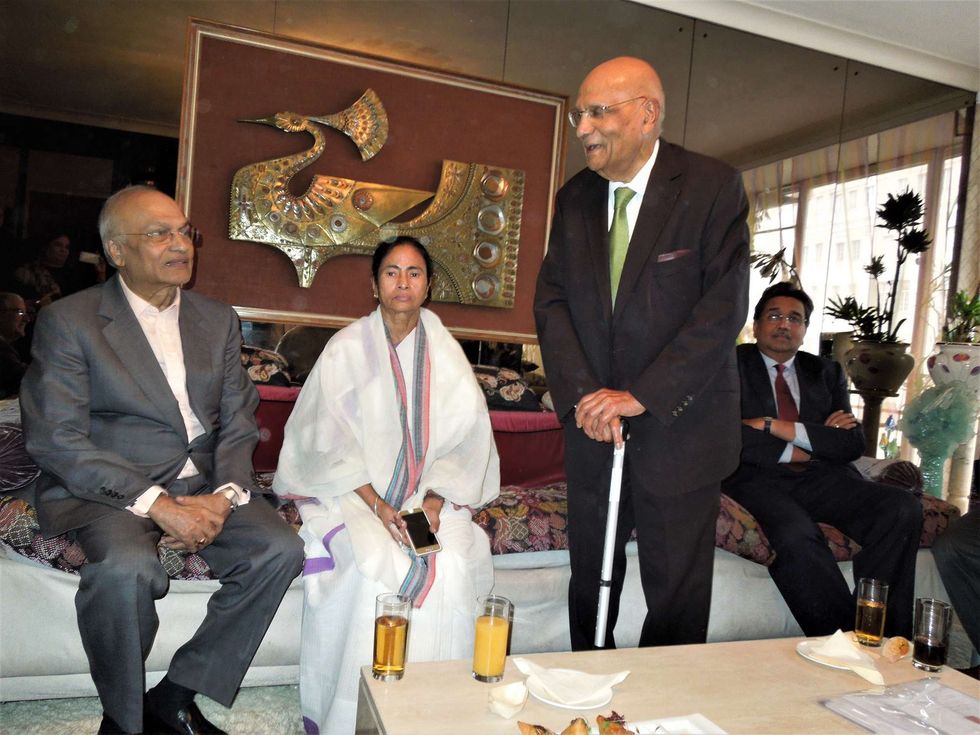 Mamata Banerjee was hosted by the late Lord Swraj Paul at his London apartment in 2015.EE
Mamata campaign was entirely destructive. She claimed farmland had been seized from farmers and won an election by keeping Tata out. Today, Singur is a concrete wasteland, a sad symbol of Mamata’s 15 years in power. Lord Paul’s son, Akash, does not even know whether he can claim back the land his father had bought.
Mamata has been thrice to the UK to raise investment but nothing came of the trips. And long ago Calcutta was the centre of the British empire.
She has had achievements to her credit. While Muslims have been attacked and lynched in other parts of India, they have been relatively safe under Mamata’s protection. But this time it seems even some Muslims, her solid vote bank in the past, have turned against her. People are desperate for Modi to revive the West Bengal economy.
While no one has questioned Mamata’s personal probity, the same cannot be said about other senior TMC officials. And there has been mounting anger that she did not do enough after the fatal rape in 2024 of a young woman doctor at R G Kar, a well-known Calcutta hospital. The victim’s mother, Ratna Debnath, has won on a BJP ticket from Panihati.
A taxi driver in Park Street in Kolkata declared: “I am from Panihati. Ratna Debnath winning from my area is a huge win for me. What happened in R G Kar can never be forgiven or forgotten. Everything needs a change, let’s see how the new government runs the state.”
The Telegraph newspaper in India noted not everything about the West Bengal election was fair.
In an article, “Glaring error”, Sukanta Chaudhuri, Professor Emeritus, Jadavpur University, pointed out: “Some 27.16 lakh people (2.716m) have been disenfranchised in Bengal on trivial grounds. They may get back their voting rights one day, but meanwhile one or more elections will have come and gone.”
He said: “This column might attract even fewer readers than usual, for it appears on the day of election results. Before the ensuing excitement eclipses all other issues, let us remind ourselves of the new and potentially lasting malaise that underlay the elections this time. It afflicted the state of West Bengal to a unique degree, but it can descend anywhere at any time.
“In Bengal, it affected 27.16 lakh people who were prevented from voting. Whatever the strident unbacked claims of a certain party, the initial figures emerging from tribunal hearings confirm what sober thought might suggest: the vast majority of those excluded are bona fide citizens. They were born in this country, have lived here all their lives, and have documents to prove it. They voted in previous elections, many in the magic year 2002. Yet the Election Commission of India suspended their voting rights, alleging ‘logical discrepancies’ in their records.”
He added that “humble citizens make up the largest part of the 27.16 lakh whose fate now rests with the tribunals. This prompts a serious caveat. There is a view that those who do not approach the tribunals have no case to defend: they are infiltrators — Bangladeshis, or those unseen, near-mythical Rohingyas. They can thus be expunged from the electoral rolls, and in due course from the citizens’ register when it materialises.
“This is fallacious if not malicious logic.
“Till April 27, the tribunals had examined 1,621 cases and restored all but fourteen to the rolls. In other words, over 99 per cent of these hapless people have suffered untold harassment, tension and expense, besides being deprived of their franchise, owing to a flawed adjudication process. If anything like this ratio holds, the entire list of ‘logical discrepancies’ might as well be scrapped and all its constituents get back their voting rights.
“If that seems too much like capitulation, could we think of some face-saving formulae? What about restoring all names where the discrepancy consists solely in the spelling? And with families of ten or twelve members, letting them all through if even one is already on the rolls?
“The alternative is to continue with individual hearings for the rest of the 27.16 lakh appellants. The tribunals took 8-10 days to dispose of 1,621 cases. At that rate, the entire exercise will take only forty years or so.”
The Telegraph’s editor, Devdan Mitra, wrote a prescient article two days before the count, headlined: “May 4 verdict to decide more than just Bengal’s fate, India’s political trajectory at stake.”
He wrote: “When the results of the Bengal Assembly elections are declared on Monday, the numbers will do more than determine who governs Nabanna, the state secretariat. They will send a signal about the broader political trajectory of India as it moves deeper into the second half of the Narendra Modi era.
“Bengal voted in two phases, on April 23 and April 29, for its 294 Assembly seats — though voting for the Falta seat was countermanded on Saturday. The overall polling, overseen by over an unprecedented 2,100 companies of paramilitary forces, was largely peaceful and recorded a turnout of over 92 per cent, the likes of which Bengal has not seen in recent memory.
The campaign was unusually charged, shaped by an overlapping set of controversies — disputes over the Special Intensive Revision (SIR) of the electoral rolls and citizenship, border security and undocumented migration, and broader debates over identity, jobs, industrial development, governance, women’s safety, and anti-incumbency after 15 years of Trinamool Congress rule.
“But the results, whatever they turn out to be, will be read not just as a verdict on Mamata Banerjee’s government. They will be parsed as a referendum on the BJP’s capacity to expand to what it has identified as its “last frontier”; on the strength of the regional Opposition; and on the durability of identity-based political mobilisation.”
He recalled: “The BJP’s growth in Bengal is closely tied to its rise at the Centre under Narendra Modi. In the 2014 Lok Sabha elections, the BJP swept major parts of the country but bagged only two seats in Bengal, though it improved its vote share significantly to 16.84 per cent from a shade over 6 per cent in 2009.
“By 2019, the party had secured 18 out of 42 Lok Sabha seats and 40.25 per cent vote share in the state — a major surge. A win in 2026 would complete what that breakthrough promised but failed to deliver in 2021, when the TMC retained power with 213 out of 294 seats, and in the 2024 general election, when the BJP got 12 seats and a vote share of 39.10 per cent.”
He emphasised: “Bengal is not just another large state — it is the one significant holdout in eastern India against BJP dominance, and it carries enormous symbolic weight. Winning here would effectively complete the party’s saffron map east of Uttar Pradesh. It would also dramatically weaken Mamata as a national figure.
“Now 71, Mamata has long been among the most credible faces of regional Opposition — combative, electorally proven, unwilling to be absorbed into the Congress-led INDIA bloc unless on her own terms. A defeat in her home state would not end her politically, but it would reduce her to a survivor rather than an architect of the anti-BJP coalition.
“The BJP’s pathway to Bengal has run through a distinct set of issues: the CAA, with BJP leaders promising that a BJP state government would speed up citizenship processing; ending illegal cross-border migration and beefing up policing along the Siliguri Corridor as matters of national security; and Hindu consolidation in targeted constituencies. A win would validate this template, encouraging its replication in future Assembly elections — particularly in states with sizeable minority populations and porous borders.
“What happens on May 4 may not just close a chapter in the state’s political history. The numbers will be read in Nabanna. The reverberations will be felt in Delhi.”
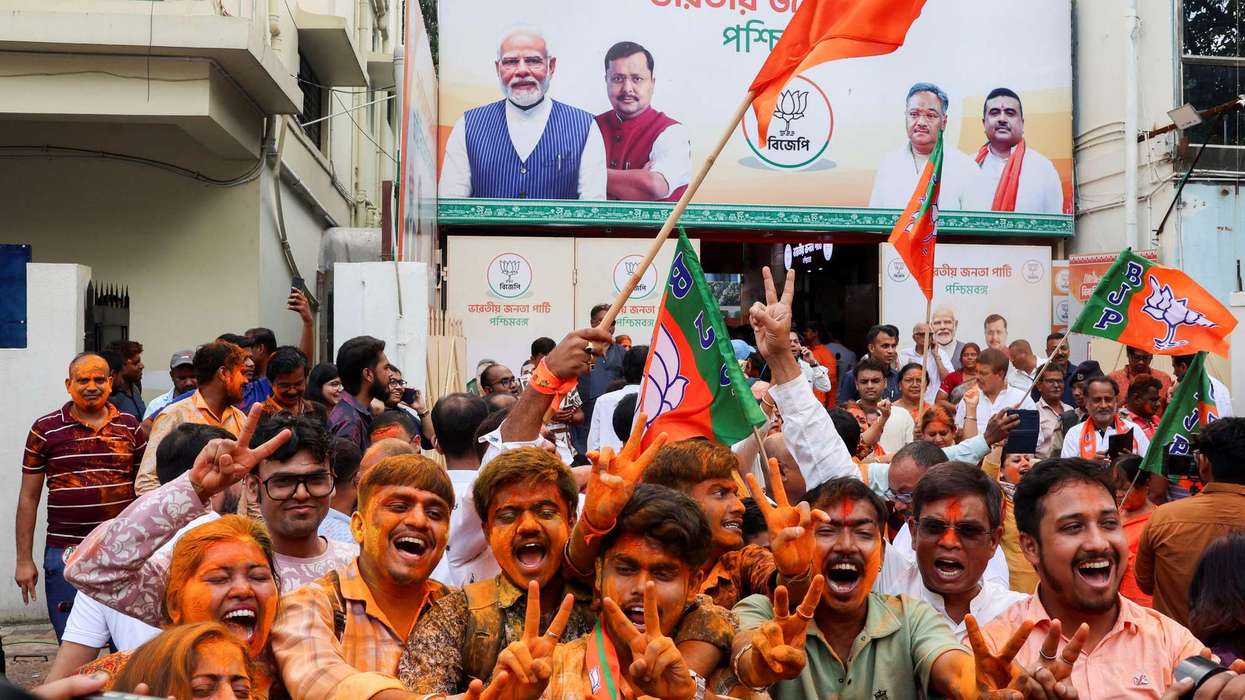
While Mamata’s house reverberated with the very non-Bengali Jai Shree Ram slogans, central Kolkata saw BJP supporters on bikes, cars, and tempos chanting Modi’s name, playing with saffron abir and carrying lotus flowers.
One supporter said: “The lotus has finally bloomed in Bengal. Ma Durga has won over the evil clouding this state.”
A lone TMC voice spoke of the various policies Trinamool had implemented during its 15-year regime.
He was philosophical in defeat: “Only time will tell what will happen. We do not believe in violence. This aggressive nature of politics is not the culture of Bengal. Trinamool has implemented over 50 policies including various doles for women, girls under 18 and the unemployed youth. But the people are the final speakers.”
Modi will almost certainly attend the formation of the new state government in West Bengal. It was his final frontier. Middle class Bengalis, who normally have a distaste for Hinduvta politics, cannot quite believe what has happened.