
- Unitree shares opened 629 per cent above their IPO price before closing 460 per cent higher.
- The company raised about £670 million through its IPO.
- Its debut briefly pushed its market value to around £50 billion.
A Chinese robot maker has just given investors a glimpse of how much excitement is building around humanoid robots.
Unitree shares opened at 1,100 yuan, up 629 per cent from their IPO price of 150.80 yuan, before giving up some of those gains. The stock closed at 845 yuan, still 460 per cent above its listing price.
The company raised about £670 million through the listing, which valued it at around £37 billion at the close. At its opening peak, its market value briefly climbed to roughly £48 billion, according to a Reuters report.
So what is driving investors to put such a huge value on a company whose robots are still largely in the early stages of commercial use?
China is betting heavily on robots
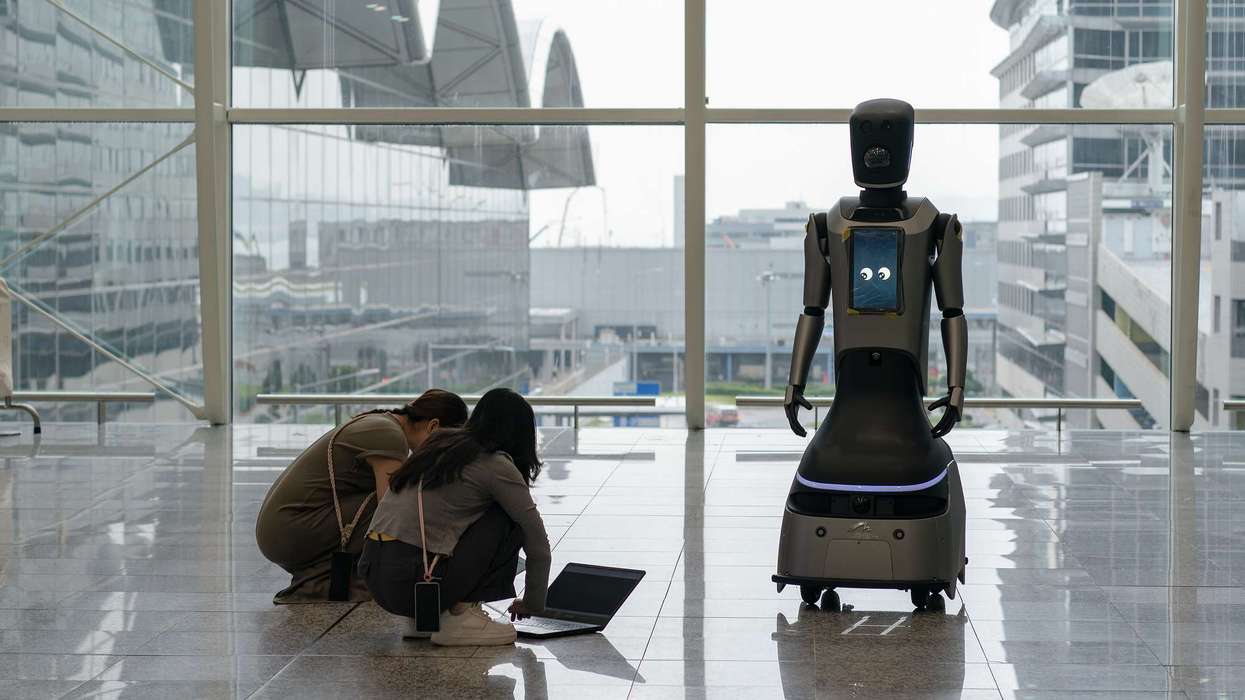
Unitree has become one of China's best-known robotics companies, with machines that can walk, run, dance and perform martial arts. It competes in a field that includes Tesla and Boston Dynamics.
The timing of the listing was significant. Unitree began trading as the World Robot Conference opened in Beijing, where hundreds of companies are demonstrating new machines and technologies.
China sees advanced robotics as a strategic industry, particularly as its ageing population creates pressure on the country's workforce. The government is investing heavily in robotics and manufacturing in an effort to build domestic technology and reduce reliance on overseas suppliers.
Unitree is also unusual because it is profitable, while many of its competitors are still losing money.
Its IPO therefore gives investors direct access to a sector that has attracted considerable government and private-sector backing. The company is backed by major Chinese technology names including Tencent and Alibaba, while founder Wang Xingxing has also received prominent political and business attention.
The enthusiasm around Unitree could also set a benchmark for other Chinese robotics companies preparing to list.
Several rivals, including Deep Robotics, Leju Robotics, Mech-Mind Robotics and AgiBot, are also considering mainland Chinese or Hong Kong listings.
The robots still have something to prove
The stock market excitement comes with a sizeable gap between what investors are pricing in and what humanoid robots currently do commercially.
Many Unitree robots are sold to universities and research institutions, while widespread commercial use remains limited. The company shipped more than 5,000 humanoid robots in 2025, according to industry estimates, but the technology is still some way from becoming a routine part of workplaces.
There is also a geopolitical problem.
The US has restricted imports of future models of foreign-made humanoid and quadruped robots, including those from Unitree, citing national security concerns. That limits the company's access to one of the world's biggest technology markets.
Yet investors have shown little hesitation so far.
The company's first-day surge has also transformed the paper wealth of Wang Xingxing, who owns around a fifth of Unitree. His stake is now worth billions of pounds based on the market price.
The bigger question is whether the frenzy around Unitree represents confidence in a technology that is about to become commercially important, or whether investors are getting ahead of the robots themselves.
For now, one thing is clear: China's humanoid robot race has moved from laboratories and technology demonstrations firmly into the stock market.