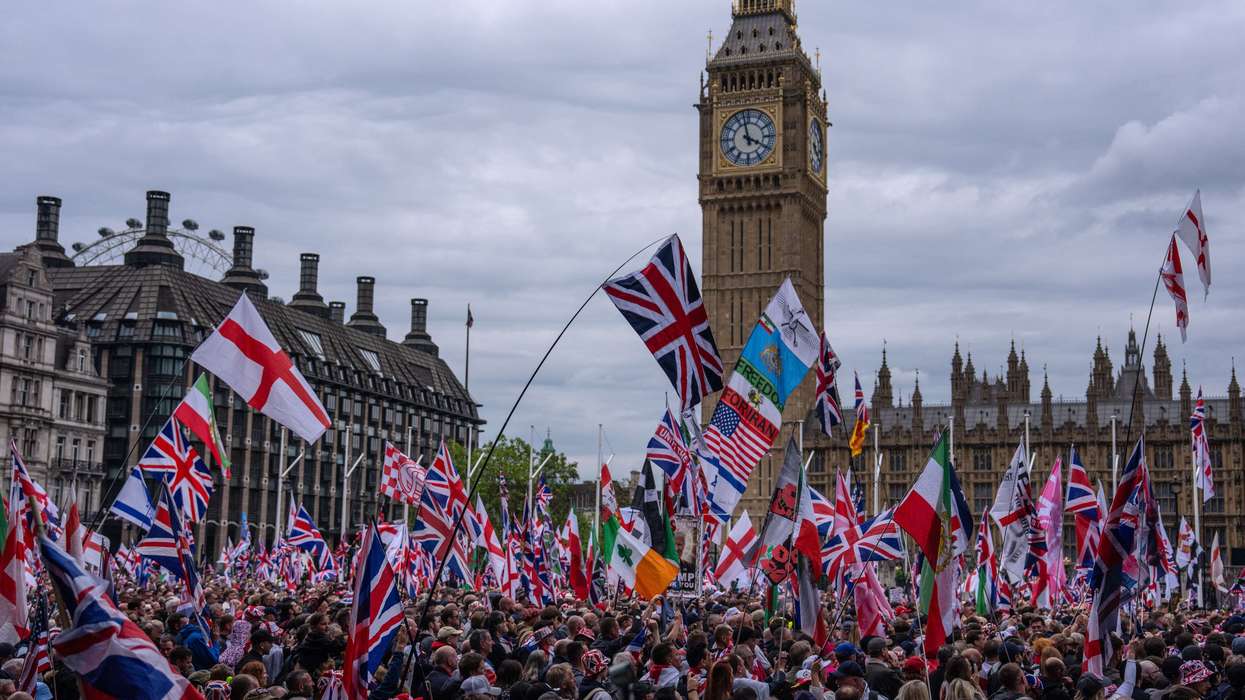
TOMMY ROBINSON has always seemed an unlikely candidate to try to “unite the Kingdom”. Yet the former football hooligan turned street movement activist, and former leader of the English Defence League created shockwaves by bringing 120,000 people out on the streets last September.
Last Saturday’s (16) follow-up was billed as being more than twice as big – yet shrank to half the size, instead. Robinson said it was a crowd of “millions” and perhaps “the largest event in history” – but the police’s more sober estimate was that around 60,000 people took part, so that much of the larger space allocated to it – from Parliament Square all the way down Whitehall to Trafalgar Square – remained unoccupied.
Nobody can be sure why the march shrank. The novelty value wearing off, poor weather and a clash with Chelsea’s FA Cup final against Manchester City could have been contributing factors. Robinson was trying out a bigger slogan – to “unite the west”, at a time when US president Donald Trump’s contribution to economic insecurity and global instability feels both dangerous and exhausting to most people.
The focus of Christian Nationalism brings new funders from across the Atlantic – but strikes a dissonant note with football firms and far-right groups with no interest in religious faith beyond the potential of appeals to Christian heritage to fuel anti-Muslim hostility.
The “Unite the Kingdom” marches exemplify a felt sense of rising division that they are more likely to exacerbate than to bridge. The scale of last September’s event was exhilarating for some – but its size and scale frightened many ethnic minority Britons, in particular.
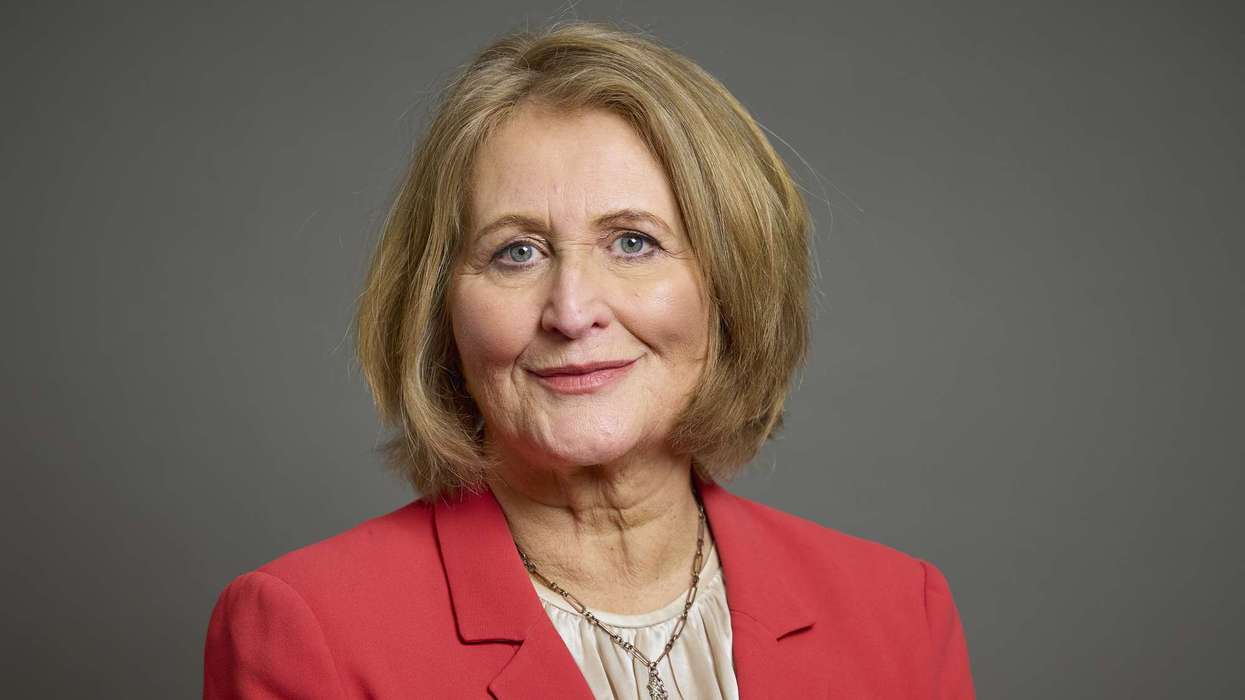
Labour MP Uma Kumaran gave a very powerful personal account as we took part in a panel discussion at the Progress conference in London of her fear. Yet she found it strange to be receiving WhatsApp messages from her parents, who had fled the civil war in Sri Lanka to make a new life in this country, to be worrying about her going out and about in London in 2026.
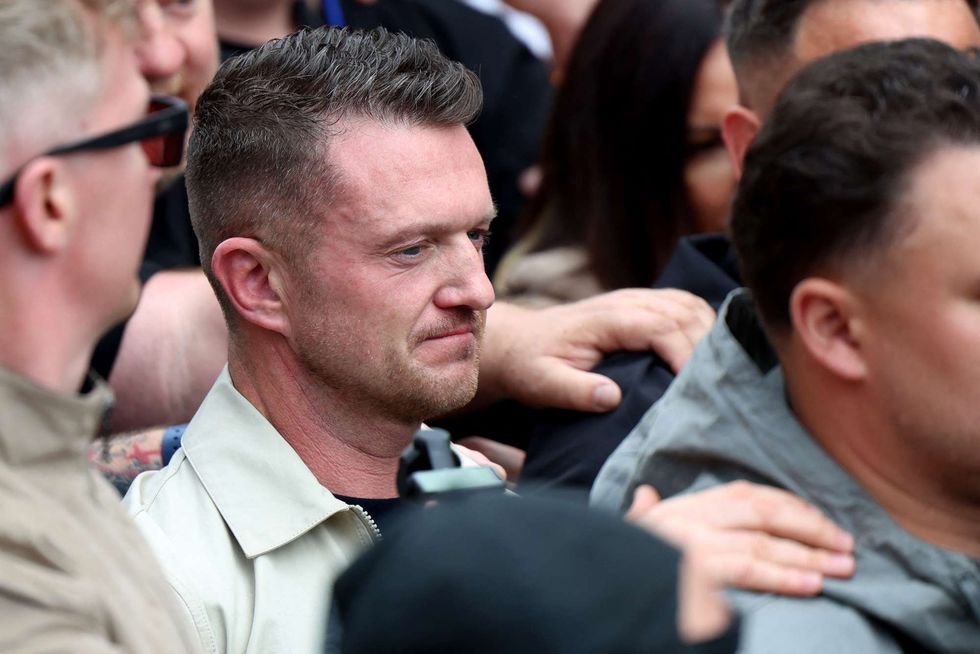 Tommy Robinson, real name Stephen Yaxley-Lennon, looks on during a rally organised by Unite The Kingdom, in central London on May 16, 2026.Getty Images
Kumaran is always clear that she would not ever want to be outbid by anybody else in the deep pride that she feels in being British.
The enormous policing effort last weekend kept the two marches separate and, with a few dozen arrests, mostly within the law. Part of the challenge for the police is that even racist groups, as well as democratic ones, have some right to free expression within the law – though not to intimidate, harass or to abuse others.
The government struggled badly last year with how to respond to a march which foregrounds themes with a broad mainstream appeal – such as national pride and free speech – while being championed by extreme organisers and groups.
Some taking part would vocally object to being called “far right”, though others embrace that label, seeing this movement as radicalising the climate of opinion, seeking to make an extreme politics of remigration and overt racism more respectable.
Indeed, Robinson has called London mayor Sir Sadiq Khan an “invader” in the city and country of his birth. Robinson’s ally, Ant Middleton, advocates changing the law to bar Khan, home secretary Shabana Mahmood or Conservatives leader Kemi Badenoch from holding leadership roles – arguing that only those with UK-born grandparents have the DNA to be leaders.
He may be increasingly politically embattled, but prime minister Sir Keir Starmer was better prepared this year to recognise the right to protest, within the law, while advocating proper boundaries not just against violence, but against extremism and prejudice, too.
That was a message to both of Saturday’s marches: those coming out for Robinson and those marching on Nakba Day for Palestine. Several international speakers were banned by the government on the grounds they would stir up hatred.
“None of this would have happened if it wasn’t for one man. Thank you Elon on behalf of Great Britain”, Robinson told the crowd, asking them to chant Elon Musk’s name. That exemplifies how the organisers views of what unites and divides is diametrically opposed to how most people see it: three-quarters of people see Musk as a negative force in our society.
The billionaire businessman grabbed the headlines last year – combining a prediction of an inevitable civil war with a call for pre-emptive violence. He played a much less prominent role in promoting the event this year.
The Unite the Kingdom march clearly failed the credibility test of a healthy expression of democracy – still less a bid for national unity – when it refuses to set any boundary to the extreme groups on the march who openly call to expel all migrants, ethnic minorities and Muslims from our country. There was a stronger civic effort to promote messages of unity, including in the Million Acts of Hope campaign.
The challenge is not just to understand what is dividing the Kingdom – but to work for what can unite it, too.