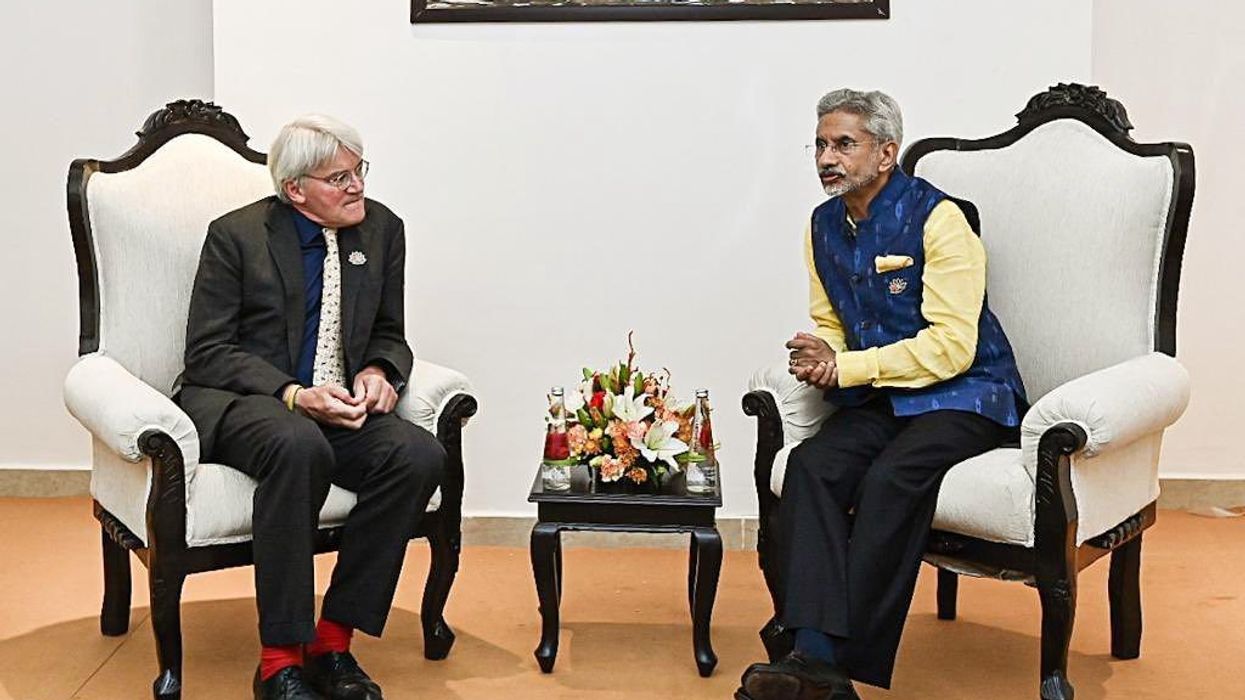

UK minister Andrew Mitchell attended the G20 development ministerial meeting in Varanasi on Monday (12), when the climate and tech partnerships were announced.
The new UK support includes funding for a tech start-up focusing on sustainable agriculture, including through growing vegetables in an environmentallyfriendly way.
Mitchell told the gathering about how the UK’s partnerships and investments are helping tackle the biggest shared challenges of today – including climate change, poverty and food insecurity. The meeting is laying the groundwork to accelerate progress towards the sustainable development goals ahead of the G20 leader’s summit in New Delhi this September.
At the G20, the UK stressed the need to redouble global efforts to tackle the climate crisis and shocks facing the most vulnerable countries.
New UK programmes announced in India also include an investment of £10 million in the Avaana Fund, a women-led climate-tech fund that supports businesses to develop solutions to climate change and create jobs for women in sectors such as clean energy, energy storage and agriculture.
An investment of £12m from the UK government-supported Neev II fund will go to Nutrifresh, an agri-tech start-up enterprise focused on making agriculture more sustainable by growing vegetables in an environmentally friendly way.
Mitchell joined India and G20 partners in calling for reinvigorated efforts to meet the UN’s sustainable development goals.
Last Sunday (11), the minister visited the Chakr Innovation research lab in Gurugram, near Delhi, which is developing cutting-edge tech to tackle climate challenges. The UK-supported lab is now developing innovative batteries for e-vehicles that do not need charging infrastructure and are fully recyclable, providing a cleaner and safer alternative to older lithium tech.
The lab has previously developed devices that capture pollution-causing emissions and convert them to pigment for black inks and paints.
Targeted investments such as these help tackle climate change and support sustainable development, a statement said.