BRITAIN'S economy shrank in October, official data showed on Wednesday (13), raising the risk of a recession and testing the Bank of England's resolve to stick to its tough line against cutting to interest rates from their 15-year high.
Gross domestic product (GDP) fell by 0.3 per cent from September, the Office for National Statistics said.
A Reuters poll of economists had pointed to no change in GDP in October.
It was the first time since July that GDP had shrunk on a month-by-month basis.
Sterling fell by about a third of a cent against the US dollar and was weaker against the euro too.
Investors added to their bets on the BoE starting to cut interest rates in June 2024.
However, the central bank is widely expected to keep Bank Rate at 5.25 per cent on Thursday (14) and signal once again that it is not close to cutting them as it tries to ensure that Britain's still-high inflation rate is brought under control.
Paul Dales, chief UK economist at Capital Economics, said the October data suggested Britain might be in a recession.
"That may nudge the Bank of England a little closer to cutting interest rates, although when leaving rates at 5.25 per cent tomorrow the Bank will probably push back against the idea of near-term rate cuts," Dales said.
In the three months to October, GDP flat-lined, the ONS said, weaker than the Reuters poll forecast of a 0.1 per cent increase.
Britain's economy avoided a contraction in the July-to-September period - when it also showed no change - but some analysts think it remains at risk of a shallow recession in late 2023 and early 2024 after the BoE's increases in interest rates.
The economy has flat-lined through most of 2023, with the level of economic output now back at its January level.
The ONS data on Wednesday showed Britain's dominant services sector shrank by 0.2 per cent in October while manufacturing and construction contracted by 1.1 per cent and 0.5 per cent respectively.
The economy was 2.0 per cent bigger than immediately before the Covid-19 pandemic hit Britain in early 2020, a stronger performance than thought before recent ONS data revisions but another weak period for living standards nonetheless.
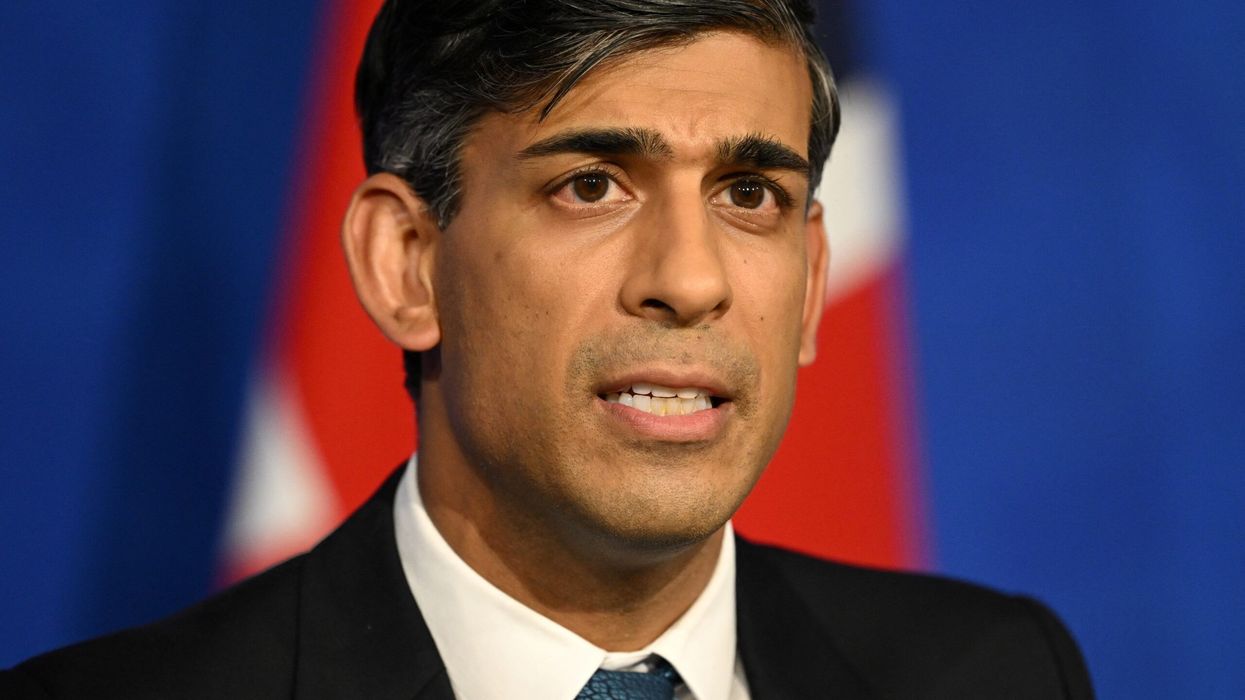
Prime minister Rishi Sunak and chancellor of the exchequer Jeremy Hunt have promised to speed up economic growth but no significant pickup is expected before a national election that Sunak must call before January 2025.
"October’s negative outturn puts the prime minister’s target to get the economy growing in jeopardy, with high inflation and borrowing costs likely to suppress economic activity in November and December," Suren Thiru, economics director at ICAEW, an accountancy body, said.
Hunt said it was inevitable that the economy would feel the hit from higher interest rates but it was well placed to start growing again after he announced cuts to some business taxes last month.
Separate data showed Britain posted a larger-than-expected goods trade deficit in October at £17 billion, against expectations for a £14 billion gap.
Exports to the European Union - which is similarly at risk of recession - fell sharply. Adjusted for inflation, goods exports to the bloc that Britain used to belong to fell for a third month in a row and hit their lowest level since mid-2009 excluding the large swings seen during the Covid-19 pandemic.
(Reuters)
UK economy shrinks in October, raises recession risk
But the Bank of England is widely expected to keep bank rate at 5.25 per cent