By Amit Roy
DURING the current pandemic, what more can be done to save the lives of British Asians?
The government has finally recognised there is a disproportionate number of deaths from coronavirus among ethnic minorities. It has asked Prof Kevin Fenton, regional director of public health at PHE (Public Health England) and NHS London, to conduct an urgent inquiry, whose initial findings will be published by the end of this month.
“PHE is rapidly building robust data and undertaking detailed analysis to develop our understanding of the impact of this coronavirus on different groups which can inform actions to mitigate the risks it presents,” Fenton said.
Meanwhile, prime minister Boris Johnson is being pressed to launch an “independent public inquiry” in a letter from 50 signatories, made up of celebrities, medics, and council, union and church leaders, including broadcaster Konnie Huq, writer and broadcaster Afua Hirsch, the mayors of Newham and Bristol, and the bishops of Southwark, Barking and Liverpool.
Maybe these are necessary exercises, but some urgent steps need to be taken now to save lives that might otherwise be lost.
It is certainly a mistake to treat the ethnic minorities as a homogenous group. This virus seems to affect black people and Asians in different ways. There are even differences between Pakistanis and Bangladeshis on one hand, and Indians on the other. The need of the hour is culturally specific advice on top of the new slogan, “Stay alert, control the virus, save lives”, which is replacing “Stay at home, protect the NHS, save lives” in England.
Eastern Eye, which I believe was the first publication to point out there was a problem, could perhaps join experienced Indian, Pakistani and Bangladeshi doctors in helping the government formulate a campaign that is targeted at the British Asian community.



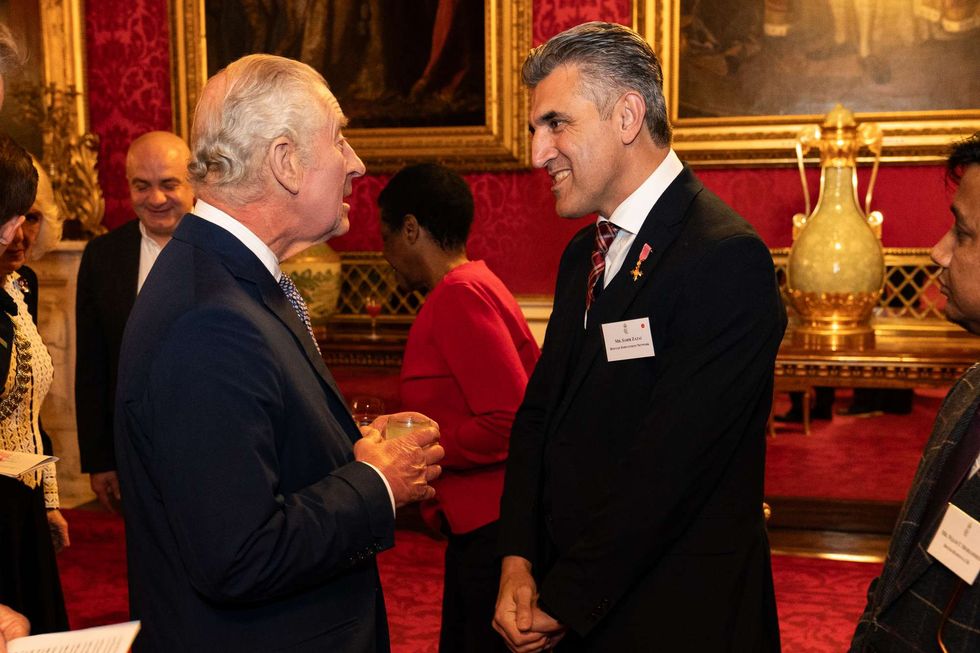 Sabir Zazai (right) speaks with King Charles III during a reception at Buckingham Palace to recognise the UK's contribution to humanitarian efforts across the world and to mark 60 years of the Disasters Emergency Committee on November 8, 2023 in London, England.Getty Images