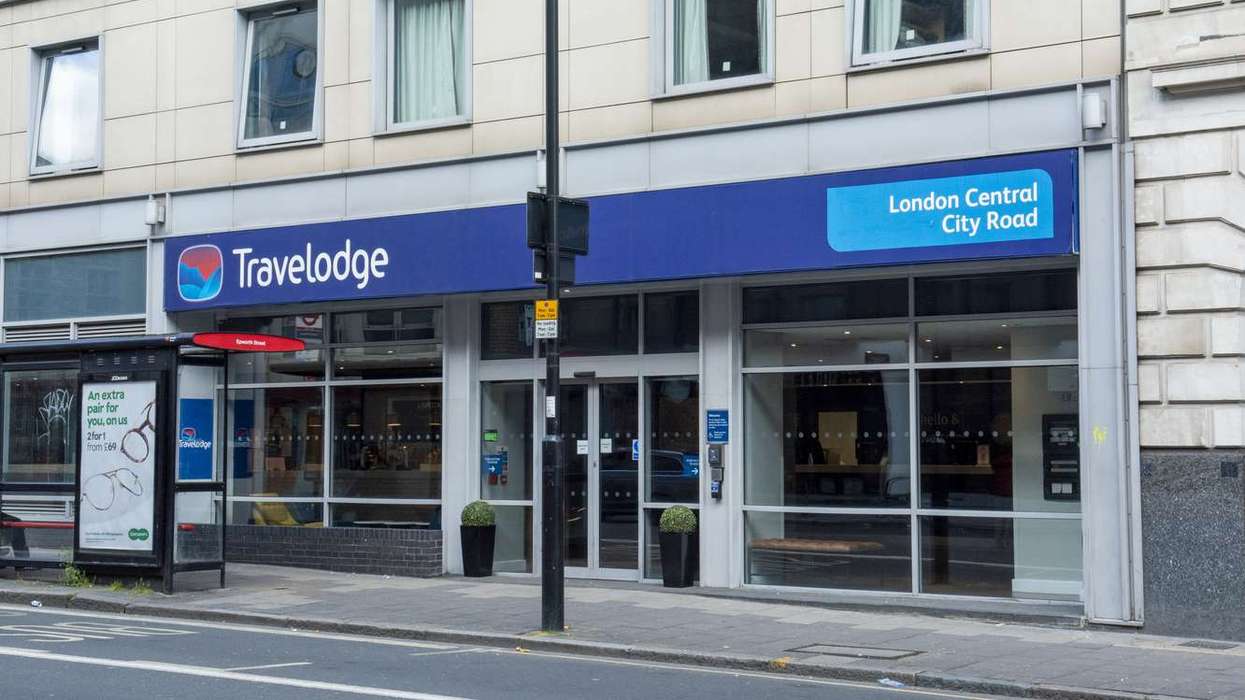

- The woman said a Travelodge receptionist gave her alleged abuser a key to her room.
- She said he attacked her before returning and kicking the hotel room door off its hinges.
- Travelodge said its policy of never confirming a guest's room details was not followed.
A domestic abuse victim has told she was attacked in her Travelodge hotel room after staff allegedly gave her abusive partner a key, raising questions over how hotels protect guests fleeing violence.
The woman, who named Lucy as reported in BBC, stayed at a London Travelodge in October 2025, hoping to spend one night away from an abusive relationship that had left her "frightened and exhausted".
Instead, she said the man she was trying to escape from found her at the hotel after allegedly persuading reception staff that his girlfriend was upstairs having a seizure.
According to Lucy, he asked reception which room she was staying in and was handed a key before being directed upstairs.
For someone trying to get away from domestic abuse, the hotel was supposed to be the one place where she could not be reached.
"It was the one place I thought he could never get to," Lucy reportedly told. "My safe place disappeared in an instant."
The night she thought she had escaped
Lucy said the man entered her room and physically attacked her before trying to take her phone.
She eventually persuaded him to leave, but said he returned later, banging on the door and becoming increasingly aggressive.
Then, she said, he kicked the hotel room door off its hinges and forced his way back inside.
Lucy ran downstairs crying and asking hotel staff for help.
"I thought someone would protect me," she reportedly said.
Instead, she was offered another room in the hotel.
Travelodge later investigated the incident and found that the man had provided Lucy's full name and room number at reception. The company said there was an established policy that staff should never confirm whether a particular guest was staying at one of its hotels.
That policy was not followed.
Travelodge said, as reported, that "this should not have happened".
Lucy contacted the BBC after hearing about the sentencing of Kyran Smith, who was jailed for seven and a half years in February after sexually assaulting a woman in her bed at a Travelodge in Maidenhead in 2022.
The case prompted Travelodge to announce changes to its room access procedures. The company said additional or replacement room keys would only be issued with explicit permission from the person staying in the room.
It also commissioned an independent review, led by a barrister, into its room access security policies and incident escalation procedures.
But Lucy's experience suggests that the issue is not simply about what the written rules say. It is about what happens when someone arrives at reception with a convincing story.
A wider concern for vulnerable guests
Lucy was among several people who contacted the media firm after the Maidenhead case.
Another woman, Jo, said she woke in a Travelodge room in July to find an unknown man standing at the end of her bed.
She screamed for help and said the man told her, "I'm sorry, they gave me this key."
Travelodge said an investigation found that its updated room access policies, which were already in place at the time, had not been correctly followed. The company said this was unacceptable and that the hotel team had been retrained on current room security and check-in procedures.
The cases have particular significance for people experiencing domestic abuse.
A hotel can be chosen precisely because it offers distance from an abusive partner, family member or former partner. But that protection can depend on something as basic as whether reception staff confirm that a person is staying there or issue a room key to someone who claims to know the guest.
Lucy said the experience had changed her permanently. She now struggles to stay in hotels because of the fear and anxiety following the attack.
"Hotels need safeguarding procedures because one mistake can have devastating consequences," she reportedly said.
Travelodge said incidents involving unauthorised people entering guest rooms were very rare, while stressing that customer safety and security remained a priority. The company said customer-facing staff had undergone recent training and that it had made changes to room access and incident escalation procedures.
The wider hotel industry has also acknowledged the concern. UKHospitality described the recent incidents as extremely serious and said it was working with members on guidance aimed at strengthening customer security.
For Lucy, however, the issue is much more personal than a change to hotel policy.
She had booked a room to get away from someone she feared. She believed the hotel would give her a layer of protection. Instead, she says the person she was trying to escape found her there and was able to enter her room.
That is why the question raised by her case is not simply whether a hotel key was issued incorrectly. It is whether the safeguarding systems designed to protect vulnerable guests actually work when they are needed most.