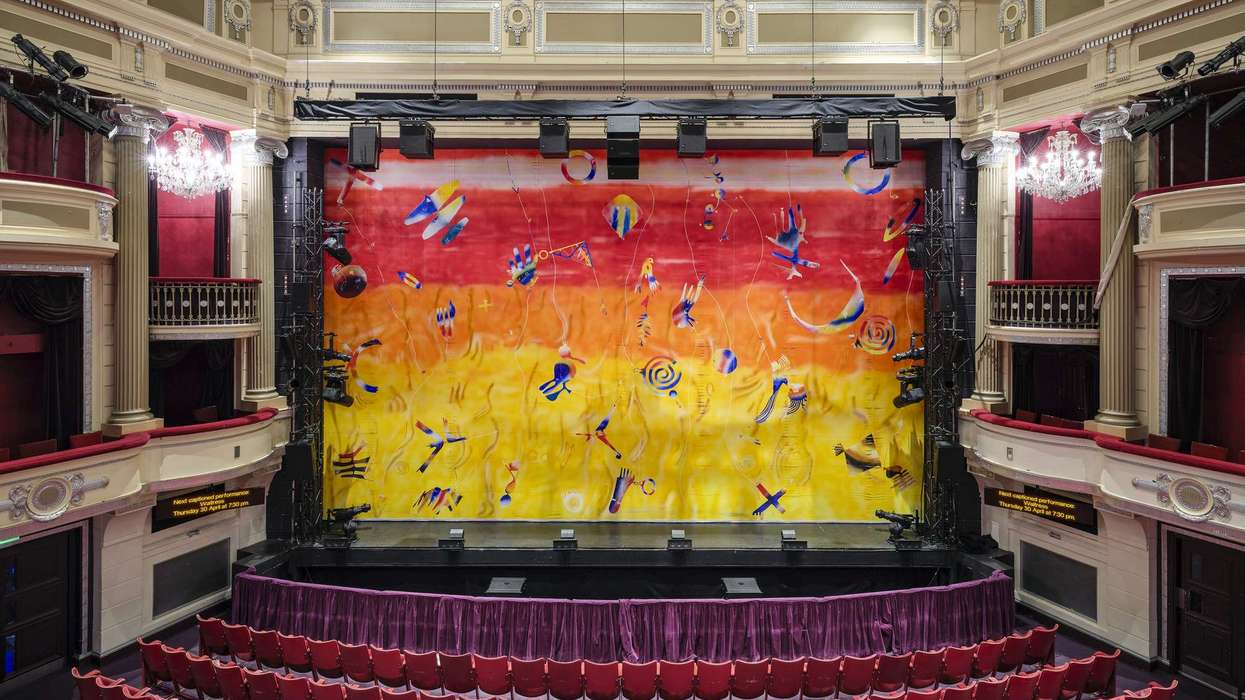

EASTERN EYE readers should keep an eye on the plays staged at Hampstead Theatre in Swiss Cottage. Earlier this year, it presented Sir Tom Stoppard’s Indian Ink, which won Best Production at Eastern Eye’s Arts, Culture & Theatre Awards (ACTAs) in June.
Now a run of Springwood has just concluded. It is my kind of play, taking real historical events and dramatising them for the stage. Springwood explores the genesis of the “special relationship” between the UK and the US. Lord Simon McDonald, Master of Christ’s College, Cambridge, is currently finishing a book on the subject. He seems to believe the relationship exists more on paper than in reality – and, as a former permanent under-secretary at the Foreign Office, he knows what it is like to deal with Washington.
For more than two hours, Springwood kept me spellbound. The play takes its name from president Franklin D Roosevelt’s country home in Hyde Park, New York. This is where Roosevelt and his wife, Eleanor, hosted King George VI and Queen Elizabeth over a weekend in June 1939. Europe was on the brink of war, and the King’s mission was to build a relationship of trust with the US president and persuade him that America should enter the war on Britain’s side if Germany attacked.
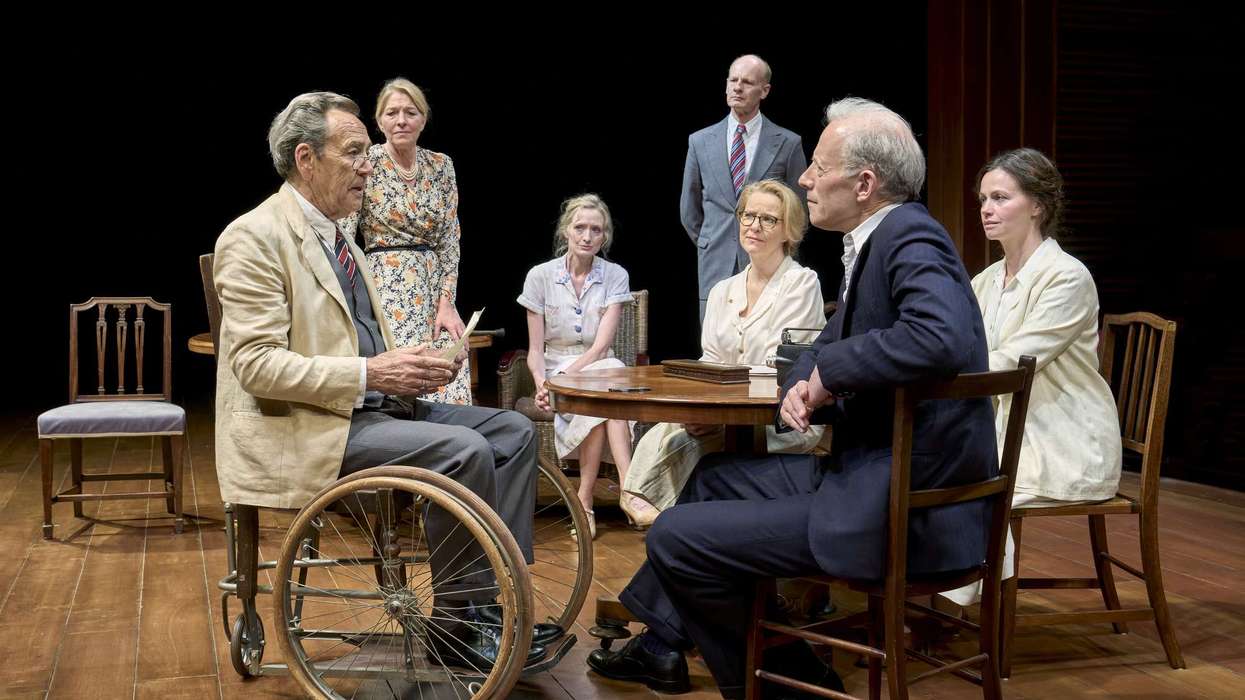
The play is written and directed by the American Richard Nelson. The entire cast delivers superb performances, especially Robert Lindsay as Roosevelt, confined to a wheelchair because of childhood polio, and Jemima Redgrave as Eleanor.
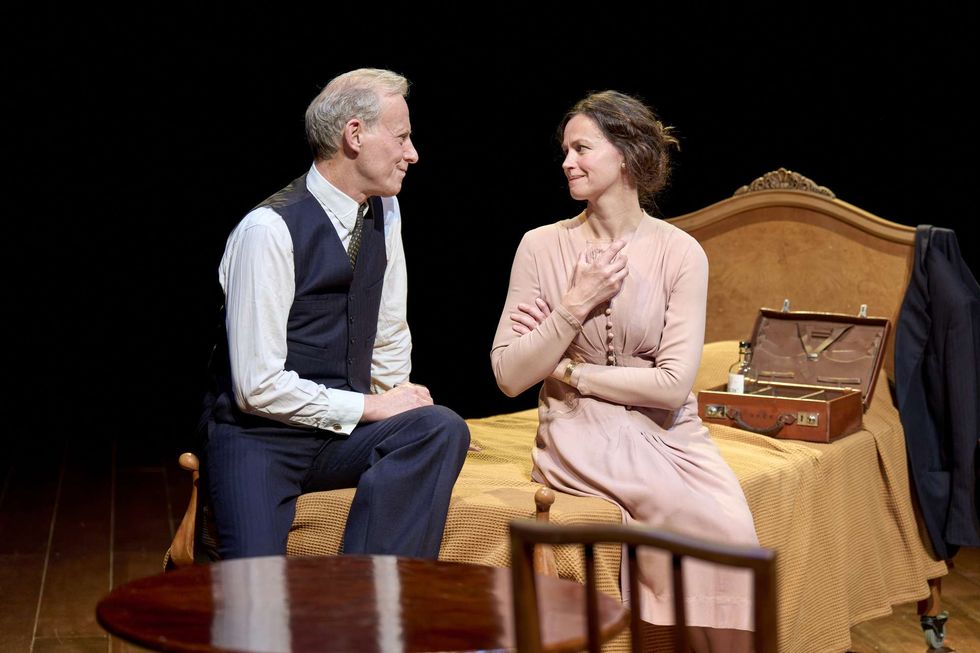 Havill with Rebecca Night as Queen Elizabeth Manuel Harlan
Andrew Havill is excellent as “Bertie”, who has been King for only two years following the abdication of his elder brother, Edward VIII. Still growing into a role for which he had not been groomed, Bertie’s lifelong stammer becomes more pronounced under pressure. I had previously seen Havill play Lord Mountbatten in Howard Brenton’s Drawing the Line, Hampstead Theatre’s 2013 play about the Partition of India.
Rebecca Night is perfectly cast as Queen Elizabeth (the future Queen Mother), who is even more agitated than her husband about the hotdogs, sausages and beer planned for an outdoor picnic arranged by the Roosevelts. The royal couple fear – wrongly, as it turns out – that it is an American plot to humiliate them.
Springwood, the estate, actually belongs to the president’s mother, played by Eileen Nicholas. The household also includes Daisy Suckley, Roosevelt’s distant cousin, who is introduced as a governess. The King is greatly embarrassed when he knocks on Roosevelt’s bedroom door one night and discovers Daisy – played by Rachel Pickup – is “much more than a governess”.
Others in the cast include Roosevelt’s efficient secretary, Missy (Teresa Banham), Cameron (John McKay), an official from the British embassy sent to assist the King, housemaid Mary (Bryony Miller), and Tommy (Harry Anton), who helps Roosevelt in and out of his wheelchair.
Nelson has had a long association with this story. He first wrote it as a BBC Radio 3 drama, Hyde Park-on-Hudson, in 2009, before adapting it into the film Hyde Park on Hudson. Its latest reincarnation is the stage production, Springwood, at Hampstead Theatre.
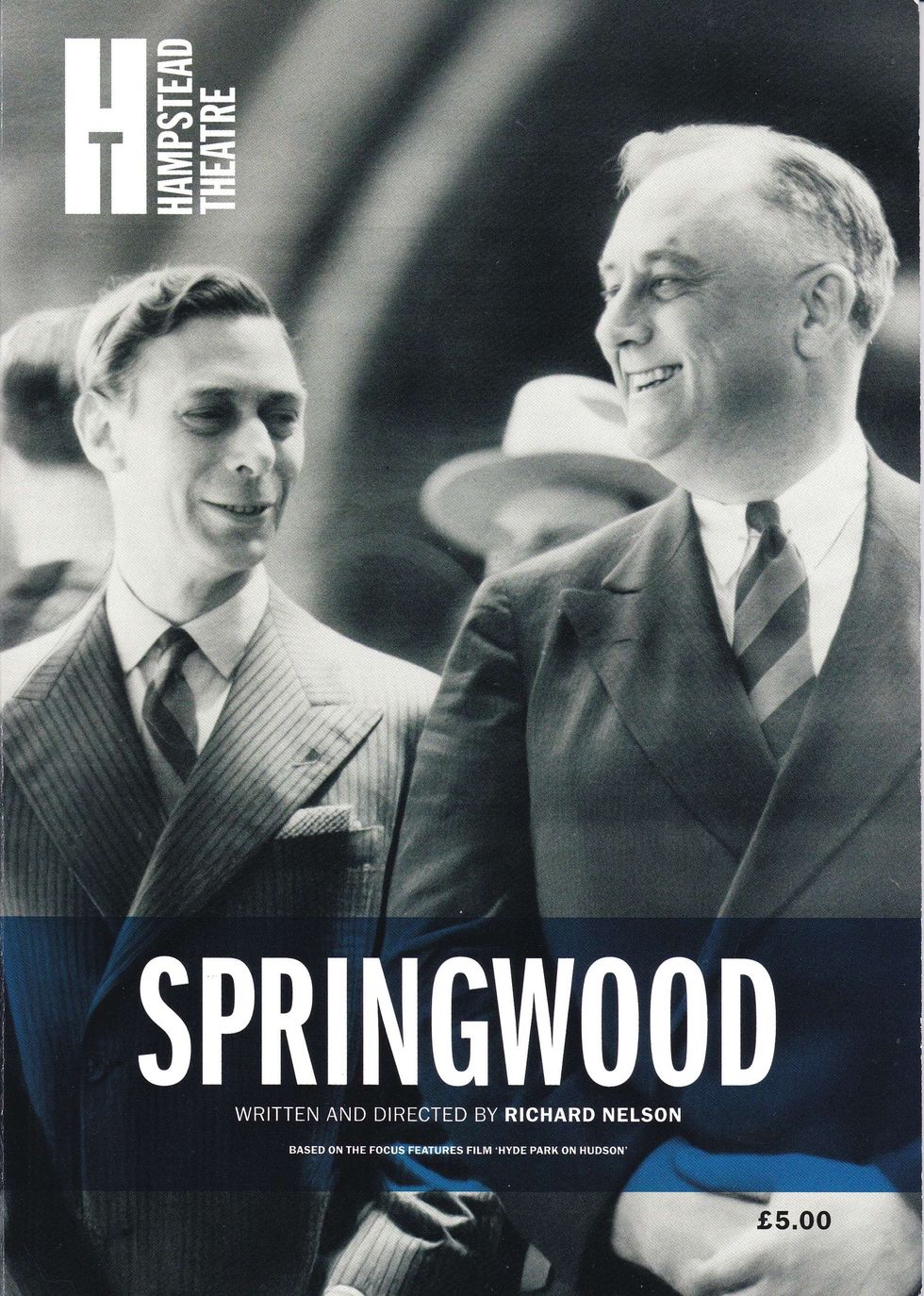 The Springwood programme cover featuring King George VI and Franklin D Rooseveltx
The programme, featuring a photograph of Roosevelt and King George VI on the cover and another inside with the Queen, Eleanor and the president’s mother, is a collector’s item. It reproduces Roosevelt’s letter of September 17, 1938, inviting the new King and Queen to visit the US.
Also reproduced is the King’s telegram of June 12, 1939, thanking the president “for your hospitality during the last four days”.
“Though this was our first visit to your great country and though it was necessarily a brief one,” the King wrote, “it has given us memories of kindly feeling and goodwill that we shall always treasure.”
The King was only partly successful in persuading Roosevelt to adopt a pro- British stance. Only weeks after the “hotdog summit”, the Second World War began on September 1, 1939, when Germany invaded Poland. Britain and France declared war two days later on September 3, 1939. America did not come to Britain’s aid until more than two years later. The trigger was Japan’s surprise attack on the US naval base at Pearl Harbor, Hawaii, on December 7, 1941. Roosevelt delivered his “day of infamy” speech the following day, when Congress declared war on Japan. On December 11, Germany and Italy declared war on the United States, which responded in kind.
Springwood is not so much about the drumbeats of war, though they provide the historical backdrop, as it is about the personal relationships forged between Roosevelt and King George VI over late-night whisky, and Eleanor and Queen Elizabeth over tea.
Roosevelt talks openly about his polio, while Bertie confides that his father, George V, had little time for him because he was not first in line to the throne. He also speaks candidly about his stammer.
Eleanor persuades the Queen that serving hotdogs is intended to show Americans that the British royals are not remote toffs looking down on ordinary people. The royal couple also discover that Eleanor and the president have an “arrangement” regarding Daisy. Eleanor herself maintains a separate home, living in a commune with women carpenters.
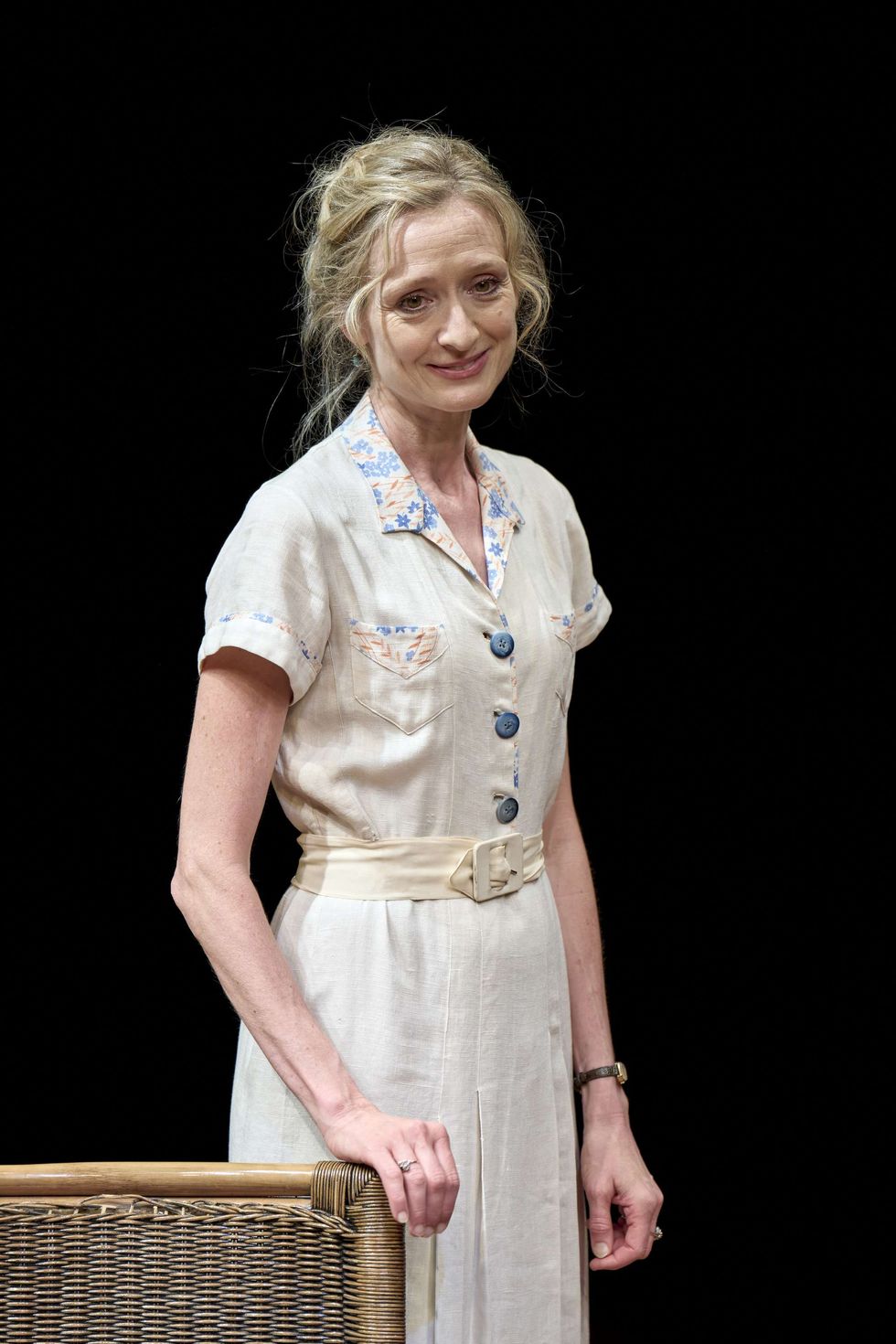 Rachel Pickup as Daisy SuckleyManuel Harlan
Springwood is about a weekend 87 years ago. Maybe nine decades from now there will be a similar play about King Charles’s visit to Washington to persuade Donald Trump, arguably the worst president in American history, not to break with Europe and NATO.
Perhaps a British Asian playwright will take on the encounters between Trump and his “best friend”, Narendra Modi. Such a play would require a third character – Pakistan’s Field Marshal Asim Munir, who sought to outflank the Indian prime minister by nominating the US president for a Nobel Peace Prize.
On the evening I went to see Springwood, several members of the cast returned to the stage afterwards to discuss the production.
Speaking about playing Roosevelt, Lindsay said: “I just think about the line when Bertie says, ‘Which side will you choose?’, and he (Roosevelt) said, ‘Bertie, I invited you to my home, and this is my home.’ And that is a really wonderful thing to say, and very perceptive in terms of what Washington thinks and what America thinks at the time. America was very, very right-wing and, in fact, there were Nazi demonstrations in Madison Square Garden. So it was a very troubling time in America. And I think he was right when he says, ‘You know, I’m not sure it’ll be your side that they choose.’ He was in a really difficult position because he did support Britain, and eventually he did when he had to. They were forced into the war. But I can’t think of any character I’ve ever played, I’ve never been so proud of playing a human being as FDR.”
If there is a lesson to be drawn from Springwood, it is that the only relationship the US truly believes in is a transactional one: “If I help you, how much money will you give me?”