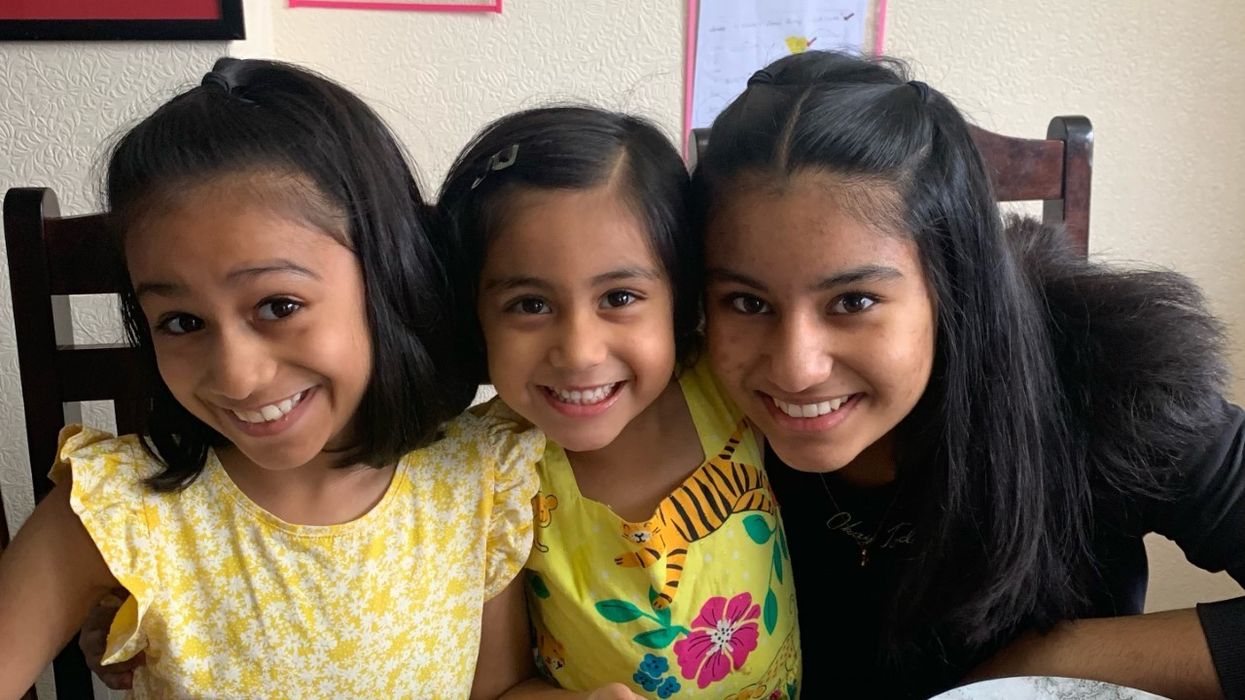

by Geeta Aashish Patel
AS A full-time working professional, lockdown with my children has taught me to juggle on a completely new level.
As a deputy headteacher, working from home has never been a new concept – bringing bags of paperwork home and marking them was the norm. However, there is a big difference between working at home on unpaid overtime and trying to do the day job you are paid for.
Granted, I was still on rota to be onsite working with children of keyworkers, and like all teachers, we embraced with gusto that steep learning curve of remote teaching.
 Geeta Aashish Patel
But so much of my job is about that face-to-face interaction with young people and I really missed the collective pulse of the school community.
That said, the new experience of learning how to formally teach my own children was something that not even my teacher training or Masters degree in education could have prepared me for.
The most successful working professionals rely on the strong network of friends and family around them, so it was hard for me to completely stop seeing them. Added to that, my mother-in-law was shielding and my parents were watching the days of their retirement slip by with nowhere to go.
The first lockdown was like the first six weeks post-partum – my husband and I didn’t really know what we were doing. We made a few mistakes (usually trying to do too much), but mostly followed our hearts and the science. Soon we moved organically into a new family rhythm. Lockdown included the first moments when I was able to spend so much time with all three of my girls together – I know I will never get this again and that thought gave me so much strength and optimism.
And then Covid hit our home during Christmas. My husband, my eldest daughter and I suffered quite badly and that was tough, especially with the younger two unaffected with their usual high levels of energy. It was really tough.
If I had to explain how we stayed positive and happy through it all, it would have to be through compassion and flexibility. Our dog Coco helped a lot with that – he was a constant reminder that life doesn’t have to be so complicated.
We found ourselves listening more – to each other; to the noise around us and to the silence. We found ourselves adapting to what was most important at any given time. Sometimes that meant I gave 18-hour days to my job and other times it meant ditching home learning so we could have a water fight in the garden.
I’ve watched my girls dance, play, create artistic masterpieces and sing more than ever and that’s been so precious. It’s important to listen to the energy around you and remember that we are beings of agency. During a time of such uncertainty, we must be certain of our own ability to embrace imperfections and just be.





 A burnt out bus on Newtownards Road as the clean-up begins following a night of anti-immigrant riots on June 10, 2026 in Belfast, Northern Ireland. Overnight protests in Belfast turned violent in reaction to a knife attack that took place on Monday night, which left a male victim in his 40's with serious injuries. Getty Images