

Billions of pounds in deals have been signed since the India-UK trade agreement came into force. But for the Indian professionals, chefs and engineers who will carry that work, the visa rules matter as much as the tariffs.
By Parvez Khan, Senior Immigration Associate and Compliance Officer, AY&J Solicitors
This week, more than 100 British businesses landed in India with Business Secretary Jonathan Reynolds. It is the first major UK trade mission since the India-UK Comprehensive Economic and Trade Agreement came into force on 15 July. The Department for Business and Trade says deals worth nearly £12 billion have been announced since the agreement was signed, and it expects trade between the two countries to grow by £25.5 billion a year in the long run.
The headlines have focused on whisky, cars and textiles. But trade is also about people. An Indian IT firm that wins a UK contract needs engineers on site. A restaurant group expanding in Birmingham needs a skilled chef. A UK company buying from Pune may want to bring its Indian team leader to London for a year.
For these families and businesses, the question is simple: what does the deal actually change, and what does it leave the same?
Professionals and IT firms: more certainty, not a new visa
The agreement opens 137 services sub-sectors in the UK to Indian businesses. It covers business visitors, intra-company transferees, investors, contractual service suppliers and independent professionals.
The most useful change for many Indian companies is for contractual service suppliers. This is the employee of an Indian firm who comes to the UK to deliver a contract for a UK client, such as an IT project, an engineering design or a consultancy brief. The deal lets these staff come for up to 12 months in more sectors than before.
It is important to be clear about what this means. The agreement does not create a brand new visa. It locks in the UK's existing routes, so they cannot easily be narrowed for Indian businesses, and it widens them a little. Staff still need the right visa under the UK's Global Business Mobility routes. The two most common are:
●Service Supplier, for staff delivering a contract for a UK client, usually for up to 12 months
●Senior or Specialist Worker, for staff moving to a UK branch or office of their own employer, with a minimum salary of £52,500 or the going rate for the job
For a company with no UK office yet, the UK Expansion Worker route lets it send staff to set one up.
Choosing the wrong route is one of the most common mistakes we see. A worker who comes as a business visitor but then starts delivering project work for a UK client is breaking the visa rules, and so is the business that sent them.
1,800 places for chefs, yoga teachers and musicians
For many British Asian businesses, the most practical part of the deal is a small one. The UK has agreed to 1,800 places a year for Indian chefs, yoga instructors and classical musicians to work in the UK.
That matters to restaurants that have struggled to recruit tandoor and regional specialist chefs, and to temples, cultural centres and wellness studios that rely on trained teachers and performers. The places are limited and will be in demand, so businesses that plan to use them should prepare early. They will also still need to meet the UK's sponsorship and visa rules.
A saving on National Insurance
A second agreement, the Double Contributions Convention, came into force on the same day. It means Indian employees on temporary assignments in the UK, and their employers, can stay in India's social security system instead of paying UK National Insurance. The exemption now lasts up to five years, up from three.
The Indian government expects more than 75,000 professionals and over 900 Indian companies to benefit. For a firm sending engineers to the UK, this can make a real difference to the cost of each assignment.
What has not changed
Some expectations around the deal have run ahead of the detail. The agreement does not:
● Create a new route to settle permanently in the UK
● Change the family visa rules or the income needed to bring a spouse or parent
● Remove the salary thresholds or the sponsor licence requirements for Skilled Worker visas
● Allow staff to switch freely between employers on Global Business Mobility visas
Yash Dubal, CEO of AY&J Solicitors, a London immigration law firm that advises Indian and British businesses on sponsorship and staff transfers, says:
"The trade deal is good news, but it is not a shortcut. What it gives Indian businesses is certainty. The routes are there and they are now protected. The firms that will gain most are the ones that plan their people moves as carefully as their contracts, with the right visa, the right paperwork and a UK sponsor licence in place before the work starts."
What businesses should do now
For Indian companies sending staff to the UK, and for British Asian businesses hiring from India, a few steps make a big difference:
- Match each worker to the right route. Service Supplier, Senior or Specialist Worker and UK Expansion Worker each have different rules on salary, length of stay and what work is allowed.
- Check your sponsor licence. A UK branch or client that sponsors workers needs a valid licence, and the Home Office revoked a record number of licences in 2025.
- Budget for the full cost. Visa fees, the Immigration Health Surcharge and the Immigration Skills Charge can add several thousand pounds per worker, even with the National Insurance saving.
- Keep records from day one. Sponsors must report changes to the Home Office within strict deadlines, and many must be reported within 10 working days.
At AY&J Solicitors, our business immigration team helps employers apply for and manage sponsor licences, choose the right Global Business Mobility route and prepare applications for staff moving from India. We also run compliance checks for businesses that already sponsor workers, so that a growing UK team does not put the licence at risk.
The India-UK deal has opened the door wider for trade. For the people behind that trade, getting the visa right is still the first step.
About the author
Parvez Khan is a Senior Immigration Associate and Compliance Officer at AY&J Solicitors, an SRA-regulated, Legal 500-ranked UK immigration law firm. He advises employers on sponsor licences, Global Business Mobility routes and compliance. Find out more about AY&J Solicitors.
This article is paid content. It has been reviewed and edited by the Eastern Eye editorial team to meet our content standards.






 HiBob
HiBob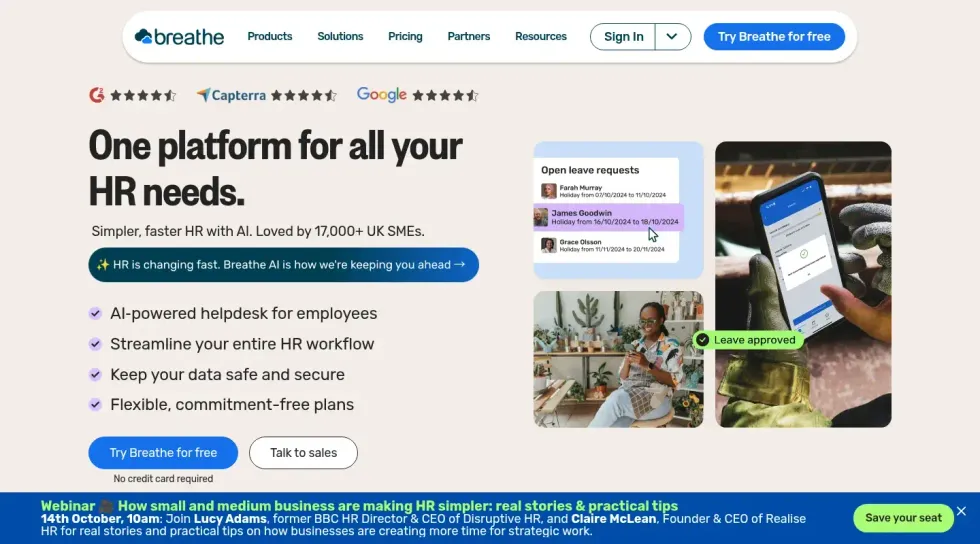 Breathe
 Personio
 Sage HR
 BambooHR
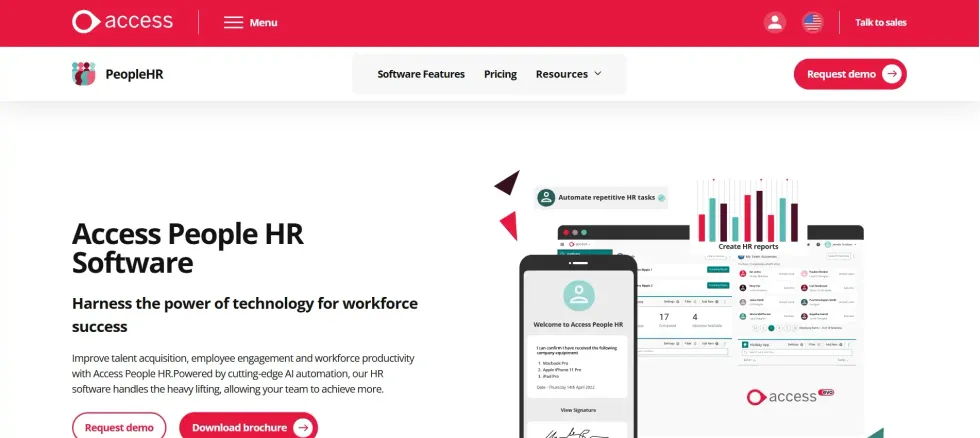 Access PeopleHR
 Access PeopleHR
 BrightHR
 CIPHR
CIPHR Rippling
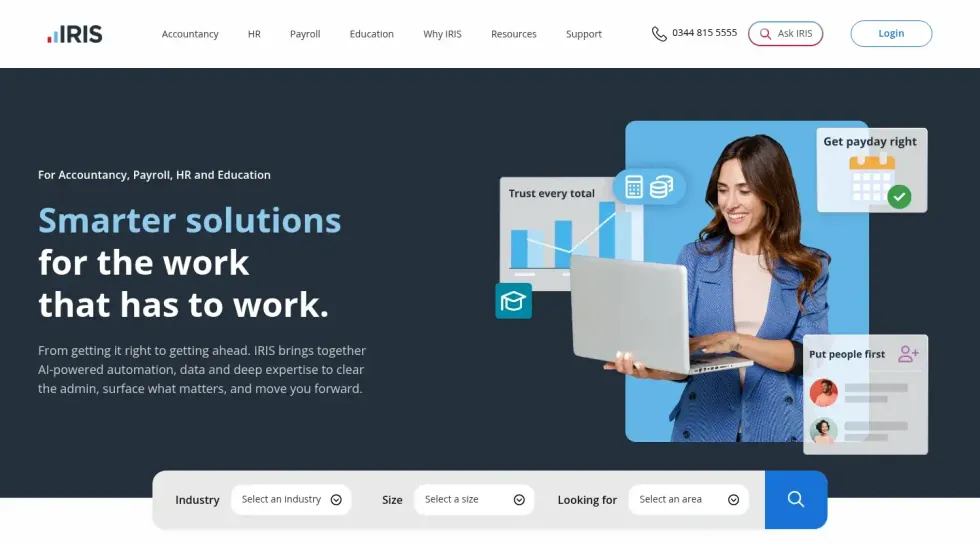 IRIS
IRIS